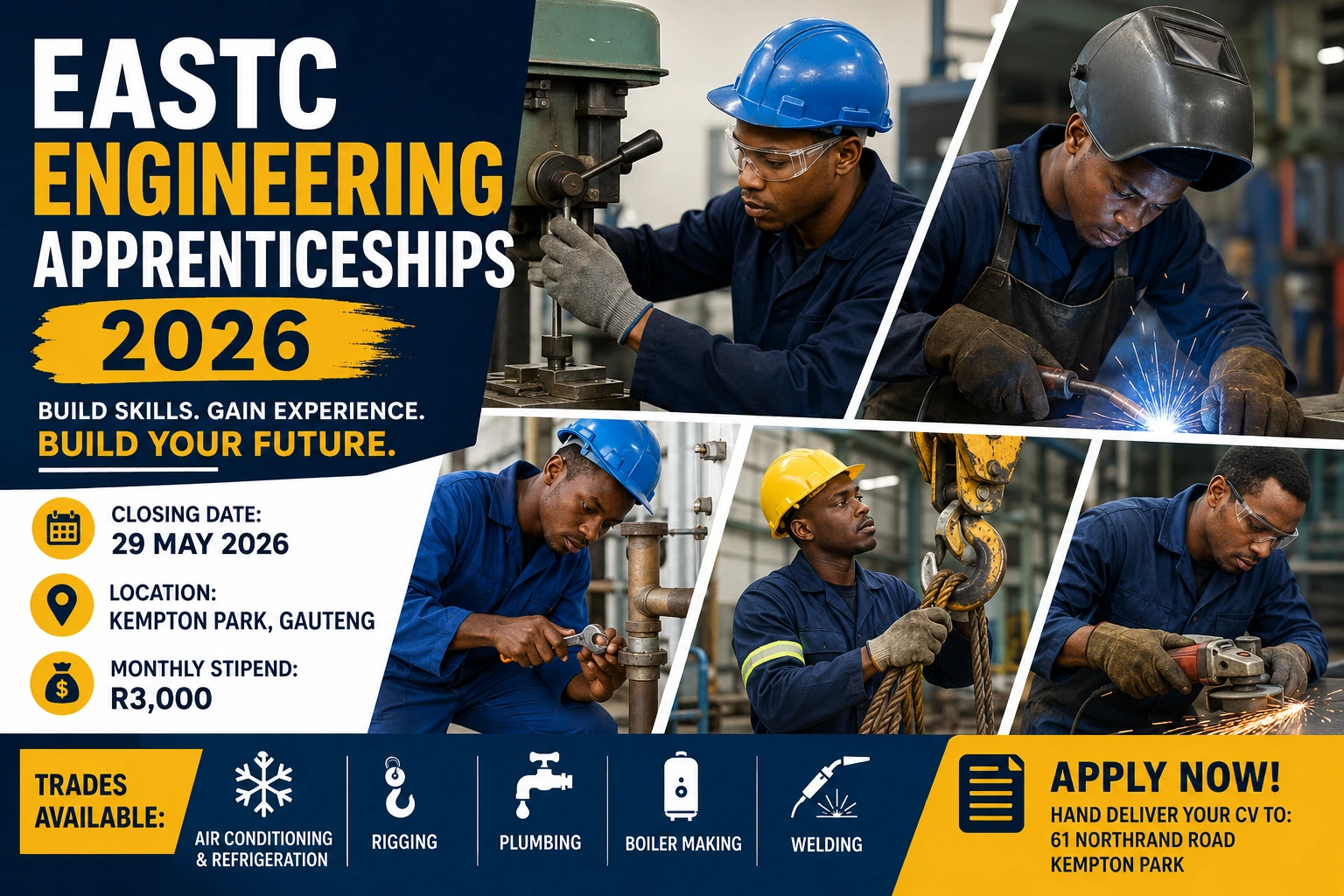
The EASTC Engineering Apprenticeships 2026 programme is attracting attention from unemployed South African youth looking to build practical careers in engineering and technical trades. The programme offers a structured three-year apprenticeship designed to help participants gain real workplace experience while developing artisan skills in high-demand industries.
For many young people, finding work without experience is difficult. Apprenticeships help solve this problem by combining training with hands-on industry exposure. Instead of only learning theory, apprentices work directly within technical environments and develop practical abilities employers value.
The EASTC Engineering Apprenticeships 2026 programme includes trades such as welding, plumbing, rigging, boiler making, and air conditioning and refrigeration. Successful applicants will also receive a monthly stipend while completing their training.
This article explains everything applicants should know about the programme, who qualifies, how the apprenticeship works, what careers may come afterward, and how to apply successfully.
What You Should Know First
The EASTC Engineering Apprenticeships 2026 programme is a three-year artisan training opportunity for unemployed youth in South Africa.
The programme focuses on technical workplace learning rather than classroom-only education. Apprentices receive practical engineering exposure, hands-on training, and industry experience in a chosen trade.
Key details include:
- Apprenticeship location: Kempton Park
- Duration: 3 years
- Monthly stipend: R3,000
- Closing date: 29 May 2026
- Applications must be hand delivered
- No email applications are accepted
The programme is especially valuable for people interested in becoming qualified artisans in engineering-related industries.
Why Engineering Apprenticeships Matter in South Africa
Engineering apprenticeships play an important role in South Africa’s economy. Many industries require skilled artisans to maintain infrastructure, operate industrial systems, repair equipment, and support construction and manufacturing projects.
Trades such as welding, plumbing, and refrigeration remain essential because businesses constantly need technical workers with practical skills.
One major challenge many young people face is the “experience barrier.” Employers often ask for work experience even when someone has recently completed studies. Apprenticeships help bridge this gap by giving learners direct workplace exposure.
Instead of graduating with only theoretical knowledge, apprentices gain:
- Practical problem-solving skills
- Workplace discipline
- Technical confidence
- Industry familiarity
- Safety training
- Real project experience
These skills often make apprenticeship graduates more employable than candidates with theory-only qualifications.
Understanding the EASTC Engineering Apprenticeships 2026 Programme
The EASTC Engineering Apprenticeships 2026 opportunity is designed to train future artisans through structured practical learning.
Unlike short training programmes, this apprenticeship lasts for three years. This longer period allows apprentices to gradually build technical competency while learning how real engineering environments operate.
Participants typically spend time learning:
- Equipment handling
- Workplace safety procedures
- Technical repair processes
- Maintenance techniques
- Installation methods
- Industry standards
- Teamwork in engineering settings
Because engineering work is highly practical, apprenticeships are one of the best ways to prepare for long-term technical careers.
The programme is aimed at unemployed youth who are willing to commit to full training over the three-year period.
Engineering Trades Available in the Programme
One of the strongest features of the EASTC Engineering Apprenticeships 2026 programme is the variety of trades available.
Each trade focuses on different technical skills and career paths.
Air Conditioning and Refrigeration
This trade involves installing, repairing, and maintaining cooling systems.
Apprentices may learn about:
- Refrigeration systems
- Cooling equipment
- Air conditioning installation
- Temperature control systems
- Fault diagnosis
- Equipment maintenance
These skills are useful in commercial buildings, factories, supermarkets, offices, and residential environments.
As South Africa continues expanding commercial infrastructure, refrigeration and cooling specialists remain in demand.
Rigging
Rigging involves lifting, moving, and positioning heavy equipment safely.
Riggers often work in industries such as:
- Construction
- Mining
- Manufacturing
- Engineering plants
- Industrial maintenance
The work requires strong safety awareness because heavy machinery and lifting systems can be dangerous when handled incorrectly.
Apprentices learn how to use lifting equipment properly and follow strict operational procedures.
Plumbing
Plumbing is one of the most consistently needed technical trades.
Plumbers work with:
- Water systems
- Drainage systems
- Pipe installation
- Maintenance repairs
- Building infrastructure
Because homes, offices, schools, factories, and businesses all require plumbing systems, qualified plumbers often have stable career opportunities.
This trade can also create opportunities for self-employment later in life.
Boiler Making
Boiler making focuses on constructing and repairing metal structures and industrial equipment.
Apprentices may work with:
- Steel fabrication
- Industrial tanks
- Pressure vessels
- Structural components
- Welding techniques
- Heavy engineering systems
Boiler makers are important in mining, manufacturing, power generation, and industrial engineering sectors.
Welding
Welding is one of the most recognized artisan trades globally.
Welders join metal components using specialized equipment and techniques.
This trade is used in:
- Construction
- Automotive work
- Manufacturing
- Shipbuilding
- Industrial engineering
- Infrastructure development
Skilled welders are often highly valued because welding precision directly affects structural safety and quality.
How Apprenticeships Work Step-by-Step
Many applicants may not fully understand how apprenticeships operate. Understanding the process can help candidates prepare mentally and professionally.
Step 1: Application Submission
Applicants must submit their CVs by hand delivery before the deadline.
Unlike many modern online applications, EASTC specifically requires physical submission.
The hand delivery address is:
Duduzile Twala
61 Northrand Road
Kempton Park
No email applications will be accepted.
See also: Northlink College WIL Internships 2026: A Complete Guide for NCV Graduates
See also: Digby Wells Environmental Bursaries 2027: A Complete Guide for South African Students
Step 2: Selection Process
After applications are reviewed, shortlisted candidates may be contacted for further assessment or interviews.
Selection often depends on:
- Interest in technical work
- Commitment to learning
- Communication skills
- Reliability
- Basic educational background
- Potential for practical development
Employers usually look for people who show willingness to learn and work consistently.
Find more information at: Ekurhuleni Artisans and Skills Training College
Step 3: Training and Workplace Learning
Successful applicants enter the apprenticeship programme and begin practical training.
This stage may include:
- Mentorship from experienced artisans
- On-site practical work
- Equipment operation
- Safety instruction
- Technical demonstrations
- Daily workplace tasks
Apprentices gradually take on more responsibilities as their skills improve.
Step 4: Skills Development Over Time
Engineering skills are not learned instantly.
During the three-year programme, apprentices slowly build confidence through repetition and practical exposure.
For example:
A welding apprentice may first learn basic safety and metal preparation before eventually progressing to advanced welding techniques.
Similarly, a plumbing apprentice may start with basic installations before learning complex maintenance systems.
This gradual development process is one reason apprenticeships are highly respected in technical industries.
Benefits of the EASTC Engineering Apprenticeships 2026 Programme
The programme offers more than just temporary training.
Real Workplace Experience
Many employers value experience almost as much as qualifications.
Apprenticeships help candidates develop industry familiarity while working in real engineering environments.
This experience may improve future job opportunities.
Monthly Financial Support
Successful apprentices receive a monthly stipend of R3,000.
Although apprenticeships are primarily training opportunities, the stipend can help participants manage transport, food, and daily expenses during the programme.
Technical Skill Development
Participants gain practical engineering abilities that can remain useful for decades.
Unlike some short-term jobs, artisan skills often remain relevant because industries continuously require technical maintenance and repair work.
Career Growth Opportunities
Qualified artisans can work in:
- Construction
- Manufacturing
- Industrial maintenance
- Mining
- Infrastructure development
- Private contracting
Some artisans later start their own businesses after gaining enough experience.
Common Misunderstandings About EASTC Engineering Apprenticeships 2026
Many people misunderstand how apprenticeships work. Here are some common misconceptions.
“Apprenticeships Are Only for People Who Failed Academically”
This is false.
Many technically skilled people intentionally choose artisan careers because they prefer practical work over office-based careers.
Engineering trades can provide stable long-term employment and valuable technical expertise.
“The Stipend Means It’s Just Temporary Cheap Labour”
Apprenticeships focus primarily on skills development.
The main purpose is training and industry exposure rather than short-term employment alone.
The experience gained may create future opportunities beyond the stipend itself.
“Only Physically Strong People Can Work in Engineering Trades”
While some trades involve physical activity, technical ability, attention to detail, discipline, and safety awareness are equally important.
Modern engineering work also relies heavily on problem-solving and technical understanding.
“Artisan Careers Have No Growth”
This misunderstanding ignores how valuable skilled artisans are in many industries.
Experienced artisans may become:
- Supervisors
- Technical specialists
- Contractors
- Trainers
- Workshop managers
- Business owners
Many successful technical professionals started through apprenticeship programmes.
How to Improve Your Application
Competition for apprenticeships can be high, so applicants should prepare carefully.
Create a Clear CV
A good CV should include:
- Personal details
- Educational background
- Technical interests
- Skills
- Any practical experience
- Contact information
Keep the document clean, professional, and easy to read.
Show Genuine Interest in Engineering
Employers often prefer candidates who truly want to work in technical industries.
If you enjoy fixing things, working with tools, solving practical problems, or learning technical systems, mention this naturally in your application.
Submit Before the Deadline
Late applications may not be considered.
Applicants should submit documents well before 29 May 2026 to avoid last-minute problems.
Dress Respectfully When Delivering Your CV
Because applications are hand delivered, first impressions can matter.
Neat and respectful presentation may help demonstrate professionalism and seriousness.
Challenges Apprentices May Face
While apprenticeships offer valuable opportunities, they can also be demanding.
Physical Work Environments
Some engineering trades involve physically active work.
Apprentices may spend long hours standing, lifting equipment, or working in industrial environments.
Learning Technical Skills Takes Time
Mistakes and learning curves are normal.
Technical trades require patience, repetition, and continuous improvement.
Workplace Discipline Is Important
Engineering environments often have strict safety rules and schedules.
Apprentices must learn punctuality, responsibility, and teamwork.
Key Takeaways
The EASTC Engineering Apprenticeships 2026 programme offers unemployed South African youth a practical pathway into technical artisan careers.
Important points include:
- The programme lasts three years
- Apprentices receive a monthly stipend of R3,000
- Training includes real workplace exposure
- Trades include welding, plumbing, rigging, boiler making, and refrigeration
- Applications must be hand delivered
- The closing date is 29 May 2026
- Apprenticeships help build practical engineering experience and long-term career skills
For young people interested in technical work, this opportunity may provide an important starting point toward becoming a qualified artisan.
Frequently Asked Questions About EASTC Engineering Apprenticeships 2026
Do I need previous work experience to apply?
The programme is aimed at unemployed youth, and apprenticeships are designed to help people gain practical experience. Previous industry experience is usually not the main requirement.
Can I apply online or by email?
No. EASTC specifically states that applications must be hand delivered. Email applications will not be accepted.
Is the R3,000 stipend considered a salary?
The stipend mainly supports apprentices while they complete training. Apprenticeships focus on skills development and workplace learning.
What careers can I pursue after completing the apprenticeship?
Depending on your trade and experience, you may work in construction, manufacturing, industrial maintenance, engineering support, technical contracting, or related artisan fields.
Final Thoughts on EASTC Engineering Apprenticeships 2026
The EASTC Engineering Apprenticeships 2026 programme represents more than just a training opportunity. It provides practical industry exposure, technical growth, and a pathway toward becoming a skilled artisan in South Africa.
For unemployed youth interested in engineering trades, apprenticeships can offer a valuable combination of workplace learning and long-term career development. The skills learned during the programme may continue opening doors long after the three-year training period ends.
Applicants who are serious about technical careers should prepare their documents early, submit before the deadline, and approach the opportunity with commitment and willingness to learn.
About The Author
