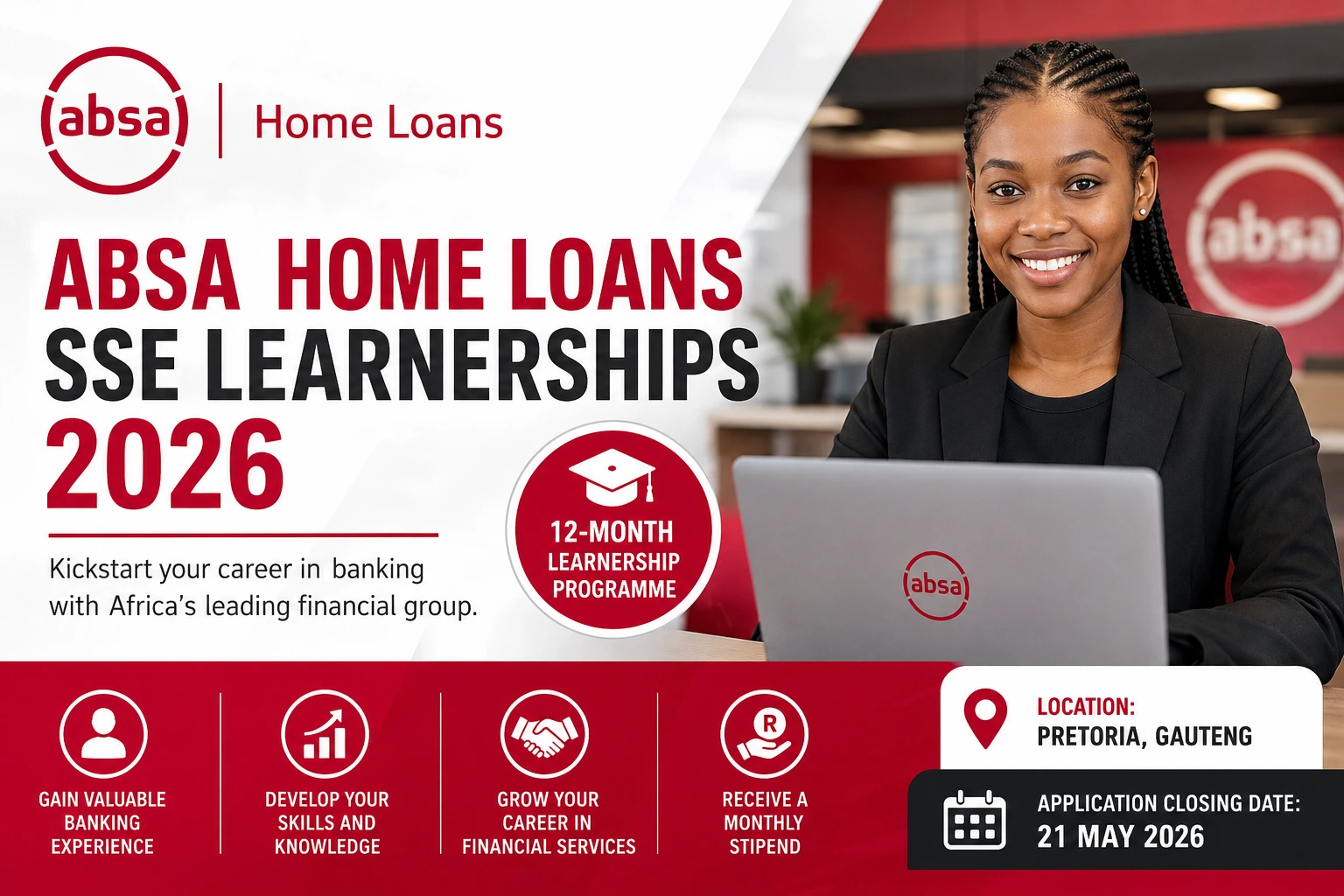
The Absa Group Home Loans SSE Learnerships 2026 programme is attracting attention from graduates across South Africa who want practical banking experience and a pathway into the financial services industry.
For many young people, getting a first job after university or college can feel difficult because employers often ask for experience. Learnership programmes help solve this problem by combining workplace training with structured learning. In this case, Absa is offering graduates the chance to gain real-world exposure within its Home Loans Sales and Service Enablement (SSE) division.
The programme is based in Pretoria and runs for 12 months. Learners receive workplace experience, customer service training, professional development, and exposure to banking operations while working in a corporate environment.
If you are interested in banking, customer support, business operations, or financial services, this learnership could become a strong starting point for your career.
What You Should Know First
The Absa Home Loans SSE Learnerships 2026 programme is a 12-month opportunity for unemployed South African graduates between the ages of 18 and 30.
Successful applicants will:
- Gain banking industry experience
- Receive workplace training
- Develop customer service skills
- Learn about home loan operations
- Work in a hybrid environment
- Receive a monthly stipend
The programme is especially useful for graduates who need practical experience before entering permanent employment in banking or financial services.
Understanding the Absa Home Loans SSE Learnerships 2026
The focus keyword, Absa Home Loans SSE Learnerships 2026, refers to a structured graduate learnership programme offered by Absa Group within its Home Loans division.
“SSE” stands for Sales and Service Enablement. This area helps support customer experiences, internal banking processes, technology systems, and operational efficiency.
Instead of only learning theory, participants work inside a real corporate environment where they are exposed to:
- Customer interactions
- Banking systems
- Home loan processes
- Administrative operations
- Professional communication
- Corporate teamwork
This combination of learning and practical exposure helps graduates build employable skills.
Why Learnerships Matter in South Africa
South Africa has a highly competitive graduate job market. Many young graduates struggle because employers often prefer candidates with experience.
Learnerships bridge that gap.
A banking learnership can help candidates:
Build Work Experience
Many graduates leave university with theoretical knowledge but limited workplace exposure. Learnerships help learners understand how companies operate in real environments.
Improve Employability
Having banking or corporate experience on a CV can improve future job applications significantly.
Develop Professional Skills
Participants usually learn:
- Time management
- Communication
- Professional etiquette
- Customer service
- Problem-solving
- Team collaboration
Explore Career Paths
Some graduates are unsure which career direction to follow. A learnership helps them discover areas they enjoy.
For example, one learner may discover an interest in customer service, while another may become interested in banking operations or home loan administration.
What the Programme Includes
The Absa Home Loans programme combines multiple forms of learning and workplace development.
Academic Learning Modules
Participants complete learning modules designed to improve their understanding of banking operations and customer-focused services.
These modules may include:
- Banking fundamentals
- Financial services concepts
- Customer relationship management
- Workplace professionalism
- Digital banking systems
Theoretical learning helps learners understand why banking systems operate the way they do.
Workplace Training
Workplace training is one of the most valuable parts of the programme.
Learners may be exposed to:
- Administrative processes
- Internal systems
- Client support environments
- Digital banking tools
- Operational workflows
This experience helps graduates become more comfortable in corporate environments.
For example, a learner might assist with handling customer requests, updating records, or supporting operational tasks within the Home Loans division.
Customer Service Exposure
Modern banking relies heavily on customer experience.
Strong communication and service skills are essential because customers expect quick, professional assistance.
Learners may gain experience in:
- Responding to customer queries
- Understanding client needs
- Managing service requests
- Maintaining professionalism under pressure
These skills are transferable to many industries beyond banking.
Professional Development Activities
Professional development helps learners prepare for long-term careers.
This may include:
- Workplace communication
- Presentation skills
- Team collaboration
- Problem-solving
- Professional conduct
Corporate professionalism is often something graduates only fully understand once they enter the workplace.
Eligibility Requirements Explained
The programme has several minimum requirements that applicants must meet.
Age Requirement
Applicants must be between 18 and 30 years old.
This aligns with youth employment and skills development initiatives commonly used in South African learnership programmes.
Educational Qualification
Candidates must hold:
- A completed degree, or
- An NQF Level 7 qualification
This means the programme is designed for graduates rather than current students.
Employment Status
Applicants must:
- Be unemployed
- Not currently studying
- Not be registered for another learnership or internship
This ensures the opportunity goes to graduates who are fully available for the programme.
Additional Requirements
Applicants must also:
- Be computer literate
- Be proficient in English
- Have a clear criminal record
- Have a good credit record
The banking sector often performs background checks because employees may work with sensitive customer and financial information.
Documents You Need for the Application
Preparing documents early can help applicants avoid last-minute stress.
The required documents include:
- Detailed CV
- Certified copy of ID
- Qualifications or certificates
- Proof of address
A clean and professional CV can improve first impressions during recruitment.
See also: Northlink College WIL Internships 2026: A Complete Guide for NCV Graduates
See also: Digby Wells Environmental Bursaries 2027: A Complete Guide for South African Students
How to Create a Strong Learnership CV
Many graduates underestimate how important a CV is.
A good CV should:
Keep Information Clear
Use simple formatting and avoid clutter.
Highlight Relevant Skills
Mention:
- Communication
- Teamwork
- Computer literacy
- Customer service experience
- Leadership roles
Include Achievements
Even academic or volunteer achievements can help demonstrate responsibility and dedication.
Avoid Common Mistakes
Do not:
- Include spelling errors
- Use unprofessional email addresses
- Add unnecessary personal details
A polished CV shows professionalism.
Skills Absa Is Looking For
The programme is not only about qualifications. Absa also wants candidates with strong personal and professional qualities.
Communication Skills
Employees in banking interact with customers and colleagues daily.
Good communication includes:
- Listening carefully
- Speaking clearly
- Writing professionally
Problem-Solving Ability
Banks face operational and customer-related challenges regularly.
Learners who can think critically and solve problems calmly are highly valuable.
Teamwork
Corporate environments depend heavily on collaboration.
A learner may work with different departments, supervisors, and support teams.
Attention to Detail
Banking requires accuracy.
Even small mistakes can affect financial processes or customer information.
Self-Motivation
Learnerships reward individuals who take initiative and remain willing to learn.
Employers value candidates who actively improve themselves rather than waiting for constant instruction.
What You Can Gain From the Programme
The Absa Home Loans SSE Learnerships 2026 programme offers more than just temporary work experience.
Industry Exposure
Participants gain insight into how one of Africa’s major banking groups operates.
This exposure can help graduates understand:
- Corporate culture
- Banking structures
- Professional expectations
- Operational systems
Improved Confidence
Many graduates feel nervous entering professional environments for the first time.
Daily workplace exposure gradually builds confidence in communication and professional interaction.
Career Opportunities
Learnerships sometimes lead to future opportunities.
Even if learners do not receive permanent positions immediately, the experience can strengthen future job applications.
Employers often prefer candidates who already understand corporate environments.
Professional Networking
Learners may build connections with:
- Managers
- Team leaders
- Colleagues
- Industry professionals
Networking can sometimes open doors to future opportunities.
Recruitment Process Explained
The recruitment process may involve several stages.
Online Occupational Assessments
These assessments help evaluate:
- Problem-solving
- Logical reasoning
- Communication abilities
- Workplace suitability
Applicants should complete these carefully and honestly.
Background Checks
Banks commonly verify:
- Identity information
- Criminal records
- Credit history
- Qualifications
This helps maintain trust and security within financial institutions.
Reference Checks
Employers may contact references to confirm information about an applicant’s reliability or previous experience.
Good references can strengthen an application.
Common Misunderstandings About Absa Home Loans SSE Learnerships 2026
“Only finance students can apply”
Not necessarily.
Many banking learnerships accept graduates from different academic backgrounds as long as they meet qualification requirements.
Skills like communication, customer service, and problem-solving are often equally important.
“A learnership is the same as a permanent job”
A learnership is primarily a training and development opportunity.
While it can improve future employment chances, permanent employment is not automatically guaranteed.
“You need previous banking experience”
The programme is specifically designed to provide practical exposure to graduates who may not yet have corporate experience.
“Only top academic achievers are selected”
Academic performance matters, but employers also look for professionalism, attitude, communication skills, and willingness to learn.
Why Banking Learnerships Remain Popular
Banking learnerships remain highly competitive because they provide exposure to stable and respected industries.
The financial services sector offers opportunities in areas such as:
- Retail banking
- Customer service
- Operations
- Digital banking
- Home loans
- Administration
- Financial consulting
Graduates often view banking learnerships as stepping stones toward long-term professional careers.
How to Prepare Before Applying
Applicants can improve their readiness by taking a few practical steps.
Research the Company
Understanding Absa’s services and values can help during assessments or interviews.
Practice Professional Communication
Strong communication matters during every recruitment stage.
Improve Digital Skills
Basic computer literacy is important in modern banking environments.
Prepare Documents Early
Avoid waiting until the deadline approaches.
How to Apply
Apply for Absa Home Loans Learnership 2026
Key Takeaways
- The Absa Home Loans SSE Learnerships 2026 programme is a 12-month graduate opportunity in Pretoria.
- It combines academic learning with practical workplace experience.
- Learners gain exposure to banking operations, customer service, and professional development.
- Applicants must be unemployed South African graduates between 18 and 30 years old.
- The programme can strengthen future employment opportunities in banking and financial services.
- Strong communication, professionalism, and willingness to learn are highly valuable during recruitment.
Frequently Asked Questions
Is the Absa Home Loans SSE Learnership paid?
Yes. Successful learners receive a monthly stipend during the programme.
Can students still studying apply?
No. Applicants must not currently be studying or registered for another learnership or internship.
Does the programme guarantee permanent employment?
No. The programme mainly focuses on workplace training and experience, although it may improve future career opportunities.
Where is the learnership located?
The programme is based in Pretoria, Gauteng, and follows a hybrid work model.
Final Thoughts
The Absa Home Loans SSE Learnerships 2026 programme offers graduates an opportunity to gain valuable workplace exposure in one of South Africa’s major banking environments.
For young people trying to enter the corporate world, practical experience can make a major difference. This learnership helps participants develop professional skills, understand banking operations, and improve their employability in a competitive job market.
Graduates interested in banking, customer service, operations, or financial services may find this programme to be an important first step toward a long-term professional career.
About The Author
