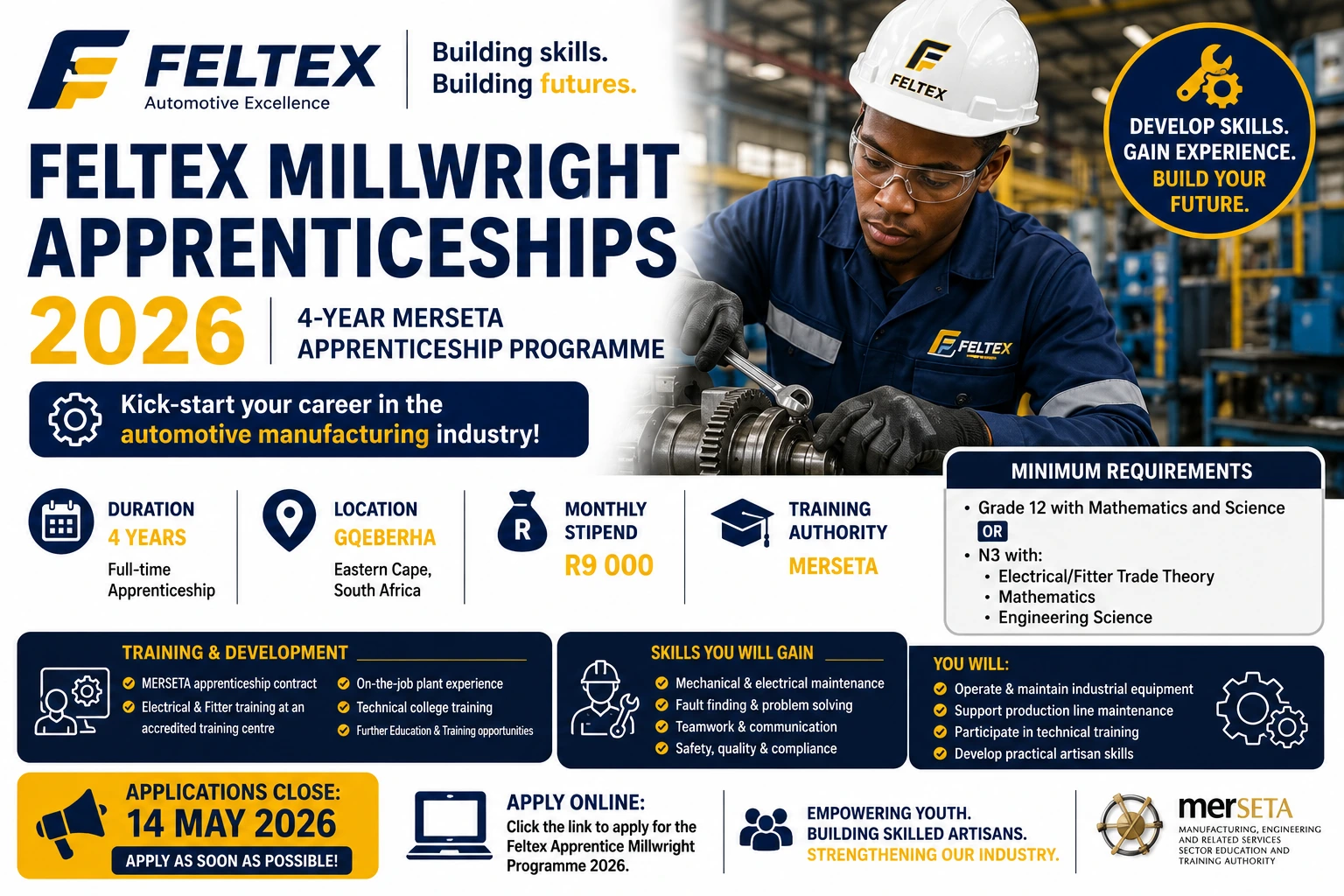
Skilled artisans remain some of the most in-demand professionals in South Africa’s manufacturing and industrial sectors. If you enjoy technical work, problem-solving, and working with machinery, the Feltex Millwright Apprenticeships 2026 could be the perfect opportunity to launch your career.
This apprenticeship programme gives unemployed youth the chance to gain nationally recognised artisan training while working in a real manufacturing environment. With practical experience, technical education, and industry exposure, apprentices can build valuable long-term careers in industrial maintenance and automotive manufacturing.
What You Should Know First
The Feltex Millwright Apprenticeships 2026 is a 4-year MERSETA-accredited apprenticeship programme that combines workplace training and technical education to prepare learners for careers as qualified millwrights.
👉 Key idea: This programme helps technically minded individuals gain practical artisan skills while working in the automotive manufacturing industry.
Understanding the Feltex Millwright Apprenticeship
Feltex operates within South Africa’s automotive manufacturing sector and requires skilled technical professionals to maintain production systems and industrial equipment.
The apprenticeship focuses on developing artisans who can:
- Maintain machinery
- Troubleshoot mechanical and electrical systems
- Support production operations
- Work safely in industrial environments
Apprenticeship Overview
- Programme: Apprentice Millwright Programme
- Company: Feltex
- Department: Maintenance
- Location: Gqeberha, Eastern Cape
- Duration: 4 Years
- Training Authority: MERSETA
Why This Apprenticeship Matters
South Africa continues to face a shortage of qualified artisans in sectors such as:
- Manufacturing
- Engineering
- Industrial maintenance
- Automotive production
The Feltex Millwright Apprenticeships 2026 helps close this skills gap while creating career opportunities for unemployed youth.
What Does a Millwright Actually Do?
A millwright is a skilled artisan responsible for maintaining and repairing industrial machinery.
This role combines:
- Mechanical skills
- Electrical knowledge
- Technical troubleshooting
- Equipment maintenance
Example of Millwright Work
A production machine suddenly stops working during manufacturing.
A millwright may need to:
- Identify the fault
- Test electrical systems
- Repair mechanical components
- Restart and monitor the equipment
👉 This makes millwrights extremely important in manufacturing environments.
How the Feltex Millwright Apprenticeships 2026 Works
The programme combines theory and practical training over four years.
Step 1: Technical Training
Apprentices receive formal training through accredited training centres and technical colleges.
Training includes:
- Electrical systems
- Fitter trade theory
- Engineering science
Step 2: Workplace Experience
Apprentices work directly in the plant environment.
This includes exposure to:
- Production lines
- Industrial equipment
- Maintenance systems
Step 3: MERSETA Development
The programme follows MERSETA standards to ensure nationally recognised artisan development.
Step 4: Further Education Opportunities
Learners may also access additional technical and educational development opportunities throughout the programme.
Minimum Requirements for Feltex Millwright Apprenticeships 2026
Applicants must meet specific academic requirements before applying.
Option 1: Matric Qualification
You must have:
- Grade 12
- Mathematics
- Physical Science
Option 2: N3 Qualification
Applicants may also qualify with:
- Electrical/Fitter Trade Theory
- Mathematics
- Engineering Science
Why These Subjects Matter
Millwright work involves calculations, technical systems, and machinery operation.
👉 Mathematics and Science help learners understand industrial processes and equipment.
Skills and Competencies Needed
Technical ability alone is not enough. Successful apprentices also need strong personal skills.
Important Skills Include:
- Problem-solving ability
- Communication skills
- Teamwork
- Decision-making ability
- Strong learning orientation
Physical Requirements
Applicants should also be:
- Physically fit
- Comfortable working at heights
- Willing to work in industrial environments
Example
An apprentice may need to climb elevated platforms to inspect machinery or repair equipment in noisy production areas.
What You Will Learn During the Apprenticeship
The Feltex Millwright Apprenticeships 2026 provides broad technical exposure.
Electrical Training
You’ll learn:
- Circuit systems
- Fault finding
- Electrical maintenance
Mechanical Maintenance
Training includes:
- Machine repairs
- Mechanical systems
- Preventive maintenance
Production Support
Apprentices help ensure production lines operate efficiently.
This may involve:
- Monitoring equipment
- Responding to breakdowns
- Performing inspections
Workplace Safety
Industrial environments require strict safety standards.
You’ll learn:
- Safety procedures
- Equipment handling
- Risk awareness
Why MERSETA Accreditation Matters
MERSETA is the Manufacturing, Engineering and Related Services Sector Education and Training Authority.
Benefits of MERSETA Accreditation
- Nationally recognised training
- Industry-standard qualifications
- Improved employability
Career Value
MERSETA-accredited artisans are often highly respected across manufacturing and engineering sectors.
Career Opportunities After the Apprenticeship
A millwright qualification can open doors in many industries.
Possible Career Paths Include:
- Manufacturing
- Automotive production
- Mining
- Energy and utilities
- Industrial engineering
Example Roles
After qualification, you may work as:
- Qualified Millwright
- Maintenance Technician
- Industrial Electrician
- Mechanical Maintenance Specialist
Why Skilled Trades Are in Demand
Technical and artisan careers remain essential because industries rely heavily on machinery and automated systems.
Industries Need Skilled Artisans To:
- Reduce downtime
- Maintain productivity
- Repair equipment
- Improve operational efficiency
Long-Term Career Stability
Skilled trades often provide:
- Strong earning potential
- Stable career paths
- Opportunities for advancement
Key Responsibilities During the Apprenticeship
Apprentices actively participate in plant operations.
Responsibilities Include:
- Learning maintenance procedures
- Operating industrial equipment
- Participating in technical training
- Supporting production maintenance activities
Additional Development Areas
Learners also develop:
- Customer service skills
- Team collaboration
- Quality compliance awareness
How to Apply for Feltex Millwright Apprenticeships 2026
Applying correctly is important because artisan programmes are competitive.
Step 1: Prepare Your Documents
Typical documents may include:
- Updated CV
- ID document
- Academic certificates
Step 2: Check Your Qualifications
Ensure you meet the required:
- Matric subjects
OR - N3 requirements
Step 3: Submit Your Application Online
Applications should be completed through the official application platform.
Click here to apply for Feltex Apprentice Millwright Programme 2026:
Step 4: Apply Before the Deadline
- Closing Date: 14 May 2026
Late applications may not be considered.
Common Application Mistakes to Avoid
Many candidates are rejected for avoidable reasons.
Avoid These Problems:
- Missing documents
- Incorrect academic information
- Incomplete applications
- Poorly prepared CVs
See also: Northlink College WIL Internships 2026: A Complete Guide for NCV Graduates
See also: Digby Wells Environmental Bursaries 2027: A Complete Guide for South African Students
Helpful Tip
Before submitting:
- Review all uploaded documents
- Ensure certificates are clear and readable
- Double-check contact details
Common Misunderstandings About Feltex Millwright Apprenticeships 2026
There are many misconceptions about artisan careers.
“Trades are only for people who struggle academically”
False.
👉 Millwright work requires strong technical thinking and problem-solving.
“Apprenticeships are not professional careers”
Incorrect.
👉 Qualified artisans are highly respected professionals.
“You only do manual labour”
Wrong.
👉 Millwrights work with advanced industrial systems and technology.
“Manufacturing jobs have no future”
Not true.
👉 Skilled technical workers remain essential in modern industries.
Why This Apprenticeship Matters in South Africa
South Africa continues to need more qualified artisans to support industrial growth and infrastructure development.
The Feltex Millwright Apprenticeships 2026 helps by:
- Developing technical skills
- Supporting youth employment
- Strengthening manufacturing industries
- Creating future artisans
Key Takeaways
- The Feltex Millwright Apprenticeships 2026 is a 4-year MERSETA-accredited programme
- Offers technical training and workplace experience
- Open to candidates with Matric or N3 qualifications
- Focuses on electrical and mechanical maintenance skills
- Provides exposure to automotive manufacturing environments
- Applications close on 14 May 2026
Frequently Asked Questions (FAQs)
1. Do I need previous work experience to apply?
No.
The programme is designed for learners entering the artisan field.
2. What qualification will I gain?
You will complete a MERSETA-recognised apprenticeship programme.
3. Can Matric learners apply?
Yes.
If you have Mathematics and Science.
4. Is this apprenticeship only for mechanical work?
No.
Millwrights work with both electrical and mechanical systems.
Final Thoughts
The Feltex Millwright Apprenticeships 2026 offers a valuable opportunity for technically minded individuals who want to build careers in manufacturing and industrial maintenance. Through structured training, workplace experience, and MERSETA accreditation, the programme helps learners develop highly sought-after artisan skills.
If you enjoy technical challenges, working with machinery, and solving problems, this apprenticeship could become the foundation for a stable and rewarding career.
About The Author
