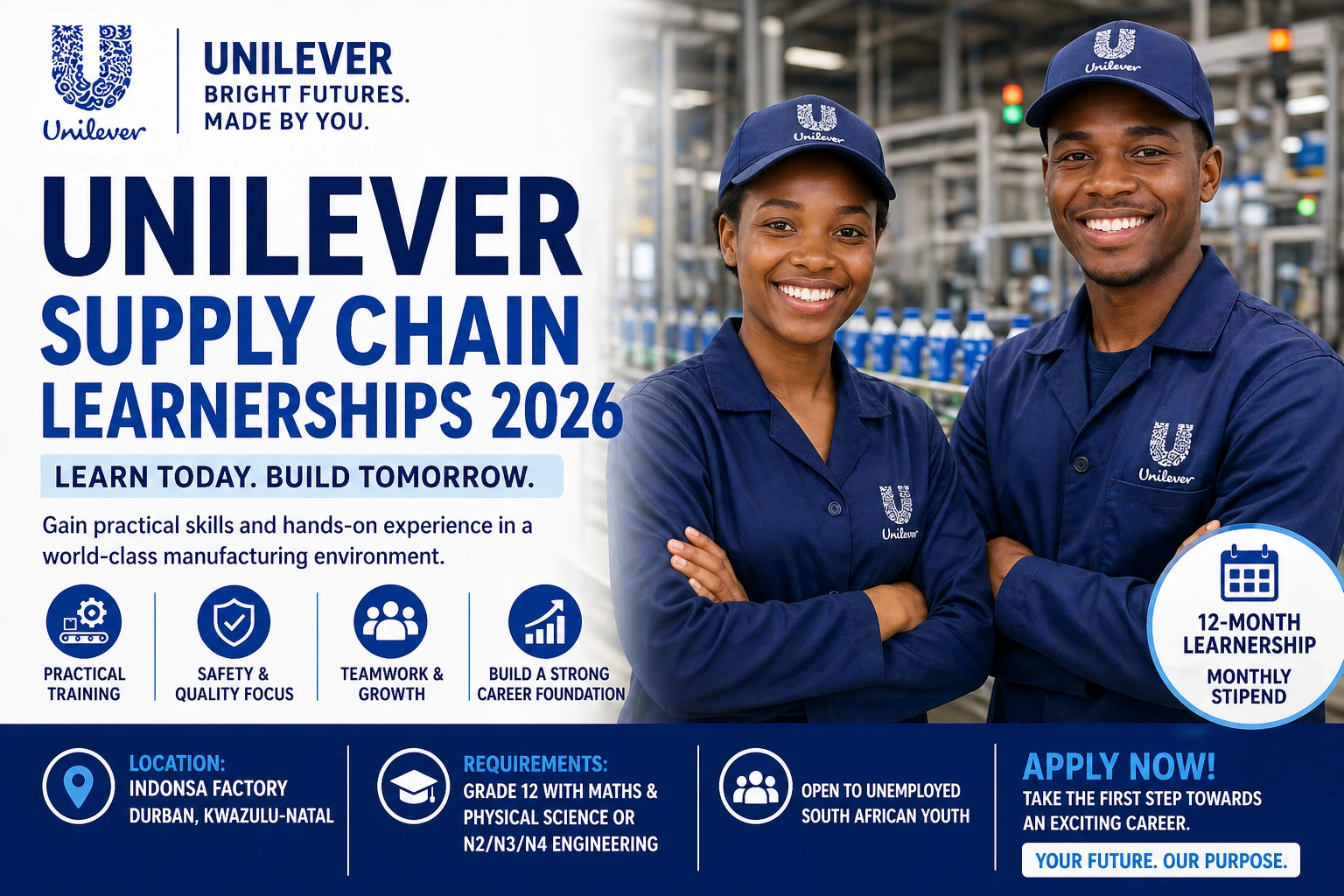
The Unilever Supply Chain Learnerships 2026 programme is an exciting opportunity for South African youth looking to enter the manufacturing and supply chain industry. If you’ve completed Matric and want hands-on experience in a real factory environment, this learnership offers a practical path into one of the world’s most essential industries.
In a job market where experience is often required even for entry-level roles, learnerships like this provide a crucial stepping stone. You don’t just learn theory—you work directly with production systems, machinery, and teams. For many, this becomes the foundation of a long-term career in operations, logistics, or industrial engineering.
What You Should Know First
The Unilever Supply Chain Learnerships 2026 is a 12-month, full-time programme based at the Indonsa Factory in Durban.
- Duration: 12 months
- Location: Durban, KwaZulu-Natal
- Focus: Supply chain and production operations
- Stipend: Monthly allowance provided
It’s designed for unemployed youth who want practical training in factory processes, quality control, and automated systems.
Understanding the Unilever Supply Chain Learnership Programme
At its core, this programme is about learning by doing. Instead of sitting in a classroom, participants work in a real production environment.
Why This Learnership Matters
South Africa’s manufacturing sector plays a major role in the economy, but it requires skilled workers who understand:
- Production systems
- Quality standards
- Safety protocols
This learnership helps bridge the gap between education and employment by giving candidates direct exposure to these areas.
What You Will Learn: Skills That Matter
The Unilever Supply Chain Learnerships 2026 focuses on practical, industry-relevant skills.
Core Learning Areas
- Operating automated packaging machines
- Understanding production line workflows
- Maintaining safety and hygiene standards
- Monitoring product quality
Step-by-Step Example: A Typical Task
Let’s say you’re assigned to a packaging line:
- Pre-start checks – Ensure machines are clean and safe
- Setup – Load materials and configure equipment
- Monitoring – Watch for defects or irregularities
- Adjustment – Fix minor issues to maintain efficiency
- Reporting – Record performance and any problems
This structured approach helps learners understand how factories operate efficiently.
Daily Responsibilities During the Programme
This isn’t a passive learning experience—you’ll actively contribute to operations.
Key Tasks Include
- Running and cleaning production lines
- Preparing raw materials
- Conducting safety inspections
- Monitoring packaging quality
- Identifying and resolving process issues
Why These Tasks Matter
Each responsibility builds a specific skill:
- Cleaning tasks → Hygiene and compliance
- Quality checks → Attention to detail
- Problem-solving → Critical thinking
Eligibility Requirements Explained
Before applying, it’s important to understand whether you qualify.
Minimum Requirements
To apply for the Unilever Supply Chain Learnerships 2026, you need:
- Grade 12 (Matric) with Mathematics and Physical Science
OR - N2/N3/N4 Engineering qualification
Why These Requirements Exist
Supply chain and production roles involve:
- Measurements and calculations
- Technical understanding
- Problem-solving
Mathematics and science provide the foundation for these skills.
Skills and Attributes That Will Help You Succeed
Meeting the minimum requirements is only part of the equation. Your attitude and mindset matter just as much.
Key Traits
- Strong work ethic
- Reliability
- Attention to detail
- Ability to work in a team
- Willingness to learn
Real-World Example
Imagine a production line where one mistake can affect thousands of products.
Being detail-oriented ensures quality is maintained and waste is reduced.
Work Environment: What to Expect
The learnership takes place in a factory setting, which is very different from an office environment.
Key Characteristics
- Fast-paced operations
- Hands-on tasks
- Strict safety rules
- Team-based workflows
Important Note
You must already live in or relocate to Durban at your own cost.
No relocation assistance is provided.
Step-by-Step Application Guide
Applying correctly increases your chances of being shortlisted.
Step 1: Prepare Your Documents
Typical requirements include:
- Updated CV
- Certified copies of qualifications
- ID document
Step 2: Apply Online
Click here to apply for Unilever Unemployed Learner Programme 2026
Step 3: Apply Early
No closing date is specified, which means:
- Positions may fill quickly
- Early applications have an advantage
Step 4: Wait for Shortlisting
Only selected candidates will be contacted, so ensure your application stands out.
Why Choose Unilever Supply Chain Learnerships 2026?
This programme offers several advantages compared to other entry-level opportunities.
1. Global Company Experience
Unilever is an internationally recognised company, which adds value to your CV.
2. Practical Industry Skills
You gain real-world experience, not just theory.
3. Career Foundation
After completing the programme, you can pursue roles in:
- Manufacturing
- Logistics
- Operations management
Common Misunderstandings About Unilever Supply Chain Learnerships 2026
“It’s Just Basic Factory Work”
While it involves physical tasks, the programme also teaches:
- Technical skills
- Process optimisation
- Quality control
“You Don’t Need Any Academic Background”
Mathematics and science are important because production processes rely on precision.
“Learnerships Don’t Lead to Careers”
Many professionals start with learnerships and grow into:
- Supervisory roles
- Technical specialists
- Operations managers
“It’s Easy to Get In”
Competition can be high, especially for well-known companies like Unilever.
How This Learnership Builds Your Career
Think of this programme as a starting point, not the final destination.
Career Path Example
- Learnership completion
- Entry-level production role
- Team leader or supervisor
- Operations or supply chain manager
Transferable Skills
The skills you gain can be used in multiple industries, including:
- Food production
- Retail logistics
- Manufacturing
see also: Old Mutual Actuarial Science Bursary 2026: A Complete Guide for South African Students
see also: SAICA Thuthuka Bursary 2027: A Complete Guide for South African Students
Key Takeaways
- The Unilever Supply Chain Learnerships 2026 is a 12-month programme focused on practical training.
- It provides hands-on experience in factory operations and supply chain processes.
- Applicants need Matric with Maths and Science or an engineering qualification.
- The programme offers valuable skills, a stipend, and career growth opportunities.
- Applying early increases your chances of selection.
Frequently Asked Questions (FAQs)
1. Do I need prior work experience to apply?
No. This programme is designed for unemployed youth with no prior experience.
2. Is the learnership paid?
Yes. A monthly stipend is provided.
3. Can I apply if I don’t live in Durban?
You can apply, but you must relocate at your own cost if selected.
4. What happens after the programme ends?
While employment is not guaranteed, the experience significantly improves your job prospects.
Final Thoughts
The Unilever Supply Chain Learnerships 2026 offers a practical and realistic pathway into the manufacturing industry. By combining hands-on training with real-world responsibilities, it prepares participants for the demands of modern production environments.
If you’re serious about building a career in supply chain or manufacturing, this learnership is worth pursuing. With the right mindset and preparation, it can open doors to long-term opportunities in a growing and essential sector.
Ready to publish.
About The Author
