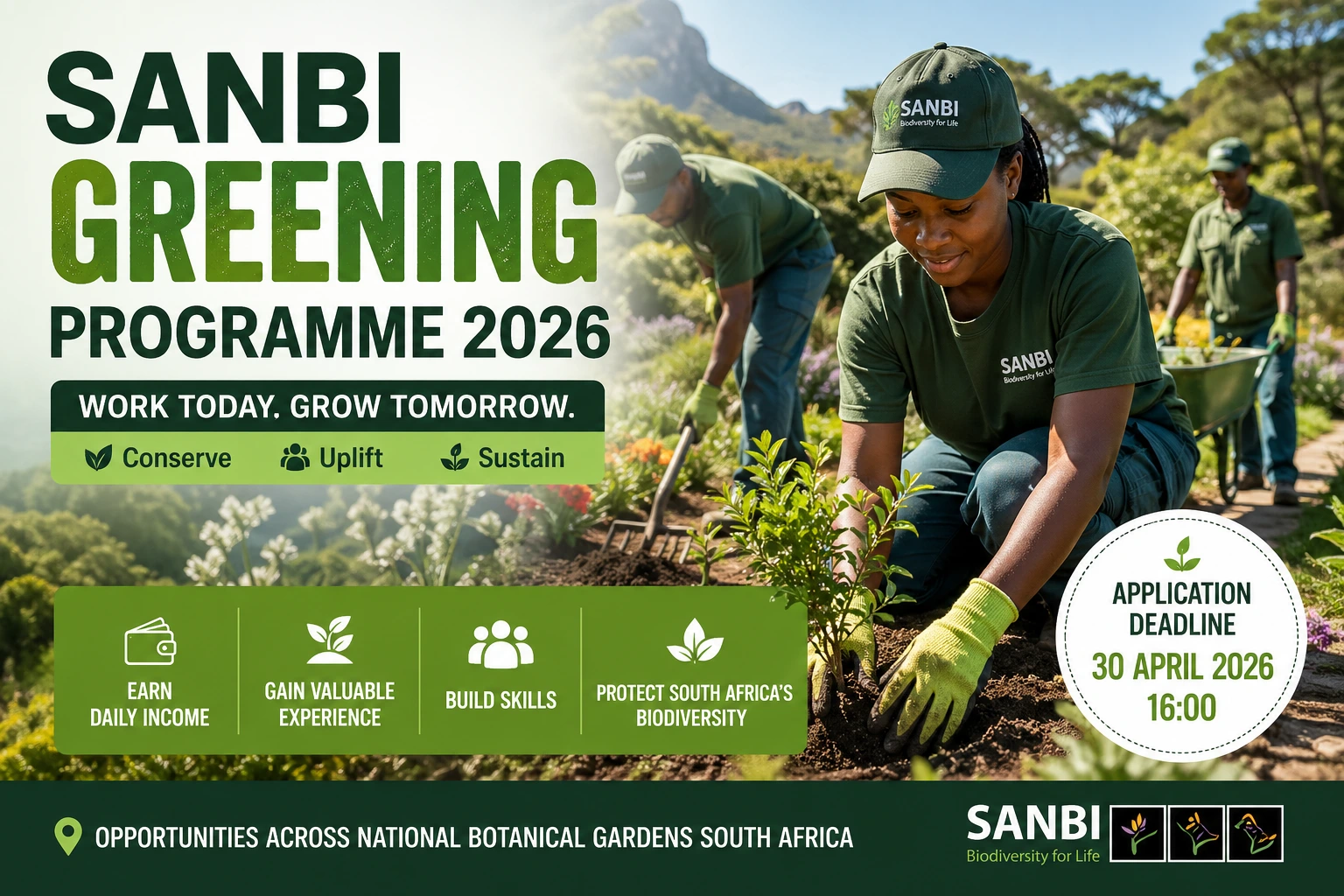
The SANBI Greening Programme 2026 is an initiative designed to provide short-term employment while promoting environmental sustainability across South Africa. If you’re unemployed and looking for practical work experience, income, and a chance to contribute to biodiversity conservation, this programme offers a valuable opportunity.
Beyond just a job, the programme connects people with nature-focused work, helping maintain botanical gardens, protect ecosystems, and uplift communities. With the growing importance of environmental conservation and job creation, understanding how this programme works can give you a real advantage when applying.
What You Should Know First
The SANBI Greening Programme 2026 is part of the Expanded Public Works Programme (EPWP), aimed at reducing unemployment while improving public spaces and environmental health.
Here’s the key idea:
You can earn an income, gain practical skills, and contribute to environmental conservation—even without prior experience.
- Application deadline: 30 April 2026 (16:00)
- Open to unemployed South Africans
- Offers both skilled and unskilled positions
- Work is based at national botanical gardens across the country
- Contracts run until 31 March 2027
What Is the SANBI Greening Programme?
The SANBI Greening Programme 2026 is a government-supported initiative focused on combining employment with environmental care. It operates under the EPWP framework, which aims to create job opportunities while delivering public services.
What makes this programme unique?
Unlike traditional jobs, this programme integrates:
- Environmental maintenance
- Biodiversity conservation
- Community development
- Skills development through hands-on work
Participants don’t just earn money—they gain exposure to real-world environmental work that can open doors in landscaping, conservation, and general maintenance industries.
Types of Opportunities Available
The programme offers two main categories of roles, making it accessible to a wide range of applicants.
1. Unskilled Participants
These roles are ideal if you have little to no formal work experience.
- Stipend: R150 per day
- Contract Duration: Until 31 March 2027
Typical work includes:
- Cleaning and maintaining gardens
- Assisting with planting
- Basic outdoor labour
2. Skilled Participants
If you already have practical experience, you may qualify for skilled roles.
- Stipend: R200 per day
- Contract Duration: Until 31 March 2027
Examples of required skills:
- Chainsaw or brush cutter operation
- Herbicide application
- Bricklaying, paving, or painting
- General construction or maintenance work
Step-by-step example
If you’ve previously worked in construction:
- You apply as a skilled participant
- You highlight your paving or bricklaying experience
- You may be assigned to maintain pathways or infrastructure in a botanical garden
Where the Programme Takes Place
The SANBI Greening Programme 2026 is available across multiple provinces, giving applicants from different regions a chance to participate.
Key locations include:
- Gauteng: Pretoria and Roodepoort
- Limpopo: Thohoyandou and Mokopane
- KwaZulu-Natal: Pietermaritzburg
- Mpumalanga: Mbombela
- Free State: Bloemfontein
- Western Cape: Kirstenbosch and surrounding gardens
- Northern Cape: Hantam
- Eastern Cape: Kwelera
Important note
You must apply for a location within your local municipality. This ensures the programme benefits local communities directly.
Minimum Requirements to Apply
Before applying, make sure you meet all the eligibility criteria.
Basic requirements:
- Must be a South African citizen
- Must live near the selected botanical garden
- Must provide proof of residence
- Must be physically fit for outdoor work
- Must be able to work independently and in a team
- Must be available for interviews if shortlisted
Why these requirements matter
This is hands-on work, often outdoors and physically demanding. For example:
- You may spend hours planting trees under the sun
- You might remove invasive plants or carry equipment
Being physically prepared is essential for success in the programme.
Duties and Responsibilities Explained
Once accepted, your daily tasks will depend on your role, but most participants contribute to maintaining and improving natural spaces.
Core responsibilities include:
- Maintaining gardens and landscapes
- Removing invasive plant species
- Cleaning pathways and public areas
- Assisting with tree planting
- Supporting conservation activities
Real-world example
A typical day might involve:
- Starting with a team briefing
- Moving to assigned garden areas
- Clearing invasive plants
- Planting new trees or shrubs
- Cleaning walkways before visitors arrive
This structured routine helps develop discipline and teamwork skills.
Required Documents for Application
To apply for the SANBI Greening Programme 2026, you need to prepare a complete application package.
Required documents:
- Completed SANBI application form
- Updated CV (maximum 2 pages)
- Proof of residence
Tips for success
- Keep your CV simple and relevant
- Highlight any physical or outdoor work experience
- Double-check that all documents are included
Missing documents can lead to immediate disqualification.
How to Apply (Step-by-Step)
Applying correctly is crucial if you want to be considered.
Step 1: Get the application form
Click here to download SANBI application form
Step 2: Prepare your documents
Make sure your CV and proof of residence are ready.
Step 3: Submit your application
You have two options:
- Email: epwp@sanbi.org.za
- Hand delivery or post: Submit to the relevant botanical garden office
Step 4: Use the correct reference number
Each location has a specific reference number—using the wrong one can disqualify your application.
Step 5: Submit before the deadline
All applications must be submitted by 30 April 2026 at 16:00.
see also: Old Mutual Actuarial Science Bursary 2026: A Complete Guide for South African Students
see also: SAICA Thuthuka Bursary 2027: A Complete Guide for South African Students
Why the SANBI Greening Programme Matters
The SANBI Greening Programme 2026 is more than just a job opportunity—it plays a role in addressing national challenges.
Key benefits:
1. Income generation
Participants earn a daily stipend, providing financial relief for unemployed individuals.
2. Skills development
You gain practical skills that can be used in:
- Landscaping
- Construction
- Environmental management
3. Environmental protection
Your work directly contributes to:
- Preserving biodiversity
- Maintaining public green spaces
- Combating invasive plant species
4. Community upliftment
The programme improves shared spaces, benefiting local communities.
Common Misunderstandings About SANBI Greening Programme 2026
“You need experience to apply”
Not true. Unskilled roles are specifically designed for people without experience.
“It’s a permanent job”
The programme is temporary, ending on 31 March 2027.
“Only environmental experts should apply”
No. Most tasks are practical and can be learned on the job.
“You can apply anywhere in the country”
Incorrect. You must apply within your local municipality.
“It’s just manual labour with no benefits”
While it is physical work, the programme offers valuable experience and skill-building opportunities.
Key Takeaways
- The SANBI Greening Programme 2026 offers short-term employment through EPWP
- Both skilled and unskilled applicants can apply
- Work focuses on environmental conservation and maintenance
- Applicants must live near the selected location
- The deadline is 30 April 2026 at 16:00
- The programme provides income, skills, and experience
Frequently Asked Questions (FAQs)
1. Can I apply if I have no work experience?
Yes. The programme includes unskilled roles specifically for beginners.
2. How much will I earn?
Unskilled: R150 per day
Skilled: R200 per day
3. What happens if I don’t hear back?
If you receive no feedback within 30 days, your application was unsuccessful.
4. Can I apply to more than one location?
It’s best to apply only to the location within your municipality to avoid disqualification.
Final Thoughts
The SANBI Greening Programme 2026 is a practical opportunity for unemployed South Africans to earn income while contributing to environmental sustainability. Whether you’re starting from scratch or already have hands-on skills, the programme offers a pathway to growth, experience, and meaningful work.
If you meet the requirements, applying could be a smart step toward building your future—while helping protect South Africa’s natural heritage at the same time.
Ready to publish.
About The Author
