.
For Millions of Students, NSFAS Is the Difference Between Studying and Staying Home
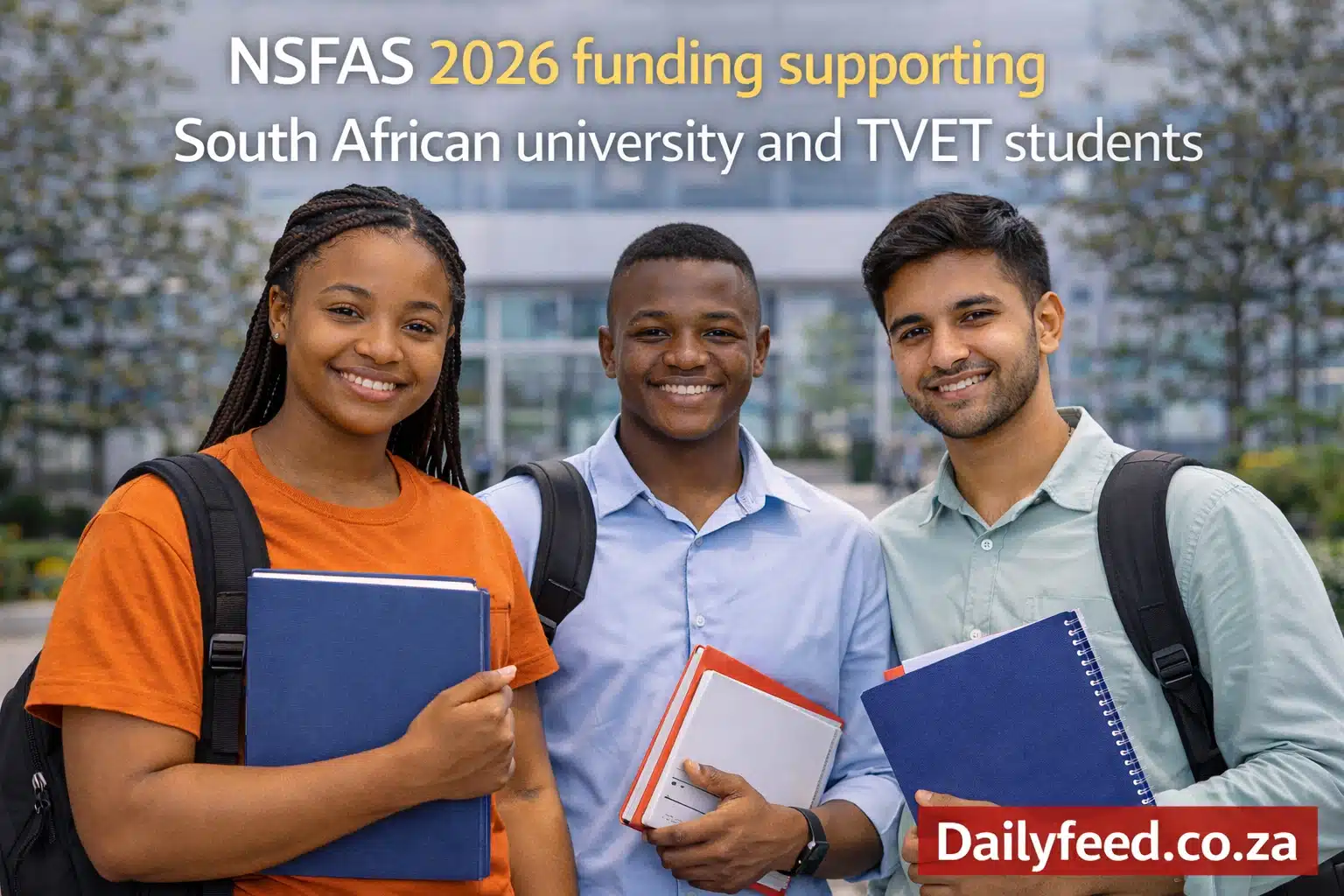
Every year, thousands of South African students sit with acceptance letters but no way to pay. Registration deadlines pass, fees increase, and families are forced to make impossible choices. In that space between hope and reality, NSFAS 2026 remains one of the most talked-about — and most relied-on — student funding systems in the country.
The National Student Financial Aid Scheme (NSFAS) continues to shape who gets access to higher education, who stays enrolled, and who is forced to drop out. But confusion around applications, allowances, and funding rules remains widespread.
This article breaks down everything students and parents need to know about NSFAS in 2026 — clearly, honestly, and without hype.
What NSFAS 2026 Is and Who It Is Meant to Support
NSFAS is a government-funded financial aid scheme designed to support poor and working-class students studying at public universities and TVET colleges in South Africa. Its goal is simple: to remove financial barriers for students who qualify academically but cannot afford tertiary education.
Funding is primarily aimed at:
- Students from households earning R350,000 or less per year
- SASSA grant beneficiaries
- Students registered at public universities and TVET colleges
- South African citizens with valid ID numbers
NSFAS funding is not automatic. Students must apply, meet eligibility requirements, and remain academically active to continue receiving support.
How NSFAS Funding Works in Practice
One of the most searched questions online is: “What does NSFAS cover?” The answer depends on the institution, but generally, NSFAS funding includes:
- Tuition fees
- Accommodation (institutional or accredited private)
- Living allowance
- Transport allowance (for students living at home)
- Learning materials allowance
For many students, these allowances are not luxuries. They cover transport, meals, data, and basic survival while studying full-time.
However, delays in payments and registration confirmations have been a recurring issue, often leaving students financially stranded at the start of the academic year.
ALSO LEARN ABOUT NSFAS Funding Status
NSFAS Applications, Status Checks, and Common Problems
NSFAS Application Process
NSFAS applications are submitted online through the official NSFAS portal. Applicants must upload supporting documents such as:
- Certified copy of ID
- Parent or guardian proof of income (if applicable)
- Consent forms
Applications usually open months before the academic year, but many students apply late or struggle with document verification.
Checking NSFAS Status
Students regularly search for terms like “check NSFAS status” or “NSFAS application status”. The system allows applicants to track progress, but status messages can be confusing, especially when applications are provisionally funded or awaiting registration data from institutions.
Ongoing Challenges
Despite improvements, NSFAS continues to face criticism for:
- Delayed allowance payments
- Registration data mismatches
- Communication gaps between institutions and NSFAS
- Sudden funding rejections due to academic progression rules
For students already under financial pressure, these issues often create anxiety and uncertainty.
Academic Progression and Why Students Lose NSFAS Funding
One of the least understood aspects of NSFAS is the academic progression rule. Funding is not guaranteed indefinitely. Students are expected to meet minimum academic requirements to continue receiving support.
Reasons students may lose NSFAS funding include:
- Failing too many modules
- Exceeding the maximum funded years
- Deregistering or changing qualifications without approval
- Providing incorrect household income information
This rule is often controversial, especially for students dealing with mental health challenges, family responsibilities, or financial instability while studying.
NSFAS, Youth Unemployment, and the Bigger Picture
South Africa’s youth unemployment crisis makes NSFAS more than just a bursary scheme. For many, it is the only path toward employability.
Without tertiary qualifications, young people are often locked out of entry-level jobs that require diplomas or degrees. NSFAS-funded education has helped thousands of graduates enter fields such as teaching, healthcare, IT, and finance.
Still, funding alone is not enough. Students also need academic support, mental health resources, and clear communication — areas where institutions and funding bodies still need improvement.
What Students Should Do to Avoid NSFAS Problems
While not everything is in a student’s control, there are steps that reduce risk:
- Apply early and upload clear, certified documents
- Regularly check NSFAS status updates
- Ensure registration details match institutional records
- Understand academic progression requirements
- Use official NSFAS communication channels only
Avoid relying on social media rumours or unofficial “NSFAS agents,” as scams remain common during application periods.
FAQs: NSFAS in 2026
Is NSFAS a loan or a bursary?
NSFAS funding is structured as a bursary for qualifying students who meet progression rules.
Can I apply for NSFAS if I already studied before?
Yes, as long as you have not exceeded the maximum funded years and still meet eligibility criteria.
Does NSFAS fund private colleges?
No. NSFAS only funds students at public universities and TVET colleges.
What happens if my NSFAS allowance is late?
Students should report delays to their institution’s financial aid office, which liaises directly with NSFAS.
Final Thoughts: Why NSFAS Remains Critical
NSFAS is far from perfect. It is often criticised, sometimes rightly so. But for millions of South African students, it remains the only bridge between poverty and possibility.
As higher education costs continue to rise and jobs become more competitive, access to funding is no longer optional — it is essential. Understanding how NSFAS works, what it covers, and how to stay funded can make the difference between graduating and dropping out.
For now, NSFAS remains one of the most powerful — and most debated — tools in South Africa’s education system.
About The Author

2 thoughts on “Why NSFAS 2026 Still Matters for Students Struggling to Afford Higher Education”