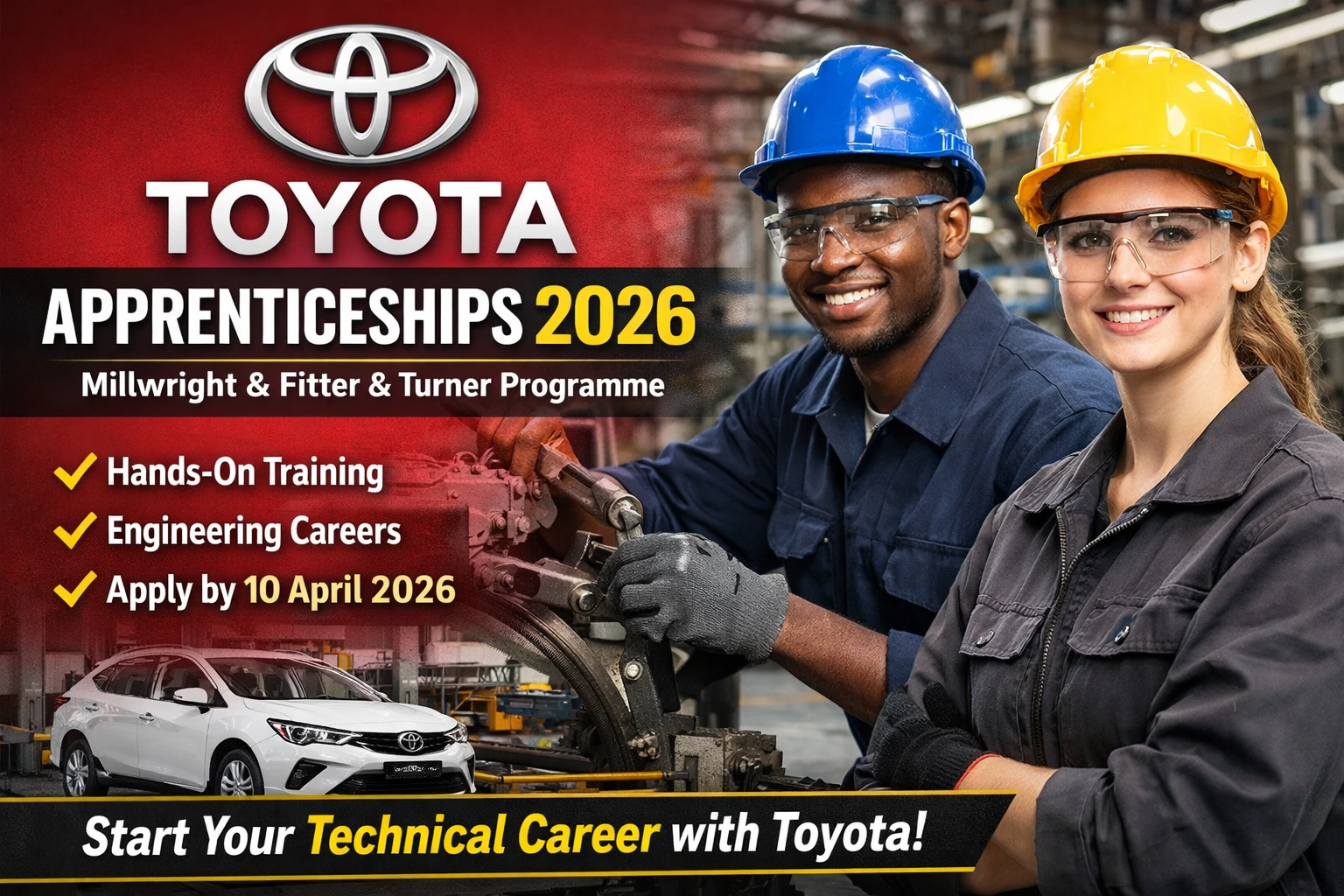
The Toyota Apprenticeships 2026 programme is one of the most practical pathways into South Africa’s engineering and manufacturing sector. If you’re looking to build a career as a qualified artisan, this opportunity offers structured training, real-world experience, and exposure to one of the country’s leading automotive companies, Toyota South Africa Motors.
For many students finishing technical matric or NTC3, the biggest challenge is moving from theory into hands-on work. That’s exactly where this apprenticeship comes in — it bridges that gap. Instead of just learning in a classroom, you’ll be working in a real production environment in Prospecton, Durban, gaining skills that employers actually need.
If you’re serious about becoming a millwright or fitter & turner, this guide will help you understand everything — from requirements to benefits, and what to expect.
What You Should Know First
Before diving into the details, here are the key facts about the Toyota Apprenticeships 2026 programme:
- Application deadline: 10 April 2026
- Location: Prospecton, Durban (KwaZulu-Natal)
- Programme type: Contract-based apprenticeship
- Trades offered: Millwright and Fitter & Turner
- Salary: Hourly-based (exact amount not stated in the official advert)
- Important: Permanent employment is not guaranteed
This programme is highly competitive and designed for candidates with strong technical foundations and a genuine interest in engineering.
Understanding the Toyota Apprenticeship Programme
What is an Apprenticeship?
An apprenticeship is a structured training programme that combines:
- Classroom-based learning
- Practical, hands-on experience
- Industry exposure
Unlike university-only education, apprenticeships focus heavily on skills development. By the end of the programme, you’re expected to be job-ready in your trade.
At Toyota South Africa Motors, this training takes place within their Technical Training Centre, where learners are guided by experienced professionals.
Trades Available in Toyota Apprenticeships 2026
1. Millwright Apprenticeship
A millwright is a multi-skilled artisan who works with both electrical and mechanical systems.
What You’ll Learn:
- Installing and maintaining machinery
- Electrical systems troubleshooting
- Mechanical repairs
- Automation systems basics
Requirements:
- NTC3 or Technical Matric with:
- Mathematics
- Engineering Science
- Electrical or Mechanical Trade Theory
- Technical Drawing / Graphical Design
- Workshop experience (advantageous)
This trade is ideal if you enjoy both electrical and mechanical work.
2. Fitter & Turner Apprenticeship
A fitter & turner focuses more on mechanical systems, precision engineering, and manufacturing components.
What You’ll Learn:
- Operating machinery like lathes
- Fabricating metal components
- Reading technical drawings
- Precision measurement and fitting
Requirements:
- NTC3 or Technical Matric with:
- Mathematics
- Engineering Science
- Fitter & Turner Trade Theory
- Technical Drawing
- Workshop experience (advantageous)
This is perfect if you prefer hands-on mechanical work and manufacturing.
Step-by-Step: How the Programme Works
Understanding the structure helps you prepare better.
Step 1: Application
You submit your application before 10 April 2026.
Step 2: Shortlisting
Only selected candidates will be contacted — this is important.
Step 3: Training Phase
You begin structured training, including:
- Theory sessions
- Practical workshops
- On-site manufacturing exposure
Step 4: Workplace Experience
You’ll work in a real factory environment, learning how systems operate daily.
Step 5: Completion
After completing the programme, you gain:
- Industry experience
- Practical skills
- Improved employability
⚠️ Note: Employment after completion depends on available vacancies.
Key Skills Toyota Looks For
Technical qualifications alone are not enough. Successful applicants usually demonstrate:
- Strong problem-solving ability
- Attention to detail
- Good communication skills
- Ability to work independently and in teams
- Commitment to learning
- Adaptability and perseverance
These are critical in fast-paced manufacturing environments.
How to Apply
Click here to apply for the Toyota Apprenticeship Programme 2026:
Programme Benefits: Why This Opportunity Matters
The Toyota Apprenticeships 2026 programme offers several advantages:
1. Real Industry Experience
You’ll work inside one of South Africa’s top automotive manufacturing plants.
2. High-Demand Skills
Trades like millwright and fitter & turner are in demand across industries:
- Manufacturing
- Mining
- Energy
- Engineering firms
3. Improved Employability
Even without guaranteed employment, this experience significantly boosts your CV.
4. Exposure to Industry Standards
You’ll learn:
- Safety protocols
- Industrial systems
- Modern manufacturing processes
What Makes Toyota Apprenticeships Competitive?
Many applicants underestimate this part.
Here’s what gives candidates an edge:
- Strong marks in Mathematics and Engineering Science
- Practical workshop exposure
- Understanding of technical drawings
- Clear motivation for choosing a trade
- A professional CV
If you treat this like a serious career step — not just “another application” — your chances improve.
Common Misunderstandings About Toyota Apprenticeships 2026
1. “It guarantees a job”
❌ False
There is no guarantee of permanent employment after completion.
2. “You don’t need experience”
❌ Misleading
While workshop experience is “advantageous,” it can significantly strengthen your application.
3. “It’s only for top students”
❌ Not entirely true
While good marks help, attitude and commitment matter just as much.
4. “It’s just like school”
❌ Incorrect
This is a work environment, not just a classroom. Expectations are higher.
How to Prepare for Toyota Apprenticeships 2026
1. Strengthen Your Technical Foundation
Focus on:
- Mathematics
- Engineering Science
- Trade theory
2. Gain Practical Exposure
If possible:
- Volunteer in workshops
- Work on small mechanical/electrical projects
3. Build a Strong CV
Include:
- Technical subjects
- Any hands-on experience
- Relevant skills
4. Prepare for Assessments or Interviews
Be ready to:
- Explain why you chose the trade
- Demonstrate problem-solving thinking
- Show willingness to learn
Key Takeaways
- The Toyota Apprenticeships 2026 programme is a strong entry into engineering careers
- It offers hands-on training in real manufacturing environments
- Trades include Millwright and Fitter & Turner
- Applicants need NTC3 or Technical Matric with relevant subjects
- Employment is not guaranteed, but experience is highly valuable
- Strong technical skills + good attitude = better chances of selection
SEE ALSO: PwC Graduate Internships 2026: Complete Guide for South African Graduates
SEE ALSO: ICASA Graduate Internships 2026: Complete Guide for South African Graduates
Frequently Asked Questions (FAQs)
1. Is the Toyota Apprenticeships 2026 programme paid?
Yes, participants are paid on an hourly basis, but the exact rate is not stated in the official advert.
2. Do I need prior work experience to apply?
No, but workshop experience is advantageous and can improve your chances.
3. Can I apply with a Technical Matric?
Yes, as long as you meet the required subjects like Mathematics and Engineering Science.
4. Will I get a permanent job after completing the apprenticeship?
No. Employment depends on available vacancies at the time.
Final Thoughts
The Toyota Apprenticeships 2026 programme is more than just training — it’s a practical stepping stone into South Africa’s engineering and manufacturing industries. For students with a technical background, it provides a rare opportunity to gain real-world experience with Toyota South Africa Motors.
While there are no guarantees of employment, the skills and exposure you gain can open doors across multiple industries. If you meet the requirements and are committed to learning, this is an opportunity worth taking seriously.
About The Author
