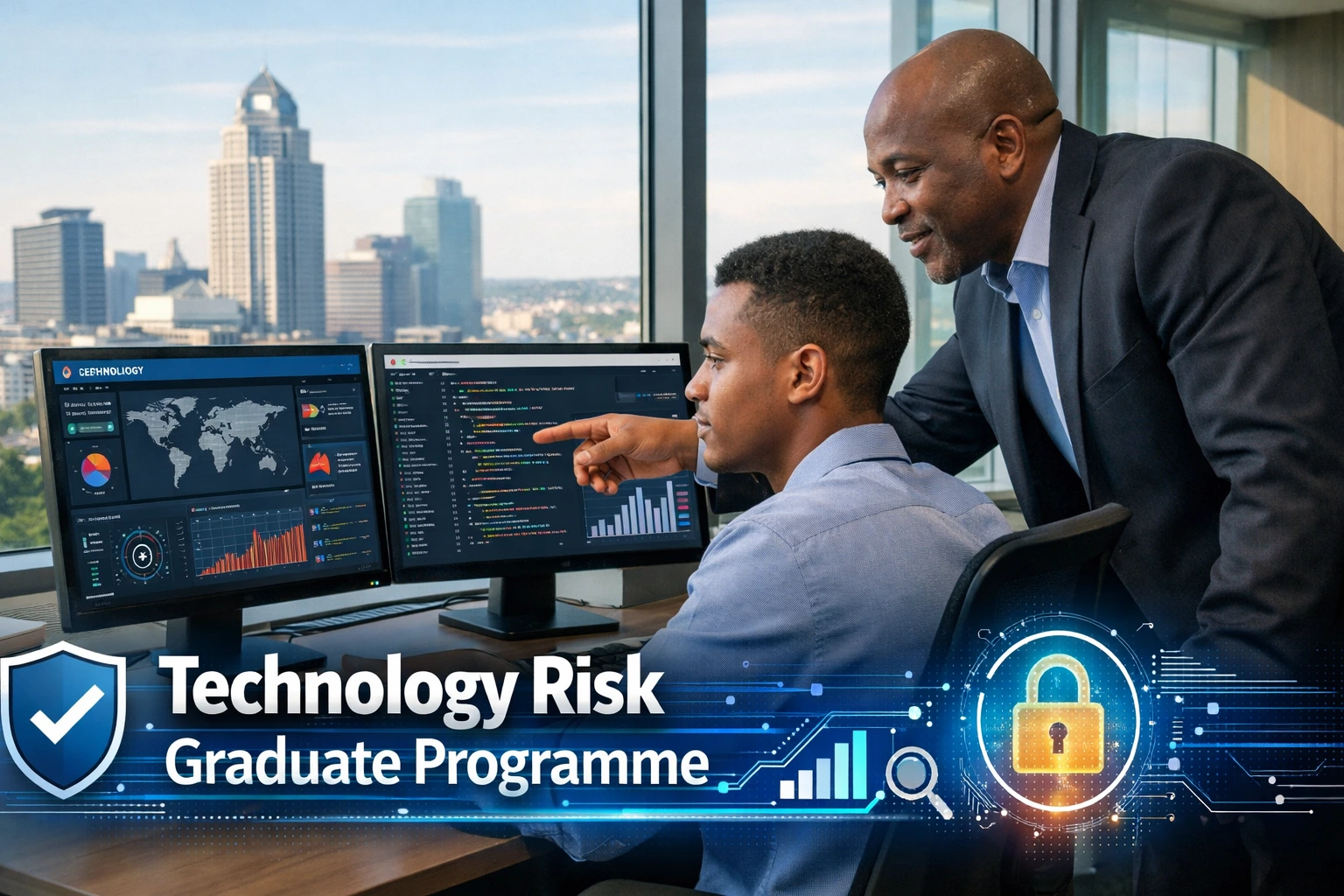
Explore the Technology Risk Graduate Programme JHB FY2027 at KPMG. Learn requirements, skills, career paths, and how to apply in South Africa.
It’s just after sunrise in Johannesburg. The traffic is already building along the N1, and inside a small apartment in Midrand, a final-year IT student scrolls through job listings on their phone. There’s a mix of excitement and anxiety—graduation is close, but so is the reality of entering a competitive job market. Then one opportunity stands out: Technology Risk Graduate Programme JHB FY2027.
At first glance, it looks like just another graduate programme. But a closer read reveals something more—a chance to step directly into the evolving world of technology, data, and risk management at a time when businesses are more digitally dependent than ever.
This is not just a job listing. It reflects a broader shift in how organisations operate—and how young professionals can position themselves for relevance in a rapidly changing economy.
Understanding the Rise of Technology Risk in South Africa
Over the past decade, South Africa has undergone a steady digital transformation. From banks adopting mobile-first platforms to retailers investing heavily in e-commerce, technology is no longer just a support function—it’s the backbone of modern business.
But with this transformation comes risk.
Cyber-attacks, data breaches, system failures, and compliance challenges are now part of everyday business concerns. Organisations need professionals who understand both technology and risk—people who can bridge the gap between IT systems and business strategy.
This is where the Technology Risk Graduate Programme JHB FY2027 becomes relevant. It sits at the intersection of these needs, preparing graduates to assess, manage, and respond to technology-related risks in real-world environments.
What the Programme Really Offers Beyond the Job Description
On paper, the responsibilities seem straightforward: working with data analytics, assessing IT controls, responding to cyber threats, and supporting clients in navigating emerging technologies like AI and blockchain.
But in practice, the experience is far more layered.
Graduates entering this programme are exposed to:
- Real client environments across industries
- High-level decision-making processes
- Complex systems that require both technical and analytical thinking
Unlike traditional entry-level roles that may limit exposure, this programme is structured to immerse graduates in meaningful work early on. You’re not just observing—you’re contributing.
And perhaps most importantly, you’re learning how businesses actually function under pressure.
Technology Risk Graduate Programme JHB FY2027: Skills That Matter Now
The demand for tech-savvy professionals is not new—but what’s changing is the type of skills required.
Today, employers are not only looking for technical expertise. They want individuals who can think critically, adapt quickly, and communicate effectively across teams.
This programme emphasises a combination of:
- Technical understanding (IT systems, data analytics, cybersecurity basics)
- Problem-solving ability (identifying root causes, not just symptoms)
- Adaptability (responding to evolving technologies and client needs)
- Collaboration (working within diverse teams and engaging stakeholders)
For graduates in fields like Computer Science, Information Systems, or Informatics, this creates a pathway that goes beyond coding or system maintenance. It introduces a strategic dimension to technology careers.
A Closer Look at the Work: More Than Just IT
One of the most overlooked aspects of technology risk roles is how dynamic the work can be.
A typical project might involve:
- Analysing a company’s IT infrastructure to identify vulnerabilities
- Assessing whether internal controls meet regulatory standards
- Using data analytics to uncover patterns or anomalies
- Supporting organisations recovering from cyber incidents
In South Africa, where regulatory frameworks and compliance requirements are continually evolving, this work carries real impact.
For example, financial institutions must comply with strict governance standards. Retailers handling customer data must ensure privacy and security. Even public sector organisations are increasingly under pressure to modernise systems while managing risk.
Graduates in this programme become part of that process.
The Human Side of Technology Careers
It’s easy to assume that a role in technology risk is purely technical. But in reality, much of the work involves people.
You’ll interact with:
- Senior executives making strategic decisions
- IT teams managing complex systems
- Clients navigating uncertainty during crises
This requires strong communication skills and emotional intelligence—qualities that are often underestimated in tech-focused roles.
For many graduates, this becomes one of the most valuable aspects of the programme. It builds confidence, professionalism, and the ability to operate in high-stakes environments.
Expert Insight: Why Technology Risk Is Becoming a Core Career Path
From an industry perspective, technology risk is no longer a niche field—it’s becoming central to business operations.
Insight:
As organisations adopt cloud computing, artificial intelligence, and automation, the complexity of managing risk increases. Traditional risk management approaches are no longer sufficient. Companies now require professionals who understand both the technical architecture of systems and the broader business implications.
This shift is particularly relevant in emerging markets like South Africa, where digital adoption is accelerating but infrastructure and security challenges remain.
For graduates, this means one thing:
careers in technology risk are likely to grow in demand, relevance, and influence over the next decade.
Why This Opportunity Matters Right Now
The timing of the Technology Risk Graduate Programme JHB FY2027 is significant.
South Africa’s youth unemployment rate remains high, and many graduates struggle to find roles that align with their qualifications. At the same time, businesses are actively seeking talent that can support digital transformation.
This creates a gap—and an opportunity.
Programmes like this help bridge that gap by:
- Providing structured entry into the workforce
- Offering mentorship and on-the-job learning
- Aligning graduate skills with industry needs
For students completing degrees in IT-related fields, it represents more than employment—it’s a launchpad.
Who Should Consider Applying?
Not every graduate programme fits every candidate. This one is best suited for individuals who:
- Have a genuine interest in technology and its business impact
- Enjoy solving complex problems
- Are comfortable working in fast-paced environments
- Can balance independent work with teamwork
If you’re looking for a predictable, routine-based role, this may not be the right fit. But if you’re drawn to dynamic environments where no two days are the same, it could be exactly what you need.
Qualifications and Entry Requirements
To be considered, applicants typically need a background in:
- BSc Computer Science
- BSc Information Technology
- BSc Information Systems
- BCom Informatics
- B.IT
- Internal Audit (Honours/PGDA)
These qualifications provide the foundational knowledge required to succeed, but the programme itself focuses heavily on practical application.
Where to Apply
To apply for the Technology Risk Graduate Programme JHB FY2027, candidates should submit their applications through the official KPMG careers platform.
APPLY HERE👉 Technology Risk Graduate Programme – JHB FY2027
Technology Risk Graduate Programme – JHB FY2027 (Job Number: 26000019)
Ensure your CV is updated and highlights both your academic background and any relevant projects, internships, or technical skills.
ALSO APPLY FOR: 10 X UNISA Graduate Internships 2026: Complete Guide for South African Graduates
Frequently Asked Questions
1. Is this programme only for IT students?
No. While IT-related degrees are preferred, candidates with backgrounds in Informatics or Internal Audit (with a technology focus) are also considered.
2. Do I need prior work experience?
Not necessarily. The programme is designed for graduates, but any internships or project experience can strengthen your application.
3. What kind of career path can this lead to?
Graduates can move into roles such as IT Auditor, Risk Consultant, Cybersecurity Analyst, or Data Risk Specialist
Final Thoughts: Building a Career That Evolves With Technology
Standing at the beginning of a career can feel uncertain. The choices you make now may seem overwhelming, especially in a world where industries are constantly shifting.
But some opportunities are designed to evolve with those changes.
The Technology Risk Graduate Programme JHB FY2027 is one of them. It doesn’t just prepare you for a specific role—it equips you with skills that remain relevant as technology continues to reshape the business landscape.
In a country like South Africa, where digital transformation is both a challenge and an opportunity, this kind of experience carries weight.
It’s not just about getting a job.
It’s about stepping into a space where you can grow, adapt, and contribute to something bigger than yourself.
About The Author
