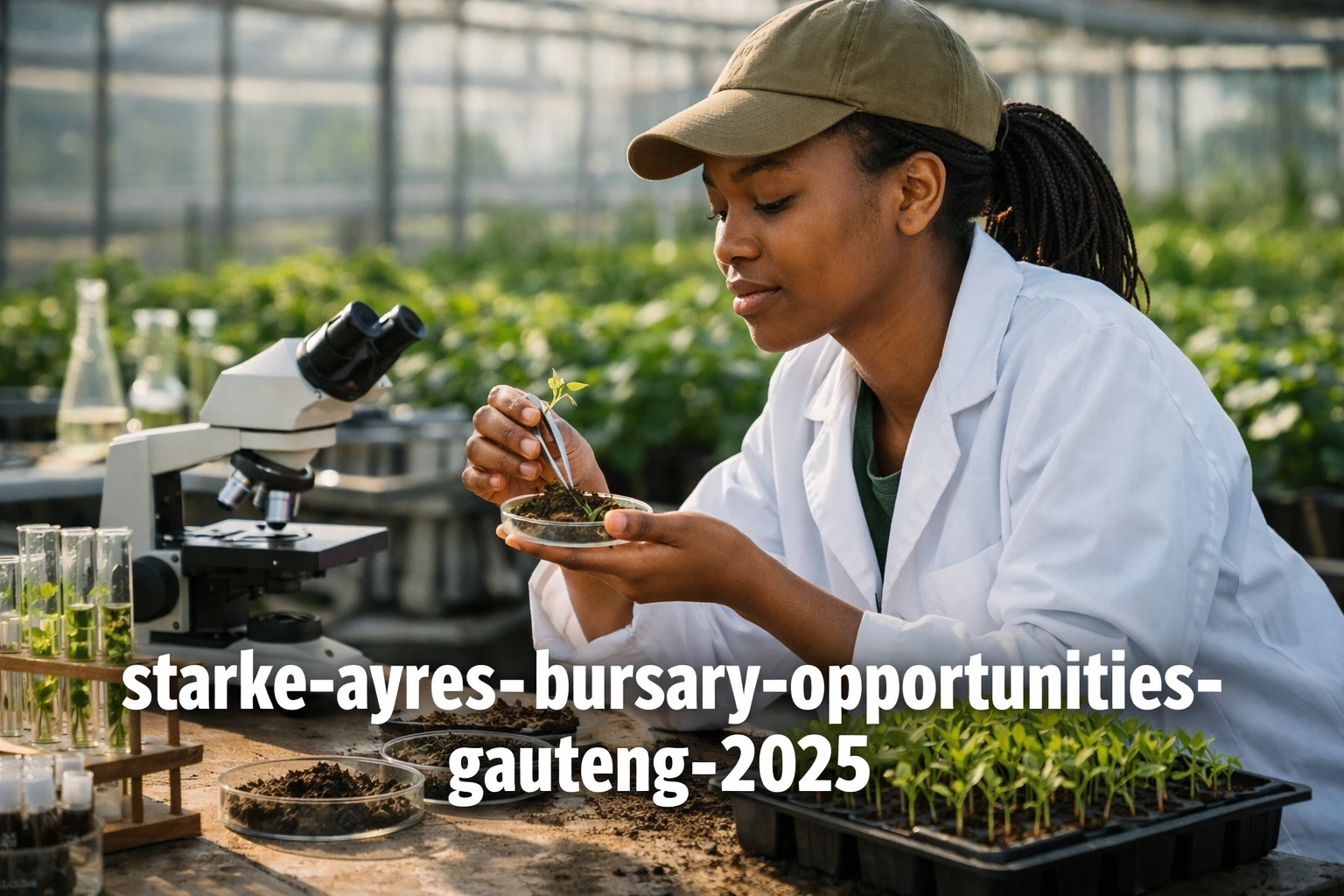
Starke Ayres Bursary 2026 Opportunities in Gauteng support agriculture students in plant science, genetics and soil science studies.
For many agriculture students in Gauteng, funding remains the biggest obstacle between ambition and qualification. The Starke Ayres Bursary 2026 Opportunities could offer meaningful relief for those studying plant and agricultural sciences in 2025.
If you’re currently pursuing — or planning to pursue — a degree in agriculture-related fields, this bursary matters now more than ever. Tuition fees continue to rise, and specialised agricultural qualifications are often expensive due to laboratory work and research components. Support from established industry players can make a real difference.
Starke Ayres, a division of Plennegy (Pty) Ltd., has announced bursary opportunities aimed at supporting the next generation of agricultural professionals.
Why This Starke Ayres Bursary 2026 Matters in Today’s Agricultural Climate
South Africa’s agricultural sector is under pressure.
From climate uncertainty to food security concerns and rising input costs, the industry needs skilled scientists, researchers, and production specialists. Yet many talented students abandon agricultural studies because of financial strain.
This is where the Starke Ayres Bursary Opportunities stand out. Rather than offering generic funding, the programme focuses specifically on fields that directly impact crop development, plant health, and food production.
The bursary is aligned with critical agricultural disciplines such as:
- Plant Science
- Genetics
- Microbiology & Plant Pathology
- Plant Production & Soil Science
These are not random selections. They reflect real skills shortages within South Africa’s farming and horticulture sectors.
Who Should Apply — And What You Need to Be Studying
This opportunity is structured for serious agriculture students at recognised tertiary institutions.
Eligible qualifications include:
- BSc
- BSc (Agric)
- BSc (Hons)
- MSc
- MSc (Agric)
- PhD
That means both undergraduate and postgraduate students can benefit. The inclusion of Honours, Master’s, and PhD levels signals something important: this bursary isn’t just about entry-level training. It supports advanced agricultural research too.
If you’re researching plant diseases, improving seed genetics, studying soil composition, or working on crop production systems — this funding could directly support your academic journey.
However, as with most bursary programmes, competition is likely to be strong. Academic performance, dedication to the agricultural field, and long-term career commitment typically matter in selections like these.
A Practical Investment in Agriculture’s Future
It’s easy to see bursaries as just financial support. But in agriculture, they represent something more.
When seed companies invest in students studying plant science or genetics, they’re investing in:
- Stronger crop varieties
- Disease-resistant plants
- Improved yields
- Sustainable farming systems
South Africa’s food security depends on this pipeline of skilled graduates.
Unlike broad corporate bursaries, this programme is clearly industry-focused. Starke Ayres operates within the seed and horticultural sector, which means funded students are studying fields directly linked to real agricultural production challenges.
That connection often increases the practical relevance of a bursary programme.
Still, applicants should carefully review the contract conditions. Some bursaries include work-back agreements or performance requirements. It’s important to understand all terms before committing. Starke Ayres Bursary 2026.
What Makes This Opportunity Stand Out in Gauteng
Gauteng is not traditionally viewed as a primary farming province compared to regions like Limpopo or the Free State. However, it remains a major hub for agribusiness headquarters, research institutions, and distribution networks.
Being based in Gauteng can provide:
- Access to research facilities
- Exposure to agribusiness networks
- Internship possibilities
- Industry mentorship opportunities
- APPLY HERE
For students studying in or around Gauteng, proximity to industry can be just as valuable as financial support.
While the bursary listing mentions one available position, this likely reflects a current intake cycle rather than the programme’s long-term scope. Students should verify timelines directly with the company.
For broader information on agricultural qualifications in South Africa, students can consult the
- Department of Agriculture, Land Reform and Rural Development
- South African Qualifications Authority (SAQA)
- National Student Financial Aid Scheme (NSFAS)
These platforms provide helpful guidance on accreditation and funding structures.
ALSO APPLY FOR: Shape the Future of Mining: Glencore Rock Engineering Bursary 2026 – Apply Now!
ALSO FOR: GABS Bursary 2026 for Computer Science Students Brings Real Relief to Struggling Families, Apply now
Important Details at a Glance
- Company: Starke Ayres (Plennegy Group)
- Industry: Horticulture / Agriculture
- Location: Gauteng
- Job Type: Contract (Bursary Programme)
- Reference Number: BO
- Salary: Market Related (Bursary Support)
Students should ensure they meet academic and institutional requirements before applying.
FAQs: Starke Ayres Bursary Opportunities
Is this bursary only for undergraduate students?
No. It includes BSc, Honours, Master’s, and PhD qualifications in agriculture-related fields.
Does the bursary cover all agriculture degrees?
No. It focuses specifically on Plant Science, Genetics, Microbiology & Plant Pathology, and Plant Production & Soil Science.
Is the bursary available outside Gauteng?
The listing specifies Gauteng, but students should confirm eligibility if studying elsewhere.
Does the bursary require work-back after graduation?
The listing does not specify. Applicants should carefully review the terms and conditions during application.
How competitive is this bursary?
Given the specialised nature and limited positions, competition is likely strong.
Final Thoughts
The Starke Ayres Bursary Opportunities are not flashy or heavily marketed. But they are focused, practical, and directly aligned with South Africa’s agricultural needs.
For students who are genuinely committed to plant science and agricultural research, this could be more than just financial assistance. It could be a gateway into a highly specialised and impactful industry.
In a time when agriculture faces climate uncertainty and food security pressure, investing in skilled graduates is not optional — it’s necessary.
And for the right student, this bursary could be the support that makes finishing that degree possible.
About The Author
