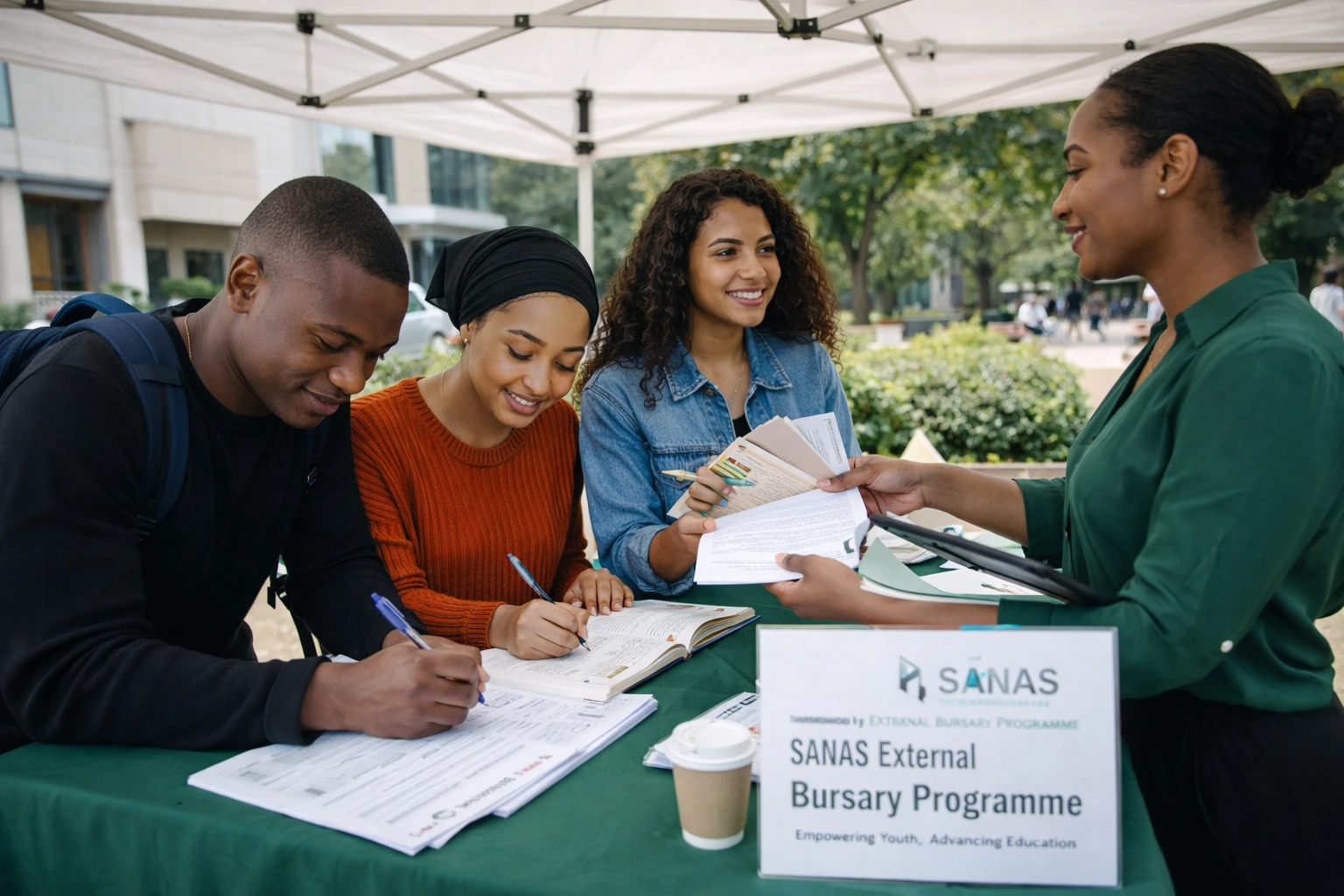
For many young South Africans, the biggest barrier to further study is not motivation — it is money. With application fees rising and tuition costs continuing to climb, even capable students are often forced to pause their education. The SANAS External Bursary Programme 2026 opens a narrow but meaningful window for unemployed youth who are ready to take their studies seriously in 2026.
This bursary is not a blanket solution for all education costs, but for the right applicant, it can be the difference between dropping out and moving forward.
Why the SANAS External Bursary Programme 2026 Matters Right Now
The SANAS External Bursary Programme 2026 is designed to ensure that financial constraints do not hinder the educational aspirations of talented youth.
South Africa’s youth unemployment rate remains high, and graduates without further qualifications often struggle to re-enter the system once they step away. Post-school education has become increasingly important, yet increasingly inaccessible.
The SANAS External Bursary Programme responds directly to this gap. It targets unemployed South African youth who are committed to advancing their education but lack financial support for tuition. At a time when many bursaries are either fully subscribed or limited to specific institutions, this programme provides targeted relief where it matters most — course fees.
Importantly, SANAS does not frame this bursary as charity. It is positioned as an investment in skills development, which aligns with the organisation’s broader role in quality assurance and national standards.
What the SANAS External Bursary Programme 2026 Covers — and What It Does Not
One of the most important things applicants should understand early is the scope of funding. The SANAS External Bursary Programme covers tuition fees only. There is no provision for accommodation, transport, meals, devices, or textbooks.
The funding limits are clearly defined:
- National Diploma or Degree: up to R50,000
- Honours or Postgraduate Diploma: up to R70,000
For students enrolled at public universities or universities of technology, this amount may cover a significant portion — or in some cases, all — of annual tuition. However, students at private institutions or in higher-cost programmes should be realistic about shortfalls.
This clarity is useful. It allows applicants to plan responsibly rather than discover funding gaps halfway through the academic year.
Who Should Apply — and Who Should Reconsider
The bursary is specifically aimed at unemployed South African youth. While SANAS does not publicly specify an age limit in the announcement, applicants should expect that priority will be given to young people who are not currently employed and who can demonstrate financial need.
This bursary may be a strong fit if you:
- Are currently unemployed
- Have already secured admission or are continuing an existing qualification
- Need tuition support specifically
- Can submit complete documentation on time
It may be less suitable if you:
- Require support beyond tuition (such as accommodation or living expenses)
- Are employed full-time
- Are still undecided about your field of study
Bursaries often fail applicants not because they are unqualified, but because expectations do not match reality. Being honest about your situation improves your chances of making the right decision.
How the Application Process Works in Practice
Applications for the SANAS External Bursary Programme must be submitted by email, which is increasingly uncommon in a world of online portals — but also simpler for many applicants.
To apply, candidates must:
- Complete the official Bursary Application Form
- Attach all required supporting documents
- Submit everything by email to careers@sanas.co.za
FOR MORE DETAILS SANAS External Bursary Programme
The closing date is Friday, 30 January 2026 at 16:30. Applications submitted after this time will not be considered.
SANAS is explicit that incomplete applications will be disqualified. This usually includes missing forms, uncertified documents, or unclear academic records. Applicants are strongly advised to prepare documents early and avoid last-day submissions, where technical errors are more likely.
For enquiries, applicants can contact the SANAS HR Department, attention Ms Lesedi Aphiri.
ALSO APPLY FOR Department of Sport, Arts and Culture (DSAC) Bursaries 2026 – Great Opportunity for Students
Click here to Follow the Daily Feed channel on WhatsApp
What Makes SANAS External Bursary Programme 2026 Different From Others
Unlike some large corporate bursaries that focus on scarce skills pipelines or future employment contracts, the SANAS bursary is relatively modest and focused. It does not promise jobs, internships, or work-back obligations.
This has both advantages and limits.
On the positive side, recipients retain full independence after completing their studies. On the other hand, students must still navigate the job market on their own.
In a funding landscape often crowded with marketing language, the SANAS External Bursary Programme stands out for being clear, specific, and realistic. It does one thing — tuition support — and does not pretend to solve every challenge.
Frequently Asked Questions (FAQs)
Does the SANAS External Bursary Programme 2026 cover accommodation or transport?
No. The bursary covers tuition fees only.
Can first-year students apply?
Yes, provided they meet the programme requirements and submit all required documentation.
Is the bursary limited to specific fields of study?
SANAS has not publicly listed restricted fields in the announcement.
How much funding can I receive?
Up to R50,000 for a diploma or degree, and up to R70,000 for honours or postgraduate diplomas.
What happens if my application is incomplete?
Incomplete applications are not considered under any circumstances.
Final Thoughts
The SANAS External Bursary Programme 2026 will not fund an entire student life, but it was never designed to. Its value lies in its focus — helping unemployed youth stay academically active at a time when financial pressure forces many out of the system.
For students who already have a plan, institutional access, and the discipline to complete their studies, this bursary can provide essential stability. As with all funding opportunities, success depends less on urgency and more on preparation.
In an uncertain education landscape, clarity like this is rare — and worth paying attention to.
About The Author
