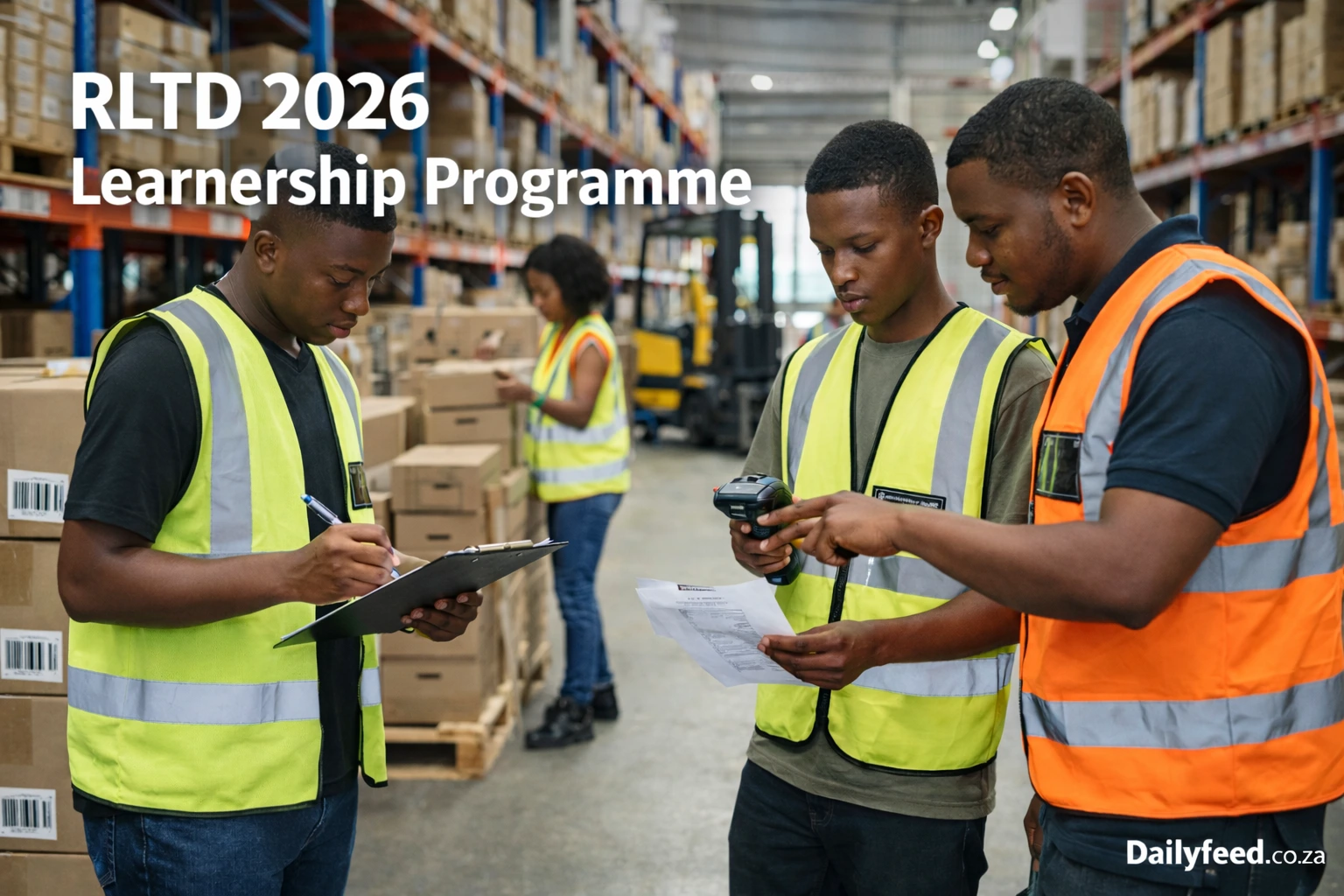
RLTD 2026 Learnership Programme explained — eligibility, training structure, stipend, and how unemployed youth can enter logistics careers.
South Africa’s logistics sector quietly keeps the country moving. From warehouse floors to delivery routes, it connects farms, factories, shops, and homes every day. But behind this system is a growing challenge: a shortage of trained entry-level workers.
The RLTD 2026 Learnership Programme exists to address that gap. For unemployed youth with Grade 10 or higher, it offers something rare — paid, accredited training linked directly to real logistics jobs, at a moment when demand is rising and opportunities are narrowing.
Why the RLTD 2026 Learnership Matters Right Now
Logistics and transport are no longer background industries. Rising e-commerce, expanding distribution networks, and pressure on supply chains have made entry-level logistics skills more valuable than ever.
Yet many young people struggle to break in. Employers want experience, while candidates need a first chance. Learnerships like RLTD sit in the middle — giving learners structured training while allowing companies to develop talent from the ground up.
With applications closing in January 2026, timing matters. This intake is competitive, and delays often mean missing out entirely.
What the RLTD 2026 Learnership Actually Involves
The RLTD 2026 Learnership Programme is a 12-month occupational training programme focused on logistics, transport, and distribution operations.
It is not a short course or a classroom-only certificate. Instead, it combines learning and work in a way that mirrors how the industry actually functions.
A Balanced Learning Structure
The programme follows a blended model:
- Around 40% theoretical learning, covering logistics basics, workplace safety, communication, and supply chain fundamentals
- Around 60% practical workplace exposure, where learners work in real warehouses, depots, or distribution centres
This balance gives learners time to build confidence while still contributing meaningfully on the job.
Training That Reflects Today’s Logistics Reality
The 2026 programme content reflects changes in the sector. Learners are introduced to:
- Digital stock and inventory systems
- Modern dispatch and receiving processes
- Environmentally responsible transport practices
This helps ensure skills remain relevant beyond the programme itself.
What Learners Gain Beyond the Certificate
While a recognised qualification is important, the real value of the RLTD learnership lies in what learners experience day to day.
During workplace placement, learners may assist with:
- Stock control and inventory handling
- Basic warehouse operations
- Dispatch and receiving procedures
- Using digital tracking and reporting tools
Just as important are the soft skills developed along the way — punctuality, teamwork, communication, and workplace discipline. These are often what employers look for first.
Career Paths After Completing the Learnership
The RLTD programme is designed with employment in mind, but outcomes can vary.
What Happens After the 12 Months?
Some learners are absorbed into permanent or contract roles with their host companies. Others use the qualification to:
- Apply for entry-level positions such as warehouse assistant or logistics clerk
- Gain experience and later move into supervisory roles
- Continue studying logistics or supply chain management
While employment is not guaranteed, industry trends show that many learners secure work within six months of completion, especially those who perform well during placement.
Who Can Apply — And Who Should Think Carefully
Minimum Requirements
To qualify, applicants must:
- Have Grade 10 or higher (Matric is an advantage, not a requirement)
- Be 18 years or older
- Be South African citizens or permanent residents
No prior work experience is required.
Personal Readiness Matters
Because logistics environments can be physically and mentally demanding, the programme suits candidates who are:
- Reliable and willing to learn
- Comfortable working in teams
- Able to follow instructions and safety rules
Motivation often matters more than academic history.
How to Apply Without Making Costly Mistakes
Applications are submitted online only through the official RLTD platform.
Before applying:
- Prepare a certified copy of your ID
- Have your latest school report or certificate ready
- Update your CV (keep it short and clear)
- APPLY HERE
When completing the application, accuracy is critical. Incomplete forms or unclear documents are common reasons for rejection.
Writing a Strong Motivation
A good motivation does not need fancy language. Focus on:
- Why logistics interests you
- What you hope to gain from the programme
- Any experience with responsibility, teamwork, or practical tasks
Avoid copied answers or vague statements. Sincerity stands out.
ALSO APPLY FOR: SAB Sales and Marketing Learnership 2026 Signals a Serious Entry Point for Young Commercial Talent
ALSO APPLY FOR: A Practical Chance Feels Within Reach: Sasol Learner Artisan 2026 Opens Quietly
Financial Support During the Programme
Learners receive a monthly stipend throughout the 12 months. While the amount may vary, it is intended to help with basic living and transport costs.
Depending on placement, additional support may include:
- Protective workwear
- Transport assistance
- Ongoing learner monitoring and support
This structure helps remove financial barriers that often prevent youth from completing training.
Final Thoughts: Is the RLTD 2026 Learnership Worth It?
The RLTD 2026 Learnership Programme is not a shortcut to instant employment. What it offers instead is credible, practical entry into an industry that continues to grow.
For unemployed youth with Grade 10 or higher, it provides paid learning, real workplace exposure, and skills that remain useful far beyond logistics alone.
With applications closing in January 2026, early and careful application is essential.
Frequently Asked Questions
Is Matric required?
No. Grade 10 is the minimum requirement.
Is the programme paid?
Yes. Learners receive a monthly stipend.
Do I need work experience?
No prior experience is required.
Is employment guaranteed after completion?
No, but the programme significantly improves employability.
When do applications close?
January 2026. Early application is strongly advised.
About The Author
