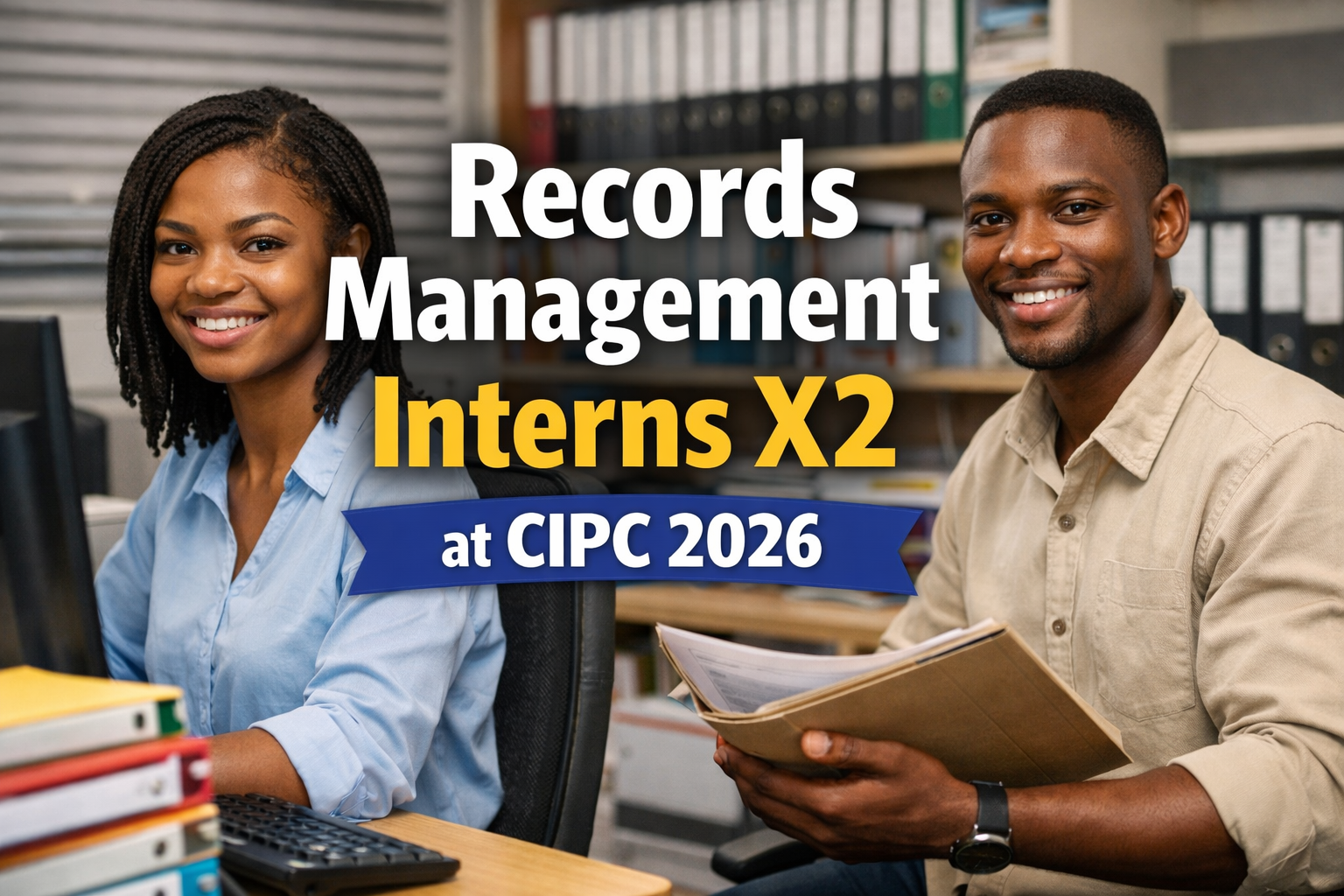
Explore the Records Management Interns X2 opportunity at CIPC in Pretoria. Learn about requirements, stipend, and how to apply for this 12-month graduate internship.
On a quiet weekday morning in Sunnyside, Pretoria, a young graduate scrolls through job listings on their phone. The pressure is familiar—months after finishing a qualification, the transition into the working world feels slower than expected. Then, a listing appears: Records Management Interns X2 at CIPC. It’s not just another opportunity; it’s a structured entry point into the public sector, offering both income and experience.
For many South African graduates, especially those in information and records-related fields, opportunities like this don’t just fill a gap—they shape careers.
Why the Records Management Interns X2 Opportunity Matters Now
South Africa’s graduate unemployment challenge remains one of the country’s most urgent socio-economic issues. While universities and colleges continue to produce qualified graduates, the gap between education and practical work experience remains wide.
This is where structured internship programmes—like the Records Management Interns X2 at the Companies & Intellectual Property Commission (CIPC)—play a crucial role.
The programme is not just about filing documents or administrative exposure. In a digital-first economy where data governance, compliance, and information systems are becoming central to both public and private sectors, records management is evolving into a highly relevant skill set.
Graduates entering this field today are not just clerks of information—they are future custodians of data integrity.
A Closer Look at the Internship Programme
The CIPC internship programme is designed with a clear purpose: to bridge the gap between academic learning and workplace demands. Rooted in public service policy dating back to 2002, internships like this aim to equip unemployed graduates with real-world skills.
Interns selected for the Records Management Interns X2 programme will spend 12 months working within CIPC’s Sunnyside office in Pretoria. During this time, they will gain hands-on experience in managing records, organizing information systems, and supporting administrative processes that underpin regulatory operations.
What sets this opportunity apart is its alignment with national development goals. CIPC, as part of the Department of Trade, Industry and Competition (the dtic), plays a vital role in business regulation and intellectual property management in South Africa. Interns are therefore exposed to systems that directly impact the country’s economic environment.
Quick Facts
- Closing Date: 29 April 2026
- Location: Pretoria (Sunnyside Office)
- Duration: 12 months
- Positions Available: 2
- Reference Number: RecManInterns
- Stipend: R12 000 per month
Who Should Apply for Records Management Interns X2?
This opportunity is tailored for a specific group of graduates—those who have completed qualifications but have not yet had the chance to apply their knowledge in a professional setting.
To qualify, applicants must:
- Be South African citizens aged between 18 and 35
- Hold a Bachelor’s Degree or Advanced Diploma in:
- Records Management
- Library and Information Science
- Information Management
- Be currently unemployed
- Have no prior work experience in their field of study
This targeted approach reflects a broader policy goal: ensuring that those who need experience the most are given priority access.
The Real Value Behind the R12 000 Stipend
At first glance, the monthly stipend of R12 000 may seem like the headline feature. For many graduates, it provides immediate financial relief—covering transport, rent, and daily expenses.
But the deeper value lies elsewhere.
In South Africa’s competitive job market, experience often outweighs qualifications alone. Employers frequently look for candidates who understand workplace systems, deadlines, and professional communication. An internship like this offers exactly that.
By the end of the 12-month programme, interns are not just certificate holders—they become candidates with proven exposure to structured work environments.
Beyond Filing: The Evolving Role of Records Management
Records management is often misunderstood as purely administrative. In reality, the field is undergoing significant transformation.
With the rise of digital records, cybersecurity concerns, and regulatory compliance requirements, organizations now rely heavily on professionals who can manage information responsibly.
At institutions like CIPC, records are not just internal documents—they are part of the legal and economic framework of the country. Proper management ensures transparency, accountability, and efficiency.
For interns, this means exposure to systems that go far beyond traditional paperwork. It’s about understanding how information flows within an organization—and how it supports decision-making at higher levels.
Expert Insight: Why Records Management Skills Are Becoming Critical
From an industry perspective, records management is quietly becoming one of the most important support functions in modern organizations.
As South Africa continues to digitize public services and strengthen regulatory frameworks, the demand for professionals who understand information governance is increasing.
Graduates entering this field today are positioning themselves for roles in:
- Compliance and risk management
- Digital archiving and data systems
- Corporate governance support
- Public administration
In a data-driven world, the ability to organize, protect, and retrieve information efficiently is no longer optional—it’s essential.
Application Process: What You Need to Know
Applying for the Records Management Interns X2 programme requires careful attention to detail. CIPC has made it clear that incomplete or incorrectly submitted applications will be disqualified.
Applicants must upload the following documents:
- Updated CV
- South African ID
- Relevant qualification certificate
Each document must be uploaded to the correct section on the application platform. This is not just a technical requirement—it’s an early test of attention to detail, a skill that is critical in records management itself.
It’s also important to note:
- Applications must be submitted online
- Faxed, emailed, or hand-delivered applications will not be accepted
- Only shortlisted candidates will receive feedback
SEE ALSO: Bridgestone Graduate Internships 2026: Full Guide for South African Graduates
Where to Apply
To apply for the Records Management Interns X2 opportunity, visit the official CIPC recruitment portal:
- https://cipc.mcidirecthire.com/default/External/CurrentOpportunities
- Or access opportunities via the CIPC website: www.cipc.co.za
APPLY HERE: Records Management Interns X2 at CIPC 2026
Applicants experiencing technical difficulties can contact the CIPC Recruitment Office at:
087 743 7074 / 7075 / 7180 or 087 260 1554
The Bigger Picture for South African Graduates
Opportunities like the Records Management Interns X2 programme highlight a broader shift in how early-career pathways are structured in South Africa.
Rather than expecting graduates to transition directly into permanent roles, institutions are increasingly investing in structured work experience programmes. These internships serve as stepping stones—helping young professionals build confidence, competence, and credibility.
For many, this may not be the final destination. But it is a critical first step.
FAQ: Records Management Interns X2
1. Can I apply if I already have work experience?
No. This internship is specifically designed for graduates who have not yet gained work experience in their field of study.
2. Is the internship permanent?
No. The programme runs for 12 months and does not guarantee permanent employment, although it significantly improves future job prospects.
3. What happens after I apply?
Only shortlisted candidates will be contacted for interviews. Background checks, including qualification verification, will also be conducted.
Final Thoughts: More Than Just an Internship
At a glance, the Records Management Interns X2 opportunity at CIPC may look like a standard graduate programme. But for the right candidate, it represents something much bigger.
It’s a chance to move from theory to practice. To step into a professional environment and begin understanding how organizations operate from the inside. To earn an income while building a foundation for a long-term career.
In a country where many graduates struggle to find their first opportunity, programmes like this are not just helpful—they are essential.
The real question is not whether this internship is worth applying for. It’s whether you are ready to take that first step into the working world—and make the most of it.
About The Author
