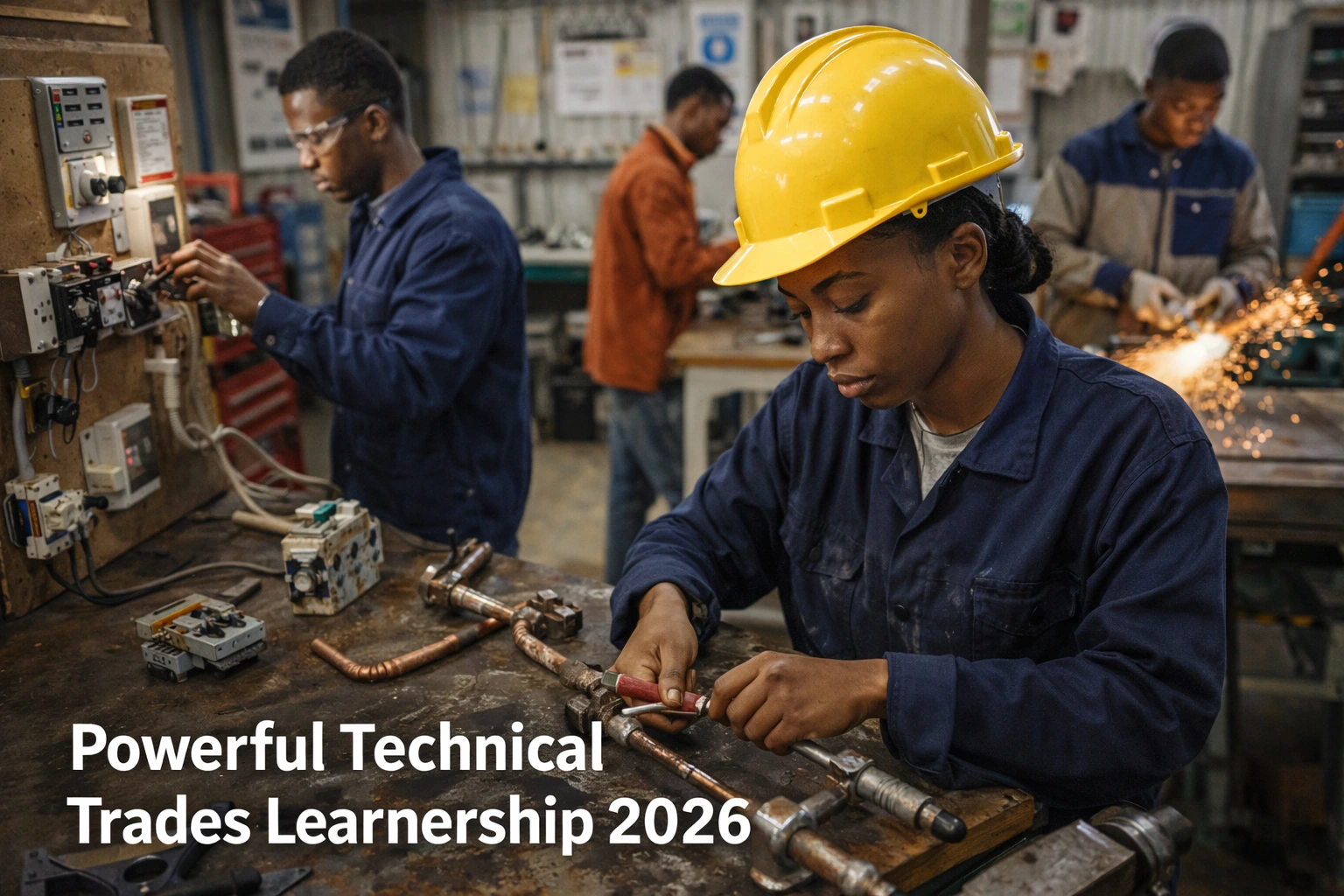
Powerful Technical Trades Learnership 2026 opens opportunities for unemployed youth. Learn who qualifies, what it offers, and how to apply before January.
South Africa does not lack ambition — it lacks skilled hands. While thousands of young people search for work, industries across the country are struggling to find trained electricians, welders, plumbers, and fitters. The Powerful Technical Trades Learnership 2026 opens at a moment when this mismatch matters more than ever.
This programme is designed for unemployed youth who want a practical career, not another short course or empty certificate. With applications closing in January 2026, timing is critical for anyone serious about entering the technical trades.
Why Technical Skills Matter Right Now
From housing developments and factories to power infrastructure and water systems, technical trades keep the country running. Yet many experienced artisans are retiring, while too few young workers are replacing them.
This learnership responds directly to that gap. It does not promise instant success, but it offers something rare: structured training linked to real workplaces. For young people with Matric who are willing to learn with their hands, this is one of the most realistic entry points into long-term employment.
What the Powerful Technical Trades Learnership Actually Offers
The Powerful Technical Trades Learnership 2026, facilitated by TLO (Training and Labour Organisation), is a full occupational training programme that runs throughout the year.
It combines three essential elements:
- Classroom-based technical education
- Supervised workplace training
- Mentorship from experienced professionals
Learners work toward nationally recognised, trade-aligned outcomes, making the programme far more valuable than informal training or short skills workshops.
Importantly, this learnership is designed for entry-level candidates. You do not need prior work experience — only readiness to learn and commit.
Trades With Real Demand in South Africa
The programme focuses on technical fields where skills shortages are well documented.
Electrical Installation
Learners are introduced to wiring systems, fault finding, safety procedures, and compliance standards used across residential, commercial, and industrial sites.
Welding
Training covers metal fabrication, welding techniques, equipment handling, and safety protocols commonly required in construction and manufacturing.
Plumbing
Focuses on water systems, drainage, pipe installation, maintenance, and national building regulations.
Fitting and Turning
Learners gain exposure to machining, mechanical assembly, precision tools, and industrial engineering basics.
Instrumentation and Process Control
Introduces automated systems, sensors, and control mechanisms used in factories, energy facilities, and processing plants.
These are not theoretical pathways. Each trade reflects actual labour market demand, which improves employment prospects after completion.
Financial Support and Day-to-Day Reality
Cost is often the biggest barrier for young people entering technical careers. This learnership removes that barrier.
Participants receive:
- No training fees
- A monthly stipend to assist with transport and basic expenses
- Protective clothing and learning materials
- Structured workplace exposure
The stipend is not a salary, and learners should plan carefully. However, it allows participants to train without accumulating debt — a major advantage over private colleges.
Workplace Exposure and What Happens After
One of the programme’s strongest features is industry placement. Learners are hosted by partner companies in sectors such as construction, manufacturing, mining, and energy.
This exposure helps learners:
- Understand real workplace expectations
- Build practical confidence
- Develop professional references
- Network within the industry
Employment after completion is not guaranteed, and the programme is transparent about this. However, past participants often secure short-term contracts or entry-level roles — especially in high-demand trades.
ALSO APPLY FOR: How merSETA Learnerships Are Giving Unemployed Youth a Real Way Into Skilled Careers
Who Should Apply — and Who Should Think Carefully
Minimum Requirements
Applicants must:
- Be South African citizens or permanent residents
- Be 18 years or older
- Hold a Grade 12 (Matric) certificate
- Be unemployed at the time of application
Academic Advantage
Mathematics and Physical Science are not always mandatory, but they strengthen applications for electrical and mechanical trades. Informal technical experience — even home repairs or mechanical hobbies — can also help.
This programme suits people who are comfortable with hands-on work and structured learning. It may not be ideal for those seeking office-based careers.
ALSO APPLY FOR: Shape Your Distinguished Career: The Ford Young Professionals Programme 2026
How to Apply Without Hurting Your Chances
Step 1: Prepare a Focused CV
Your CV should clearly show:
- Matric subjects and results
- Any technical subjects, projects, or exposure
- Practical interests such as repairs, tools, or mechanical work
Keep it simple and honest.
Step 2: Submit Your Application
Email your documents to:
applications@tlo.co.za
Subject line:
Powerful Technical Trades Learnership 2026 – Your Full Name
Attach:
- CV (PDF)
- Certified ID copy
- Certified Matric certificate
Step 3: Selection Process
Shortlisted candidates may complete:
- Basic aptitude or numeracy assessments
- Technical awareness tests
- Interviews (online or in person)
Successful applicants are contacted directly.
Why Trades Still Offer Long-Term Stability
Technical careers remain among the most resilient in South Africa. Qualified artisans often enjoy:
- Strong demand across industries
- Clear progression paths
- Opportunities for contracting or self-employment
Many artisans eventually start their own businesses or specialise in areas like renewable energy, maintenance services, or industrial systems.
Skills, unlike temporary jobs, compound over time.
Frequently Asked Questions
Is the learnership free?
Yes. There are no training fees, and learners receive a stipend.
Do I need work experience?
No. This programme is designed for beginners.
Is employment guaranteed?
No. However, workplace exposure improves employability.
Can women apply?
Yes. Women are strongly encouraged to apply.
When does the programme start?
Start dates are communicated to successful candidates.
Final Word
The Powerful Technical Trades Learnership 2026 is not a shortcut — it is a structured entry into South Africa’s skills economy. For young people ready to commit to practical work and long-term growth, it offers something rare: credibility.
With applications closing in January 2026, preparation matters. Those who apply early and submit complete documents stand the best chance.
Click here to Follow the Daily Feed channel on WhatsApp
About The Author
