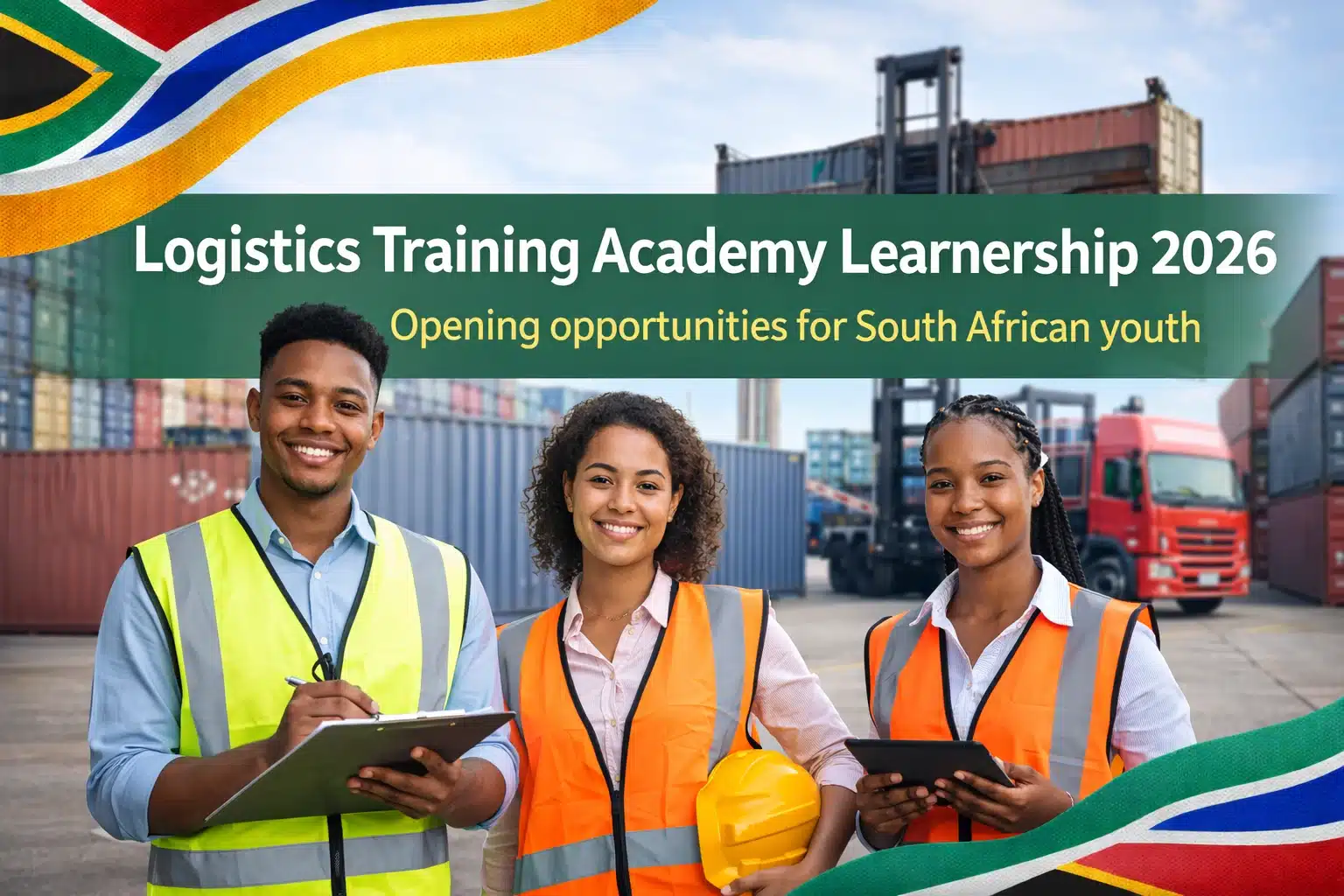
Logistics Training Academy Learnership 2026 offers paid training with a R7200 stipend and a recognised qualification for South African youth.
For many young South Africans, finding work is not just about motivation — it is about access. Even entry-level jobs increasingly demand experience that first-time jobseekers do not yet have. The Logistics Training Academy Learnership 2026 is one of the few opportunities that tackles this problem directly by combining paid work, structured training, and a nationally recognised qualification.
With applications now open, the programme offers a 12-month learnership with a R7 200 monthly stipend, giving participants both income and practical experience in a sector that continues to grow despite economic pressure.
What the Logistics Training Academy Learnership Involves
The Logistics Training Academy Learnership is designed around work-integrated learning. Instead of spending a year only in classrooms, learners are placed directly at logistics, warehousing, and transport sites across South Africa.
Throughout the programme, participants rotate through real operational environments. This includes exposure to:
- Receiving and dispatch operations
- Stock control and inventory systems
- Picking, packing, and warehouse processes
- Basic transport and delivery coordination
This structure reflects how the logistics industry actually works. It helps learners understand expectations early and reduces the gap between training and employment.
Why the R7 200 Monthly Stipend Matters
For many unemployed youth, unpaid training is simply not an option. Transport, food, and daily costs still exist. The R7 200 monthly stipend offered by the Logistics Training Academy Learnership makes participation financially possible.
While it is not a full salary, the stipend allows learners to:
- Cover basic living expenses
- Travel consistently to training sites
- Focus on learning without constant financial stress
In a labour market where many internships pay nothing at all, this level of support makes a real difference.
Skills, Modules, and Certification
Over the 12-month period, learners are trained in core logistics functions that employers actively look for. These include:
- Warehouse operations and layout management
- Inventory and stock movement control
- Transportation scheduling basics
- Workplace safety and compliance
- Use of basic logistics technology and tracking systems
On successful completion, learners receive a nationally recognised qualification, usually at NQF Level 2 or 3, depending on the training plan and placement. This certification improves employability in warehousing, retail distribution, and supply chain operations.
Who Can Apply for the Learnership
The Logistics Training Academy Learnership 2026 keeps entry requirements deliberately accessible.
Applicants must:
- Be South African citizens
- Be 18 years or older
- Have completed at least Grade 11
A Matric certificate strengthens an application, but it is not compulsory. Strong English and basic numeracy skills are helpful, though the programme focuses more on attitude, reliability, and willingness to learn than academic perfection.
Because logistics environments can be demanding, applicants should also expect:
- A basic criminal background check
- A medical fitness assessment
These are standard industry requirements aimed at safety and accountability.
How to Apply and What to Expect
Applications must be submitted online through the official recruitment portal provided by the Logistics Training Academy. Placements are available across different regions, depending on operational needs.
To prepare a strong application:
- Ensure certified copies of your ID and qualifications are ready
- Keep your CV clear and honest
- Mention any exposure to retail, teamwork, or physical work
- Double-check all details before submission
The selection process typically includes document screening, online assessments, interviews, and final background checks. Interview questions often focus on reliability, teamwork, and problem-solving rather than technical knowledge.
Life After the Learnership
Completing the learnership does not guarantee permanent employment, but it significantly improves a learner’s chances. Many graduates move into roles such as:
- Warehouse assistant
- Receiving or dispatch clerk
- Stock controller
- Inventory administrator
- Transport assistant
Logistics remains one of South Africa’s fastest-growing employment sectors, driven by retail, e-commerce, and distribution networks. Practical experience is often the deciding factor between candidates.
Frequently Asked Questions
How long does the learnership run?
It runs for 12 months.
What stipend is paid?
Learners receive R7 200 per month.
Do I need work experience?
No. The programme is beginner-friendly.
What is the minimum qualification?
At least Grade 11. Matric is an advantage.
Will I receive a certificate?
At least Grade 11. Matric is an advantage.
Where do I apply?
Applications are submitted via the official Logistics Training Academy online portal.
Applications for the Logistics Training Academy Learnership 2026 must be submitted online using the official recruitment portal: SUBMIT FORM HERE
The programme is available across various locations in South Africa, and placements are matched based on availability.

Final Thoughts for Applicants
The Logistics Training Academy Learnership 2026 is not a shortcut to success, but it is a realistic entry point into stable work. For young people struggling to break into the job market, it offers income, structure, and practical skills — all at once.
If you are serious about building a future in logistics, this learnership is worth careful consideration and timely application.
External references
Internal reference
Written by :Bless Nohiya is a South African content writer who focuses on learnerships, internships, and skills development opportunities, helping unemployed youth understand pathways into work and training.
About The Author
