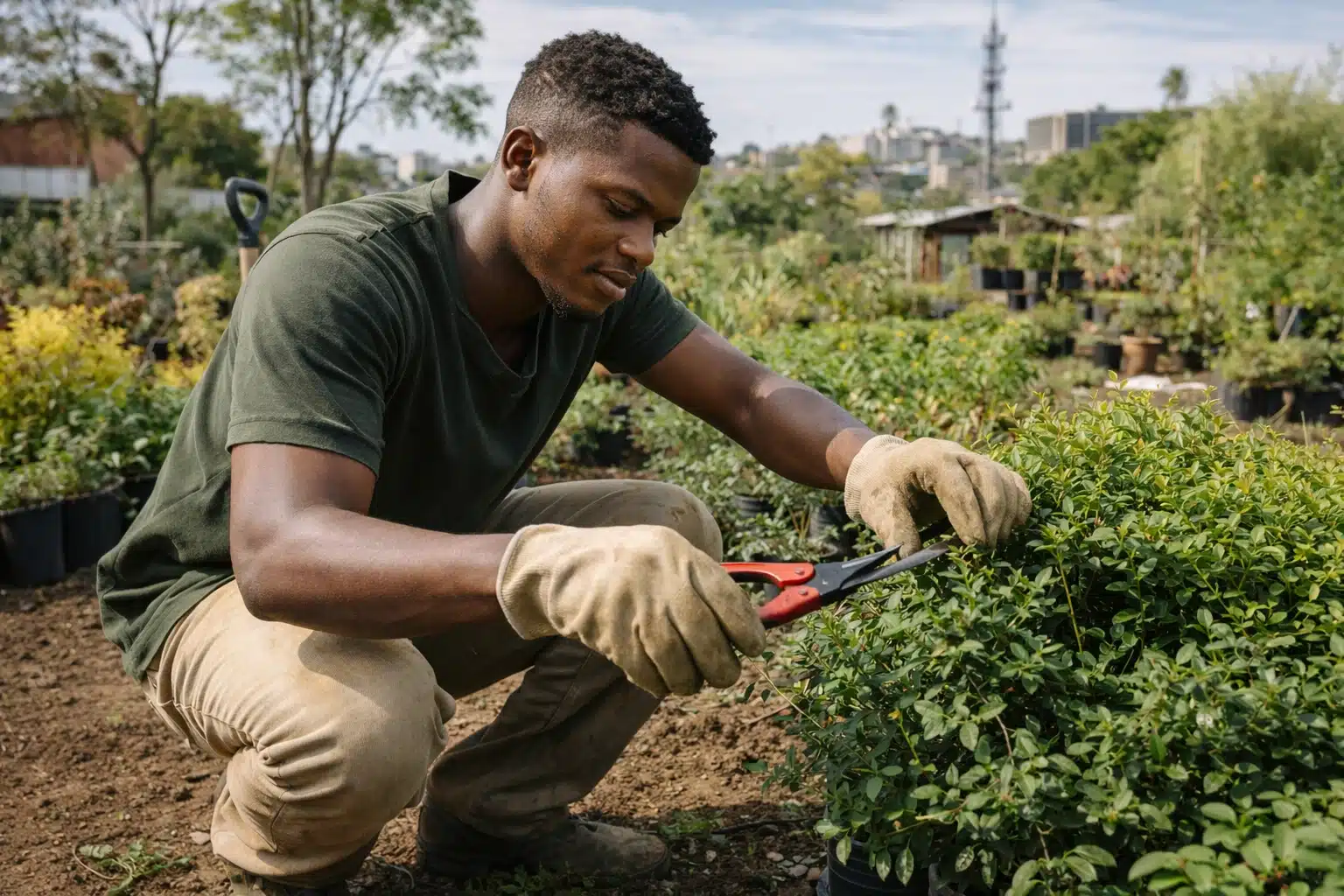
For young people who feel more at home outdoors than behind a desk, the Horticultural Learnership 2026 in Johannesburg may be a practical way to turn that interest into employable skills.
With South Africa’s green economy slowly expanding — from estate landscaping to nursery production — structured horticultural training is becoming more valuable. This 9–12 month learnership offers hands-on experience for Grade 12 and NQF Level 4 candidates who want to work with plants, soil, and outdoor environments.
It’s not glamorous work. It’s physical, weather-dependent, and practical. But for the right person, it can be the beginning of a steady career path.
What the Horticultural Learnership 2026 Actually Involves
The programme is based in Johannesburg and runs for 9 to 12 months under a temporary learnership contract. It is aimed at students and graduates who need structured workplace exposure.
Unlike short gardening courses, a learnership combines theory with real working conditions. Learners are placed in active horticultural environments where they develop skills while contributing to daily operations.
The focus is practical competence — not classroom theory alone.
Training is structured around five core areas:
- Plant care and maintenance
- Propagation and cultivation
- Pest and weed control
- Environmental and safety compliance
- Technical and physical skills development
This balanced approach reflects how horticulture actually works in the field.
Learning the Foundations: Soil, Plants, and Propagation
Plant care sounds simple, but professional horticulture requires precision.
Learners will be trained to:
- Identify soil types and prepare planting areas
- Establish ornamental and herbaceous plants
- Prune shrubs and shape trees correctly
- Apply fertilisers safely and effectively
- Manage irrigation systems
These skills are used daily in landscaping companies, estates, parks, and plant nurseries.
Propagation is another key component. Growing plants from seeds and cuttings may seem basic, but it is a valuable commercial skill. Many nurseries depend on propagation techniques to maintain stock levels and reduce costs.
Learners gain exposure to:
- Seed germination methods
- Stem cutting techniques
- Growth media preparation
- Basic nursery management
This hands-on training is particularly useful for anyone considering future work in plant production or even starting a small gardening business.
The Less Glamorous Side: Pest Control and Physical Labour
Horticulture is not only about planting flowers.
Managing pests and weeds is a large part of the job. If ignored, invasive species and plant diseases can destroy entire landscapes.
Training includes:
- Manual weed removal
- Identifying alien invader plants
- Safe mixing and application of herbicides
- Integrated pest management practices
Environmental compliance is strongly emphasised. Learners are trained to follow South African workplace safety standards and minimise chemical risks.
This aligns with guidelines from the Department of Forestry, Fisheries and the Environment, which promotes environmental protection and responsible land management.
Physically, the work can be demanding.
Most tasks take place outdoors. Weather conditions, lifting equipment, digging soil, and extended standing are normal parts of the job. Anyone applying should be honest about their physical readiness.
This is active work — not office administration.
Who Should Apply — And Who Should Think Twice
To qualify for the Horticultural Learnership 2026, applicants must have:
- A completed Grade 12 certificate or
- An NQF Level 4 qualification
Basic knowledge of soil science and health and safety is recommended.
Strong reading and communication skills are important too. Learners must follow instructions, complete basic records, and understand safety guidelines.
This opportunity is ideal for:
- Young people who enjoy working outdoors
- Individuals interested in landscaping or agriculture
- Students needing workplace experience
- Physically fit applicants comfortable with manual labour
However, it may not suit someone who prefers structured office environments or struggles with physical tasks.
Being realistic before applying helps avoid disappointment later.
Why Green Skills Are Becoming More Relevant
Johannesburg continues to expand with residential estates, office parks, and commercial developments. All of these spaces require landscaping and maintenance.
The green sector also connects to environmental sustainability. As climate awareness grows, demand for responsible land care and plant management increases.
Organisations such as the South African National Biodiversity Institute regularly highlight the importance of trained horticultural workers in protecting plant biodiversity.
While a learnership does not guarantee permanent employment, it does provide structured experience that improves employability.
Potential career paths after completion include:
- Landscaping assistant
- Nursery assistant
- Estate groundskeeper
- Irrigation support technician
- Environmental maintenance worker
Some learners may also continue studies at TVET colleges or pursue entrepreneurship in garden maintenance services.
What Makes This Programme Valuable — And Its Limits
The main strength of the Horticultural Learnership 2026 is practical exposure.
Employers in landscaping and agriculture often prioritise hands-on experience over purely academic qualifications. A candidate who understands irrigation systems and pruning techniques is often more employable than someone with theory alone.
However, it is important to acknowledge limitations:
- The programme is temporary (9–12 months)
- Permanent employment is not guaranteed
- Stipends are typically modest
- Work conditions can be physically demanding
Applicants should approach this opportunity as skill-building rather than instant job security.
For motivated individuals, that skill-building can make a meaningful difference.
Application Details
- Programme: Horticultural Learnership 2026
- Location: Johannesburg
- Duration: 9–12 Months
- Work Level: Student / Graduate
- Salary: Market related
Applicants should submit (using the official application link):
- Certified copy of Grade 12 or NQF Level 4 qualification
- Updated CV
- Supporting documentation
Ensure all documents are certified and complete before submission to avoid disqualification.
SEE ALSO: Standard Bank Group Learnerships 2026 – Your Gateway to Banking
Frequently Asked Questions (FAQs)
Is the Horticultural Learnership 2026 paid?
The stipend is listed as market related. Learnership allowances are usually aligned with entry-level training rates.
Do I need work experience?
No formal experience is required, but basic knowledge of soil science and safety helps.
Is this a permanent job?
No. It is a temporary learnership lasting 9 to 12 months.
Can I apply without Grade 12?
No. A completed Grade 12 certificate or NQF Level 4 qualification is required.
Is the work indoors or outdoors?
Most of the work takes place outdoors in horticultural environments.
Final Thoughts
The Horticultural Learnership 2026 in Johannesburg is not a shortcut to instant employment. It is a structured opportunity to gain practical skills in a growing sector.
For young people who prefer physical, outdoor work and are willing to learn, this programme can serve as a steady starting point in landscaping or plant production.
In a competitive job market, real workplace experience matters. And sometimes, the most sustainable careers begin in the soil.
About The Author
