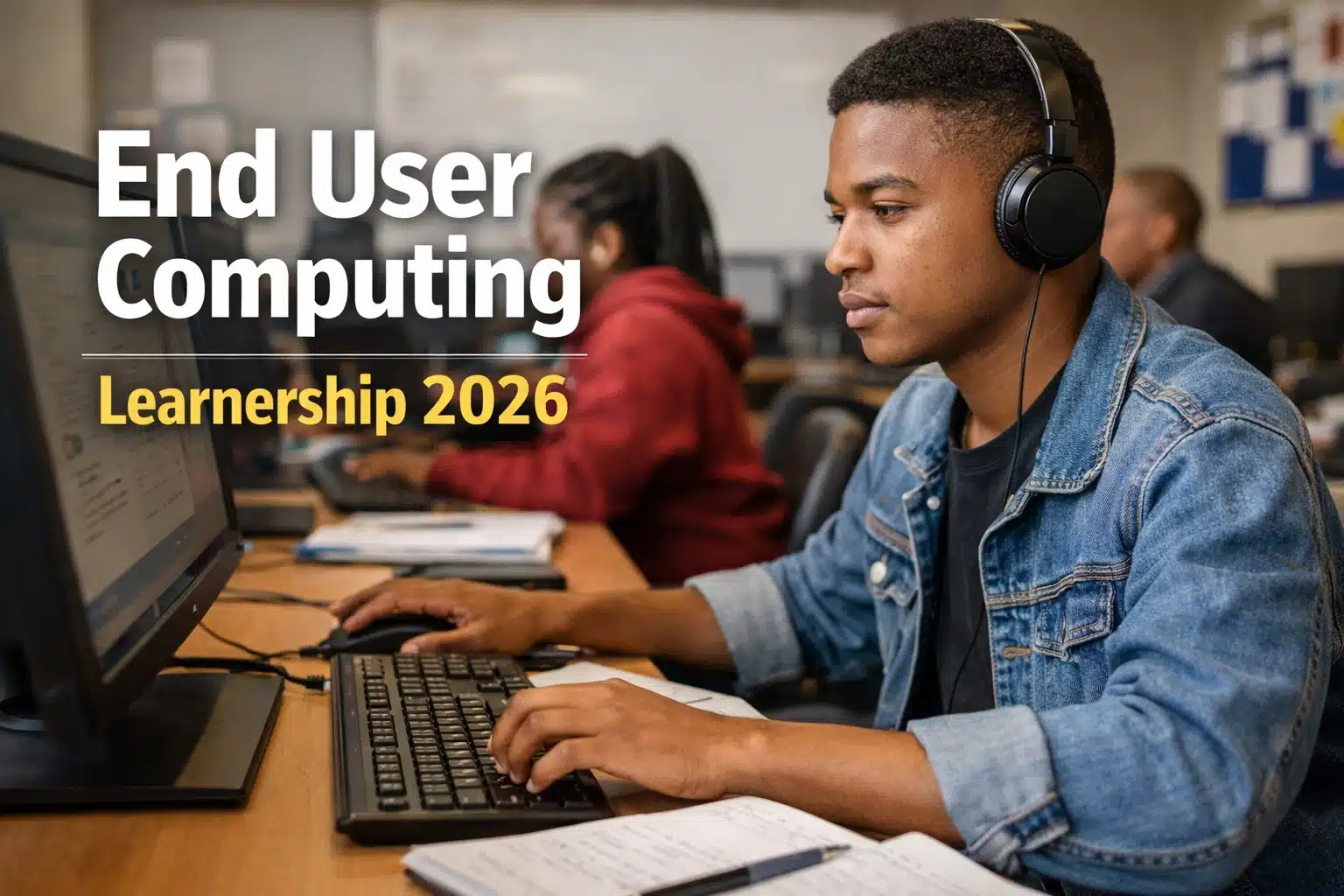
End User Computing Learnership 2026 (NQF Level 3) explained — skills taught, requirements, and why it matters for admin jobs in South Africa.
Not everyone wants to become a software engineer — but almost every job today requires computer skills.
That reality is why the End User Computing Learnership (NQF Level 3) matters right now, especially for South Africans trying to enter or stay relevant in the workplace.
This learnership is designed for school leavers and job seekers who need practical, usable computer skills — not theory for theory’s sake — in a job market where digital competence is no longer optional.
Why End User Computing Skills Matter in Today’s Workplace
Walk into any office, retail store, clinic, or logistics hub and one thing is guaranteed: computers are part of the job.
From sending emails and managing spreadsheets to capturing data and using web-based systems, employers increasingly expect workers to be confident end users of technology. Yet many capable people are excluded from opportunities simply because they lack formal IT training.
The End User Computing Learnership responds directly to this gap.
It focuses on real workplace tasks, not abstract concepts, helping learners function confidently in everyday digital environments.
Importantly, it is aligned with South Africa’s national skills framework, ensuring the qualification is recognised across industries.
USEFUL LINK
What the End User Computing Learnership 2026 Actually Teaches
This learnership builds both technical ability and workplace readiness. It doesn’t assume learners already know everything — but it also doesn’t waste time on unnecessary content.
Key learning areas include:
- Introduction to ICT (Information and Communications Technology)
Learners gain a foundational understanding of how computer systems work and how technology supports organisations. - Microsoft Office Applications
Practical use of Word, Excel, PowerPoint, and related tools — the same software used in most admin and office roles. - Web Browsers and Online Tools
Safe, efficient use of the internet for work-related tasks, research, and communication. - Communications
Professional written and digital communication skills needed in modern workplaces. - Maths Literacy
Applied numerical skills used in data capture, reporting, and basic analysis.
By the end of the programme, learners are able to operate computer systems, install software, manage files, troubleshoot basic issues, and work independently in digital environments.
Who This End User Computing Learnership 2026 Is Best Suited For
This programme is particularly relevant for:
- Recent Grade 12 graduates who are not ready for university
- Job seekers aiming for admin, clerical, or office-based roles
- Workers who want to formalise existing computer experience
- Individuals seeking Recognition of Prior Learning (RPL)
Admission Requirements
To qualify, learners generally need:
- Grade 12 pass or equivalent (NQF Level 3)
- English pass of 50% or higher
- Mathematics OR Mathematics Literacy pass of 50% or higher
These requirements ensure learners can keep up with both the technical and communication aspects of the programme.
Realistic Career Outcomes (And Their Limits)
Completing the End User Computing Learnership does not turn someone into an IT specialist overnight — and it doesn’t claim to.
What it does provide is:
- A nationally recognised qualification
- Practical skills employers expect at entry to admin-level roles
- A foundation for further IT or business-related studies
Graduates often find opportunities in:
- Office administration
- Data capturing
- Reception and front-desk roles
- Retail and logistics admin
- Call centres and customer service environments
Like any qualification, outcomes still depend on job availability, work ethic, and experience, but this learnership removes a major barrier: lack of digital competence.
Why This Qualification Still Holds Value in 2026
As more systems move online — from payroll to inventory to customer records — the demand for digitally capable workers continues to grow.
What makes the End User Computing Learnership relevant is its balance:
- Not too academic
- Not outdated
- Not focused on coding or advanced IT
- APPLY HERE
It targets the everyday digital skills that keep organisations running — skills that are transferable across sectors and resilient to economic shifts.
ALSO APPLY FOR: Become Part of a Legacy of Success: Mr Price Training Programme 2026
Frequently Asked Questions
Is the End User Computing Learnership accredited?
Yes. It is aligned with South Africa’s national unit standards and leads to a recognised NQF Level 3 qualification.
Do I need prior computer experience?
No formal experience is required, but basic familiarity with computers is helpful.
Can this help me get an admin job?
Yes. The skills gained are directly relevant to admin-level and office-based roles.
Is this suitable if I want to study further in IT?
It provides a foundation, but further qualifications would be needed for specialised IT careers.
Does this replace a diploma or degree?
No. It is a skills-based qualification designed for workplace readiness, not advanced theory.
About The Author
