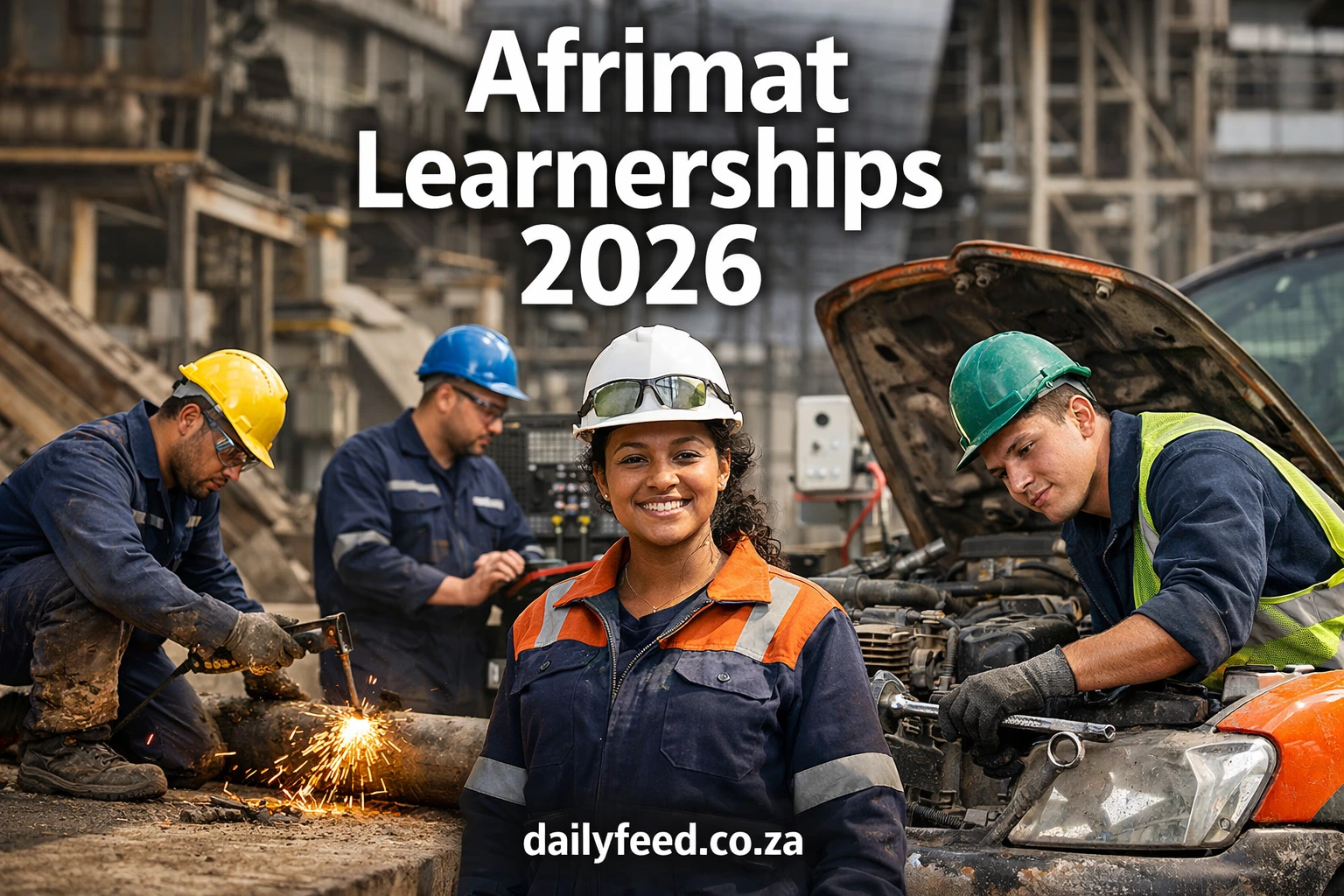
If you finished school, picked up an N6, or have been waiting for a real technical opportunity, the Afrimat Learnerships 2026 matter right now.
They’re not about fast promises — they’re about structured exposure inside real industrial plants.
For many young South Africans, this is one of the few entry points where learning and real work still meet.
Why Afrimat Learnerships Matter in 2026
Technical learnerships have quietly become harder to access. Many programmes advertise skills development, but offer little real exposure to working environments. Afrimat’s approach is different because learners are placed directly into operational sites where production, safety, and maintenance happen daily.
In 2026, this matters more than ever. Employers increasingly expect hands-on experience, not just certificates. A learner who understands plant inspections, safety protocols, and daily maintenance routines enters the job market with context — not just theory.
These learnerships are designed for people willing to work in fast-paced, physically demanding environments. They suit candidates who understand that skilled trades are built over time, through observation, repetition, and discipline.
ALSO APPLY FOR Mpumalanga Dept of Culture, Sport and Recreation Internships 2026
What You’ll Actually Learn on the Ground
The Afrimat Learnerships 2026 cover several core technical trades, each grounded in real operational needs rather than classroom simulations.
Electrical Engineering Learner
Electrical learners are introduced to industrial electrical systems under supervision. This includes installing wiring, conduits, and cables, assisting with maintenance, and learning fault diagnosis. Learners also participate in plant inspections and risk assessments.
Housekeeping and safety compliance are part of the role, reflecting real industry expectations. This is not bench work — it’s plant-based learning that prioritises safety, accuracy, and accountability.
Boilermaker Learner
Boilermaker learners work around heavy equipment such as crushers, conveyors, pumps, and steel structures. The role includes cutting, welding, inspections, and maintaining structural components.
This trade requires physical stamina and attention to detail. Wearing PPE, cleaning spillages, and adhering to safety regulations are non-negotiable parts of daily work.
Auto Electrical Learner
Auto Electrical learners assist with vehicle and machinery inspections, testing, and troubleshooting. The role bridges mechanical and electrical work, supporting diesel mechanics while learning systems maintenance and repair.
This learnership suits candidates interested in diagnostics, fault-finding, and working across different types of equipment rather than specialising too early.
Fitter Learner
Fitter learners focus on assembling, maintaining, and repairing mechanical equipment. This includes work on conveyor belts, crushers, pumps, and pipes, as well as the use of lifting and cutting equipment.
Risk assessments, inspections, and housekeeping form part of the routine. The work environment demands precision, patience, and respect for safety procedures.
Diesel Mechanic Learner
Diesel mechanic learners assist with routine servicing, inspections, fault diagnosis, and maintenance record keeping. Learners work directly on vehicles and machinery used in daily operations.
Cleaning, PPE compliance, and safety checks are embedded into the role, reflecting the realities of mechanical work in industrial settings.
Who These Learnerships Are Really For
The Afrimat Learnerships 2026 are best suited to candidates who:
- Have completed Matric (Grade 12)
- Hold an N6 qualification (advantageous, not compulsory)
- Are willing to learn through doing, not just observing
- Can work in fast-paced, industrial environments
- Understand the importance of safety and compliance
- Preferably have their own transport due to site locations
Importantly, candidates must be medically fit in terms of the Mine Health and Safety Act and company standards. This requirement reflects the physical and safety-sensitive nature of the work.
ALSO APPLY FOR Electrical Engineering Internship Opens in Modimolle-Mookgophong for 2026
What These Learnerships Don’t Promise
It’s important to be clear: these learnerships do not guarantee permanent employment. They do not offer shortcuts into artisan status. What they offer is exposure — the kind that many employers now quietly expect.
Learners leave with a clearer understanding of industrial environments, safety culture, and the realities of technical trades. That alone can shift future job prospects.
ALSO APPLY FOR PSG Graduate Programme 2026 Opens Doors for New Talent
Application Requirements and What to Prepare
Applicants must upload one combined file (maximum 3 MB) containing:
- CV
- Certified copy of ID
- Qualifications and academic transcript
- Job application form (where applicable)
Only shortlisted candidates will be contacted. Afrimat reserves the right not to make an appointment, and all personal information is handled in line with POPIA regulations.
This process may feel strict, but it mirrors real industry recruitment standards.
Apply for the Afrimat Learnerships 2026

Frequently Asked Questions (FAQs)
Are Afrimat Learnerships paid?
Stipend details are not always publicly disclosed and may vary by site and role.
Can I apply without an N6 qualification?
Yes. N6 is advantageous, but Matric is the minimum requirement.
Do I need previous work experience?
No prior experience is required, but willingness to learn is essential.
Are these learnerships office-based?
No. Most roles are plant- and site-based.
Will I be contacted if unsuccessful?
Only shortlisted candidates will be contacted
About The Author
