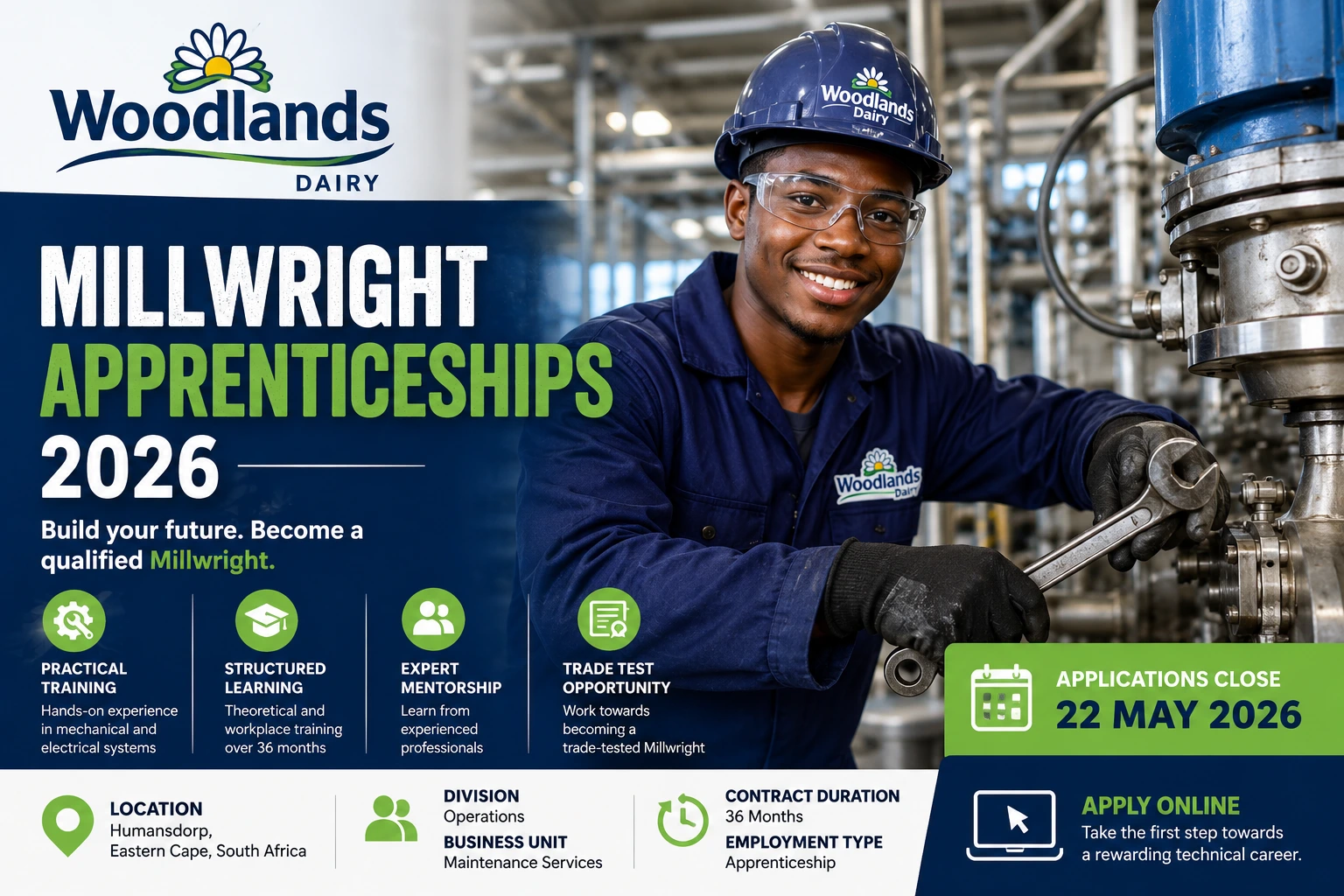
The Woodlands Dairy Millwright Apprenticeships 2026 programme offers South African youth an opportunity to develop valuable technical skills while working toward becoming qualified trade-tested Millwrights. In a country where technical and artisan careers remain highly important, apprenticeship programmes like this help young people gain both practical experience and recognised industry training.
Woodlands Dairy, one of South Africa’s major dairy and beverage manufacturers, is offering this structured apprenticeship programme in Humansdorp, Eastern Cape. The programme combines mechanical and electrical engineering exposure with formal workplace learning aligned with FoodBev SETA requirements.
For candidates interested in engineering, industrial maintenance, manufacturing, or technical problem-solving, this apprenticeship can become the starting point for a long-term career in the FMCG industry and beyond.
What You Should Know First
The Woodlands Dairy Millwright Apprenticeships 2026 programme is a 36-month technical training opportunity designed for aspiring Millwrights.
Here are the key facts applicants should understand before applying:
- Applications close on 22 May 2026
- The apprenticeship is based in Humansdorp, Eastern Cape
- Training includes both mechanical and electrical engineering exposure
- Candidates must have Technical Grade 12 or an N3 qualification
- Apprentices will complete both practical and theoretical learning
- The programme supports progress toward becoming a trade-tested Millwright
- Apprentices gain mentorship and real workplace experience
This programme is especially valuable for young people seeking stable technical careers in manufacturing and industrial maintenance.
Understanding the Woodlands Dairy Millwright Apprenticeship Programme
Many young people hear the word “apprenticeship” without fully understanding how it works.
A Millwright apprenticeship is a structured training programme that combines classroom-based technical learning with hands-on workplace experience. Instead of only studying theory, apprentices actively work with industrial systems, machinery, and maintenance teams.
The Woodlands Dairy Millwright Apprenticeships 2026 programme is designed to help apprentices gradually develop into skilled artisans.
The programme includes:
- Formal technical learning
- Practical engineering experience
- Workplace mentorship
- Equipment maintenance exposure
- Electrical and mechanical training
- Trade preparation
By the end of the apprenticeship, candidates should have stronger technical abilities and industry experience that can support long-term employment opportunities.
What Does a Millwright Actually Do?
A Millwright is a technical artisan who works with industrial machinery and production systems. Millwrights combine mechanical and electrical knowledge to install, maintain, troubleshoot, and repair equipment.
This makes the trade highly versatile across many industries.
Daily Responsibilities of a Millwright
A Millwright may:
- Repair production machinery
- Diagnose electrical faults
- Replace damaged components
- Install industrial equipment
- Perform preventative maintenance
- Test systems for safety and performance
- Work with motors, conveyors, pumps, and automated systems
In manufacturing environments like dairy processing plants, machinery must operate efficiently to maintain production. Millwrights play a major role in ensuring equipment runs correctly and downtime is minimized.
Why Millwrights Are Important in South Africa
South Africa continues to need skilled artisans in sectors such as:
- Manufacturing
- Mining
- Food processing
- Engineering
- Industrial maintenance
- FMCG production
As industries rely more on advanced machinery and automated systems, skilled Millwrights remain highly valuable.
One reason the Woodlands Dairy Millwright Apprenticeships 2026 programme matters is because it helps address the shortage of qualified technical artisans.
Companies need workers who understand both:
- Mechanical systems
- Electrical systems
Millwrights are trained in both areas, which makes them adaptable and employable across different industries.
Understanding the Training Structure
One of the most important parts of any apprenticeship is how the training is structured.
The Woodlands Dairy programme combines several learning components.
Step 1: Theoretical Training
Apprentices first build technical knowledge through formal learning.
This may include:
- Electrical principles
- Mechanical systems
- Engineering mathematics
- Industrial safety
- Equipment operations
- Technical diagrams
Theory helps apprentices understand how industrial systems work before applying those concepts practically.
See also: Northlink College WIL Internships 2026: A Complete Guide for NCV Graduates
See also: Digby Wells Environmental Bursaries 2027: A Complete Guide for South African Students
Step 2: Practical Workplace Experience
After learning theoretical concepts, apprentices apply their knowledge in real industrial environments.
For example:
An apprentice may learn how motors operate during technical lessons. Later, they may assist technicians in inspecting or repairing actual industrial motors within the production environment.
This combination of theory and practice helps strengthen technical understanding.
Step 3: Mentorship and Guidance
Experienced technicians and supervisors often mentor apprentices throughout the programme.
Mentors may help apprentices:
- Learn workplace procedures
- Improve technical skills
- Understand safety systems
- Develop troubleshooting abilities
- Build confidence in industrial environments
Mentorship can make a major difference in how quickly apprentices develop professionally.
Key Performance Areas During the Apprenticeship
Successful candidates will participate in several technical and operational activities during the programme.
Mechanical Maintenance Exposure
Mechanical maintenance involves working with physical machine systems.
Apprentices may learn about:
- Bearings
- Pumps
- Conveyors
- Gearboxes
- Hydraulic systems
- Machine alignment
Understanding mechanical systems is essential because industrial machinery experiences wear and tear over time.
Electrical Maintenance Exposure
Electrical systems are another important part of Millwright training.
Apprentices may gain exposure to:
- Electrical wiring
- Control panels
- Motors
- Sensors
- Fault detection
- Industrial automation systems
Electrical knowledge helps Millwrights troubleshoot equipment efficiently.
Equipment Installation
Industrial facilities regularly install or upgrade equipment.
Apprentices may observe or assist with:
- Machinery installation
- Testing procedures
- Alignment checks
- Equipment commissioning
This helps apprentices understand how industrial systems are introduced into operational environments.
Health and Safety Compliance
Safety is extremely important in engineering and manufacturing environments.
Apprentices must follow workplace health and safety standards to reduce risks associated with:
- Electrical systems
- Heavy machinery
- Industrial tools
- Production equipment
Learning safe work practices is a critical part of becoming a qualified artisan.
Minimum Requirements for Applicants
The Woodlands Dairy Millwright Apprenticeships 2026 programme has several entry requirements applicants must meet.
Educational Requirements
Applicants must have:
- Technical Grade 12 OR
- N3 qualification
Qualifications should relate to:
- Electrical Engineering
- Mechanical Engineering
- Related technical fields
These subjects help prepare candidates for technical apprenticeship training.
Interest in Technical Careers
Applicants should demonstrate a genuine interest in:
- Mechanical systems
- Electrical systems
- Engineering environments
- Industrial maintenance
Apprenticeships require commitment because technical trades involve continuous learning and practical problem-solving.
Willingness to Learn
The programme specifically looks for candidates willing to participate in structured training.
Apprentices must remain disciplined and committed throughout the 36-month training period.
Skills That Can Help You Succeed
Technical qualifications matter, but personal qualities are equally important during apprenticeships.
Technical Aptitude
Technical aptitude refers to the ability to understand mechanical or electrical concepts.
Candidates with curiosity about how machines work often adapt well in technical environments.
Reliability and Discipline
Industrial workplaces depend on consistency and responsibility.
Reliable apprentices:
- Arrive on time
- Follow procedures
- Complete tasks carefully
- Respect workplace rules
These behaviours help build professional credibility.
Problem-Solving Skills
Millwrights often troubleshoot machinery issues.
For example:
If a production machine suddenly stops working, a technician may need to identify whether the problem is electrical, mechanical, or software-related.
Problem-solving abilities help apprentices become effective technicians over time.
Commitment to Continuous Learning
Technology and industrial systems continue evolving.
Successful artisans continue learning throughout their careers by:
- Improving technical skills
- Learning new systems
- Adapting to automation technologies
- Understanding updated safety standards
What Apprentices Gain From the Programme
The apprenticeship provides several long-term benefits beyond basic workplace exposure.
Formal Apprenticeship Training
Candidates receive structured learning aligned with industry requirements.
This helps ensure apprentices develop recognised technical competencies.
Real Workplace Experience
Experience in a functioning FMCG environment helps apprentices understand industrial operations in practice.
This exposure can improve future employability.
Mentorship From Experienced Technicians
Working alongside qualified artisans allows apprentices to learn practical skills directly from experienced professionals.
Progress Toward Trade Testing
One major goal of the programme is preparing apprentices to become trade-tested Millwrights.
Trade testing evaluates whether candidates meet industry standards required for qualified artisans.
Why FMCG Apprenticeships Matter
FMCG stands for:
- Fast-Moving Consumer Goods
This industry includes products people buy regularly, such as:
- Dairy products
- Beverages
- Packaged foods
- Household items
Manufacturing plants in FMCG environments rely heavily on machinery and automation systems.
Because production runs continuously, companies need skilled technicians to maintain equipment efficiently.
The Woodlands Dairy Millwright Apprenticeships 2026 programme gives apprentices exposure to this important industrial sector while helping them develop highly transferable technical skills.
Common Misunderstandings About Woodlands Dairy Millwright Apprenticeships 2026
“Millwright work is only mechanical”
Many people assume Millwrights only work with mechanical systems.
In reality, Millwrights work with both:
- Mechanical engineering systems
- Electrical engineering systems
This combination makes the trade highly versatile.
“Apprenticeships are only for people who struggle academically”
Technical apprenticeships require strong discipline, technical understanding, and practical problem-solving abilities.
They are professional training pathways, not second-choice career options.
“You become qualified immediately after starting”
Becoming a qualified Millwright takes time.
The programme lasts 36 months because apprentices need extensive practical and theoretical training before trade testing.
“Technical careers have limited opportunities”
Qualified artisans are needed across many industries including mining, manufacturing, food processing, and engineering.
Technical careers often provide stable long-term opportunities.
How to Prepare a Strong Apprenticeship Application
Competition for apprenticeship opportunities can be high.
Here are practical ways to improve your application.
Prepare an Updated CV
Your CV should include:
- Educational qualifications
- Technical subjects completed
- Contact details
- Practical projects
- Relevant achievements
Keep the document clear and professional.
Highlight Technical Interest
If you have participated in:
- Engineering projects
- Technical workshops
- School practicals
- Mechanical activities
Include them in your application.
Employers often value genuine technical interest.
Submit Applications Early
Late applications may not be considered.
Prepare supporting documents before the closing date to avoid problems.
Key Takeaways
- The Woodlands Dairy Millwright Apprenticeships 2026 programme offers structured artisan training for South African youth
- Apprentices receive both theoretical and practical engineering exposure
- Training includes mechanical and electrical maintenance experience
- The programme runs for 36 months in Humansdorp, Eastern Cape
- Candidates need Technical Grade 12 or an N3 qualification in a related technical field
- Apprentices work toward becoming qualified trade-tested Millwrights
- Millwrights remain highly sought-after across multiple industries
FAQ About Woodlands Dairy Millwright Apprenticeships 2026
What qualification do I need to apply?
Applicants need Technical Grade 12 or an N3 qualification related to Electrical Engineering, Mechanical Engineering, or similar technical fields.
How long does the apprenticeship last?
The programme runs for 36 months and combines workplace experience with formal technical training.
What career opportunities can a Millwright pursue?
Qualified Millwrights can work in manufacturing, mining, food processing, engineering, industrial maintenance, and FMCG industries.
Does the apprenticeship include practical training?
Yes. Apprentices receive practical workplace exposure alongside theoretical learning and mentorship.
Final Thoughts
The Woodlands Dairy Millwright Apprenticeships 2026 programme provides an important opportunity for South African youth interested in technical and engineering careers.
By combining structured learning, workplace exposure, mentorship, and trade preparation, the programme helps apprentices develop practical skills that remain valuable across many industries.
For candidates passionate about machinery, electrical systems, industrial maintenance, and long-term technical careers, this apprenticeship could become a strong foundation for future professional success.
About The Author
