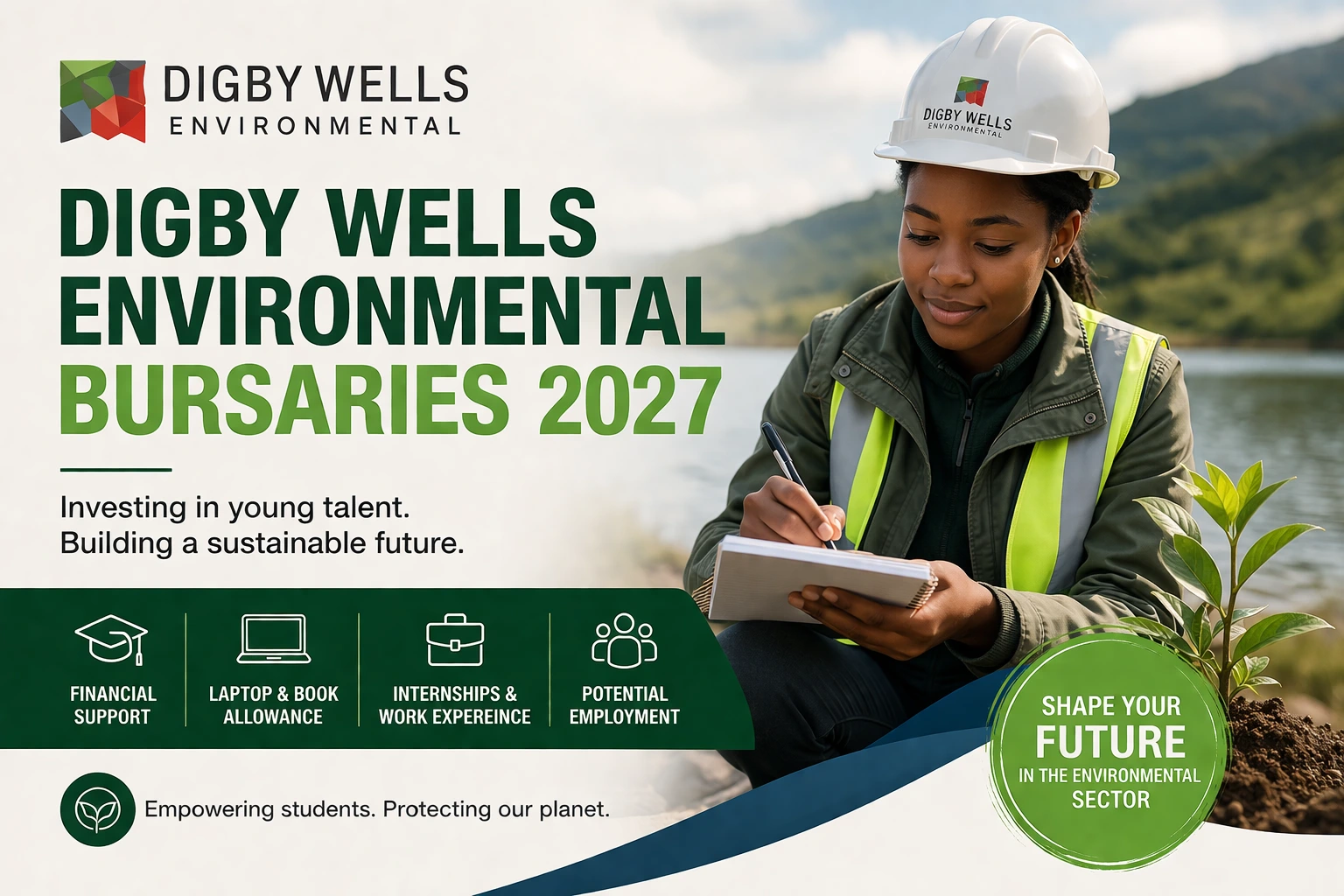
If you’re passionate about protecting the environment and building a meaningful career, the Digby Wells Environmental Bursaries 2027 could be a powerful opportunity. This bursary programme is designed to support South African students who want to study environmental-related fields while receiving financial and career development support.
In a country facing complex environmental challenges—from water scarcity to sustainable mining—there’s a growing demand for skilled professionals. This bursary not only helps you pay for your studies but also connects you to real-world experience and potential employment after graduation.
What You Should Know First
The Digby Wells Environmental Bursary is a funding programme aimed at academically strong and environmentally driven students in South Africa. It covers key study costs and offers additional career opportunities like internships and possible employment.
In simple terms:
- You get financial support for your studies
- You gain work experience during your degree
- You may secure a job after graduating
What Is the Digby Wells Environmental Bursary?
The Digby Wells Environmental Bursary is more than just financial aid. It’s a structured support system designed to help students succeed academically and transition into the environmental workforce.
The programme focuses on:
- Developing future environmental professionals
- Supporting sustainability efforts in South Africa
- Bridging the gap between education and employment
Unlike many bursaries, this one actively invests in your career path—not just your tuition.
Fields of Study Covered
The bursary targets disciplines that directly contribute to environmental sustainability and responsible development.
Core Fields You Can Study
You can apply if you’re pursuing any of the following:
- Environmental Science – Understanding ecosystems and environmental issues
- Environmental Management – Managing environmental impact in industries
- Hydrology – Studying water systems and distribution
- Hydrogeology – Understanding groundwater systems
- Aquatic Ecology – Studying water-based ecosystems
- Geographical Information Systems (GIS) – Mapping and spatial analysis
- Community Development – Working with communities on sustainable solutions
- Social Sciences & Sociology – Understanding human impact on the environment
- Stakeholder Engagement – Managing relationships in environmental projects
Why These Fields Matter
These areas are critical in industries like:
- Mining
- Infrastructure development
- Water management
- Conservation
For example, a hydrologist might help design systems to prevent water shortages, while a GIS specialist could map environmental risks in a mining area.
What the Bursary Covers
One of the strongest advantages of this programme is its comprehensive financial support.
Main Financial Benefits
The bursary typically includes:
- Tuition fees – Covers your academic costs
- Book allowance – Helps with study materials
- Laptop – Supports digital learning and research
This means you can focus on your studies without constant financial pressure.
Additional Benefits That Set It Apart
This bursary goes beyond funding by offering career-building opportunities.
1. Vacation Work and Internships
During university holidays, you may get the chance to:
- Work on real environmental projects
- Gain hands-on industry experience
- Build professional networks
2. Potential Employment After Graduation
A standout feature is the possibility of employment with Digby Wells Environmental after completing your studies.
Important detail:
- The employment period is usually equal to the time you were funded
For example:
- If your bursary covered 3 years, you may work for the company for 3 years
This creates a clear pathway from education to employment.
Eligibility Criteria Explained
To qualify, you must meet several requirements. Let’s break them down clearly.
Basic Requirements
You must:
- Be a South African citizen
- Be in Matric or already completed Matric
- Study (or plan to study) full-time
- Be accepted into a recognised tertiary institution
Academic Requirements
- You need a strong academic record
- Competitive marks increase your chances significantly
Personal Qualities
Digby Wells is not only looking for good grades—they want students who:
- Are passionate about environmental sustainability
- Show responsibility and commitment
- Care about community and environmental impact
Example:
A student volunteering in a recycling initiative or community clean-up project may stand out.
Required Supporting Documents
Your application must include several documents. Missing even one can lead to rejection.
Checklist
Make sure you submit:
- Certified copy of your ID document
- Matric certificate or latest results
- Academic transcripts (if already studying)
- Proof of university acceptance or registration
- Updated CV with contact details
- A strong motivational letter
see also: Old Mutual Actuarial Science Bursary 2026: A Complete Guide for South African Students
see also: SAICA Thuthuka Bursary 2027: A Complete Guide for South African Students
How to Write a Strong Motivational Letter
This is one of the most important parts of your application.
What to Include
Your letter should clearly explain:
- Your career goals
- What do you want to become?
- Why you chose your field
- What inspired your interest?
- Your passion for the environment
- Show real examples, not just statements
- Why you deserve the bursary
- Highlight achievements and values
Example Approach
Instead of saying:
“I love the environment.”
Say:
“I became interested in environmental science after seeing water shortages in my community, which motivated me to pursue solutions in hydrology.”
How to Apply for the Digby Wells Environmental Bursaries 2027
The application process is straightforward, but attention to detail is crucial.
Step-by-Step Process
- Prepare all required documents
- Ensure they are certified and clear
- Write a strong motivational letter
- Submit your application through the official platform
Click here to apply for Digby Wells Bursary South Africa 2027:
Important Tip
- The closing date is not disclosed
- Apply as early as possible to avoid missing out
Why Choose the Digby Wells Environmental Bursary?
There are many bursaries in South Africa—but this one stands out for several reasons.
1. Career-Focused Support
You’re not just funded—you’re guided into a career.
2. Industry Experience
You gain real-world exposure before graduating.
3. Employment Opportunity
Few bursaries offer a direct path to employment.
4. Contribution to Sustainability
You become part of solving real environmental challenges.
Common Misunderstandings About Digby Wells Environmental Bursaries
“It’s only about academic performance”
Not true. While grades matter, your passion and commitment to environmental sustainability are equally important.
“You must already be studying to apply”
Incorrect. Matric students can also apply if they plan to study in a relevant field.
“It only covers tuition”
False. The bursary also includes books, a laptop, and career development opportunities.
“There’s no obligation after graduation”
Misleading. You may be required to work for Digby Wells after graduating, depending on your funding period.
Key Takeaways
- The Digby Wells Environmental Bursaries 2027 support students in environmental-related fields
- It covers tuition, books, and a laptop
- Offers internships and potential employment
- Open to South African students in Matric or tertiary studies
- Requires a strong academic record and environmental passion
- Early application is essential due to no fixed closing date
Frequently Asked Questions (FAQs.
1. When is the closing date for the Digby Wells Environmental Bursaries 2027?
The closing date is not specified. It’s best to apply as soon as possible to avoid missing the opportunity.
2. Can I apply if I’m still in Matric?
Yes. As long as you plan to study a qualifying field and meet the requirements, you can apply.
3. Do I need to pay the bursary back?
No direct repayment is required, but you may need to work for Digby Wells Environmental after graduation.
4. What makes a strong application?
A combination of:
Good academic results
A clear career vision
Genuine passion for environmental sustainability
A well-written motivational letter
Final Thoughts
The Digby Wells Environmental Bursaries 2027 offer more than financial relief—they provide a structured path into a meaningful and impactful career. If you’re serious about environmental sustainability and willing to put in the effort, this opportunity can shape your future in powerful ways.
Apply early, prepare carefully, and present a strong, authentic application.
About The Author
