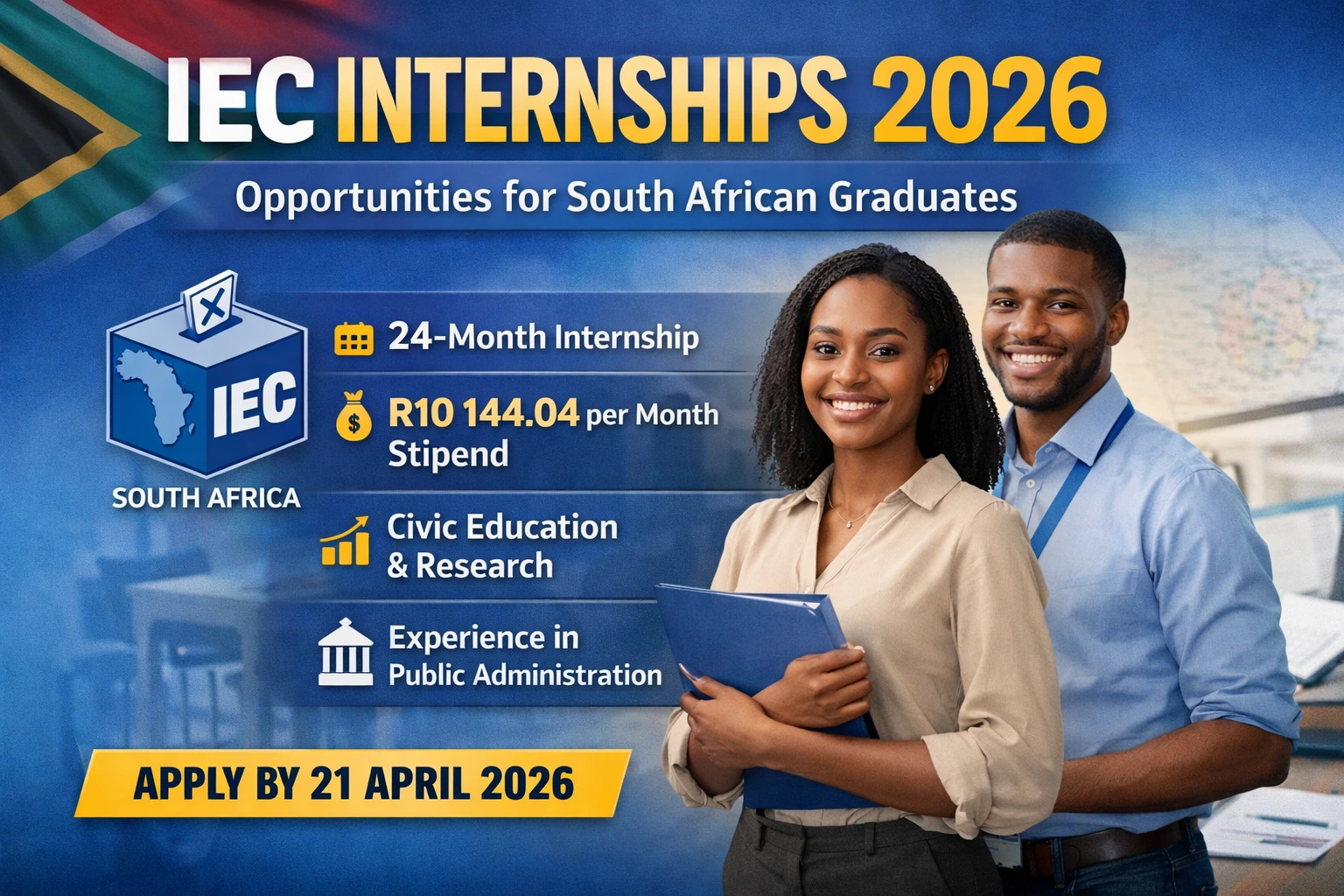
The Electoral Commission Internships 2026 offer a valuable opportunity for young South African graduates to step into the world of public service, governance, and civic education. If you’ve ever wanted to contribute to democracy while gaining real workplace experience, this programme is designed for you.
Internships like this are more than just temporary jobs—they are structured learning pathways that help you transition from university into a professional career. With a 24-month duration, a monthly stipend, and hands-on exposure to national processes, this internship can be a strong starting point for careers in public administration, political science, and governance.
This guide breaks down everything you need to know—from eligibility and responsibilities to application tips—so you can apply with confidence.
What You Should Know First
Before diving deeper, here are the most important facts about the Electoral Commission Internships 2026:
- Closing Date: 21 April 2026
- Location: Centurion (National Office)
- Duration: 24 months
- Stipend: R10 144.04 per month
- Positions: Intern – Civic Education & Research (2 posts)
- Focus Area: Outreach, civic education, and research
👉 This internship is best suited for unemployed graduates under 35 who have never participated in an internship before and want to build a career in the public sector.
Understanding the Internship Programme
The Electoral Commission is a Chapter 9 constitutional institution, meaning it plays a critical role in protecting and strengthening South Africa’s democracy. Its main responsibility is to manage elections and ensure they are free and fair.
What Makes This Internship Unique?
Unlike many private-sector internships, this programme places you at the heart of democratic processes. You won’t just be doing admin work—you’ll contribute to:
- Civic education initiatives
- Public awareness campaigns
- Research on voter engagement
- Stakeholder coordination
This gives you a deeper understanding of how governance works in real life.
Internship Role: Civic Education & Research
The focus keyword: Electoral Commission Internships 2026 is especially relevant here because this role combines both practical and analytical work.
Key Responsibilities Explained
Here’s what you’ll likely be doing during the programme:
1. Administrative Support
You’ll assist with everyday office tasks such as:
- Organising documents
- Managing correspondence
- Maintaining filing systems
👉 This builds your professional discipline and attention to detail.
2. Supporting the Outreach Management System (OMS)
This involves working with internal systems used to:
- Track outreach activities
- Monitor engagement with communities
👉 You’ll gain technical and system-based experience, which is highly valuable.
3. Stakeholder Coordination
You’ll help communicate with:
- Community groups
- Government departments
- Civil society organisations
👉 This improves your communication and networking skills.
4. Research and Reporting
Tasks include:
- Preparing reports and presentations
- Taking meeting minutes
- Assisting in research projects
👉 This strengthens your analytical thinking and writing skills.
5. Event and Outreach Coordination
You may assist in:
- Planning civic education events
- Coordinating logistics
👉 This gives exposure to project management basics.
Who Should Apply?
The Electoral Commission Internships 2026 have specific eligibility criteria.
Minimum Requirements
You must:
- Have Matric (Grade 12)
- Hold a Bachelor’s Degree or National Diploma in:
- Public Administration
- Political Sciences
- Be 35 years or younger
- Be unemployed
Important Restrictions
You must NOT:
- Have previous work experience in your field
- Have participated in any internship before
👉 This ensures the programme supports first-time job seekers.
Skills That Will Help You Succeed
Even if you meet the minimum requirements, your success depends on your skills.
Essential Competencies
- Strong communication skills (written and verbal)
- Basic computer literacy (Microsoft Office)
- Good time management
- Ability to work independently and in teams
- Professional attitude and interpersonal skills
💡 Tip: If you’ve done group projects or presentations at university, highlight them—they directly relate to this role.
Step-by-Step: How the Internship Builds Your Career
Understanding how this internship fits into your long-term goals is important.
Step 1: Exposure to Government Systems
You’ll learn how a constitutional institution operates.
Step 2: Skill Development
You’ll build:
- Administrative skills
- Research capabilities
- Communication skills
Step 3: Professional Experience
After 24 months, you’ll have:
- Real work experience
- References
- A stronger CV
Step 4: Career Opportunities
This can lead to roles in:
- Government departments
- NGOs
- Policy research organisations
See also: TFG YES Intern Programme 2026: A Real Stable Opportunity for Future Retail Planners in South Africa
See also: SANParks Internships 2026: Complete Guide for South African Graduates
Application Process (Explained Clearly)
Applying for the Electoral Commission Internships 2026 is straightforward, but missing details can cost you the opportunity.
Required Documents
Make sure you submit:
- Updated CV
- Certified copies of qualifications
- Certified copy of ID
- Driver’s licence (if applicable)
⚠️ Missing documents = automatic disqualification.
Important Conditions
- Preference may be given to persons with disabilities
- You must not have a high political party profile
- You will undergo:
- Qualification checks
- Criminal checks
- Credit checks
👉 These checks ensure integrity and neutrality, which are critical in electoral work.
Click here to apply for Electoral Commission Internship Programme 2026:
Why This Internship Matters in South Africa
The Electoral Commission Internships 2026 are not just about employment—they are about nation-building.
Your Role in Democracy
Through this programme, you help:
- Educate citizens about voting
- Strengthen democratic participation
- Support fair electoral processes
This gives your work real societal impact, not just personal gain.
Common Misunderstandings About Electoral Commission Internships 2026
Many applicants misunderstand how this programme works. Let’s clear that up.
1. “It’s Just Admin Work”
❌ Not true
✔️ While admin tasks exist, the role includes research, outreach, and stakeholder engagement.
2. “You Need Political Connections”
❌ False
✔️ In fact, having a strong political profile can disqualify you.
3. “Any Degree Can Apply”
❌ Incorrect
✔️ Only relevant qualifications (Public Administration or Political Science) are accepted.
4. “You Can Apply Even If You Did Another Internship”
❌ Not allowed
✔️ This programme is strictly for first-time interns.
Key Takeaways
- The Electoral Commission Internships 2026 are a 24-month programme based in Centurion
- You’ll earn a monthly stipend of R10 144.04
- The internship focuses on civic education, research, and outreach
- Only first-time interns under 35 with relevant qualifications can apply
- You’ll gain valuable experience in a constitutional institution
- The programme can open doors to careers in government and policy sectors
Frequently Asked Questions (FAQs)
1. Can I apply if I studied a different course?
No. Only qualifications in Public Administration or Political Sciences are accepted.
2. Is this internship permanent employment?
No. It is a 24-month fixed-term internship, but it can lead to future opportunities.
3. What happens if I don’t get feedback?
If you don’t hear back by 07 June 2026, consider your application unsuccessful.
4. Do I need work experience to apply?
No. In fact, you must NOT have prior work experience in your field.
Final Thoughts
The Electoral Commission Internships 2026 provide a rare chance to gain meaningful experience while contributing to South Africa’s democratic system. For graduates struggling to enter the job market, this programme offers both financial support and professional growth.
If you meet the requirements, take the opportunity seriously. Prepare your documents carefully, apply before the deadline, and present yourself as someone eager to learn and contribute.
Opportunities like this don’t just build careers—they help shape the future of the country.
About The Author
