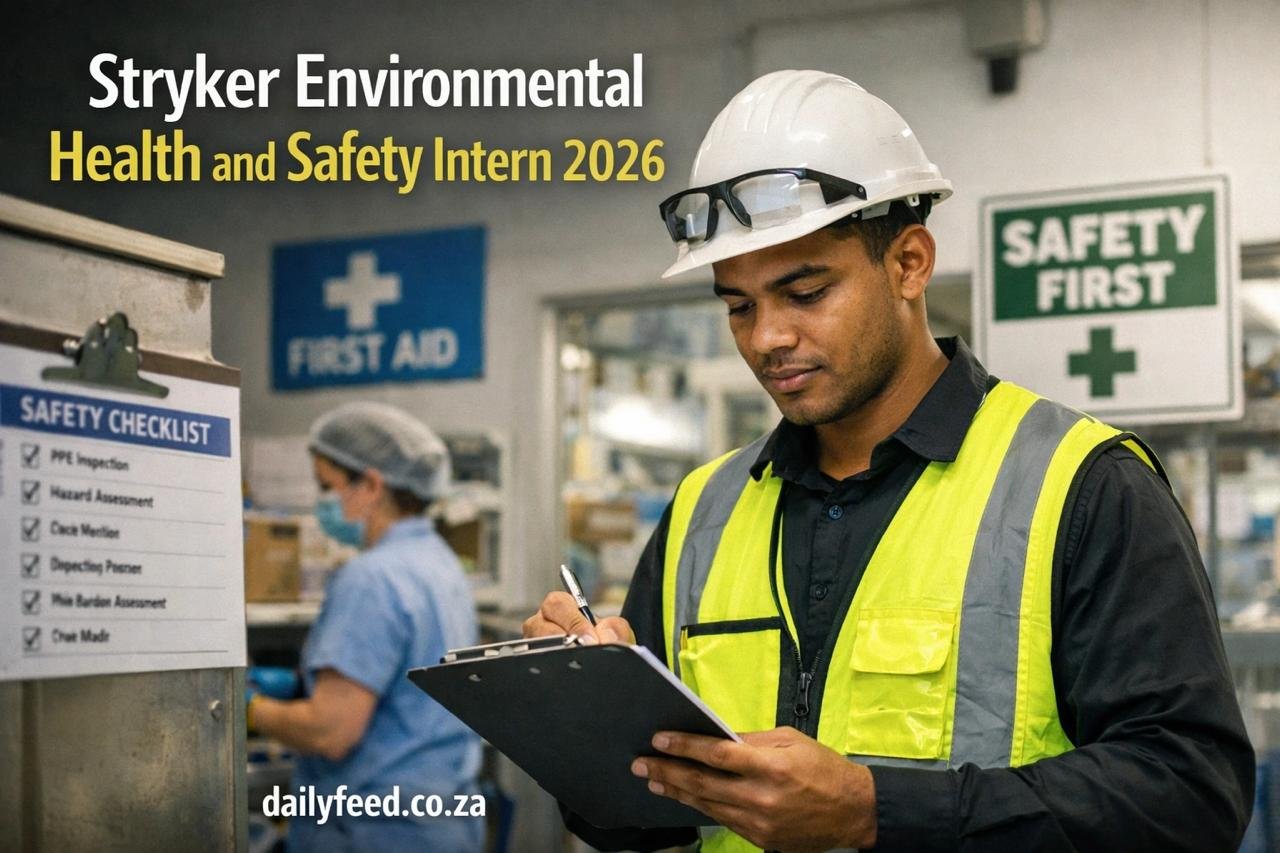
For many young South Africans trying to enter the safety field, the Stryker Environmental Health and Safety Intern 2026 role arrives at a moment that feels both hopeful and uncertain. Jobs in occupational health and safety are growing, yet getting that first real workplace experience remains one of the biggest hurdles.
This opportunity matters now because employers increasingly expect practical exposure, not just certificates. For graduates holding a SAMTRAC or similar qualification, internships like this can determine whether they stay stuck in theory or move into a real career.
And in a country where workplace safety challenges still affect industries daily, roles that build hands-on EHS skills carry genuine weight.
The Reality Behind the Job Title
At first glance, the internship sounds straightforward: supporting environmental, health, and safety standards within a global medical technology company like Stryker.
But the reality is more layered.
This isn’t a purely technical safety role, nor is it just an administrative internship. Instead, it sits right in the middle, where documentation, compliance, communication, and practical safety awareness all intersect.
On a typical day, an intern could:
- Update safety documentation or incident logs
- Assist with workplace risk assessments
- Track safety equipment procurement
- Help prepare reports for internal audits
- Communicate with suppliers about compliance requirements
This combination reflects a truth often overlooked in safety careers: a large portion of EHS work happens behind the scenes, long before inspections or incidents occur.
ALSO APPLY FOR Rand Water Graduate Internship Programme 2026
Why This Internship Feels Encouraging for Beginners
One of the most reassuring aspects of this role is that it doesn’t expect full professional experience. Instead, it focuses on foundational competencies — the exact areas many entry-level candidates struggle to develop.
For example:
- Basic hazard identification knowledge
- Familiarity with safety legislation
- Strong attention to detail
- Confidence using Microsoft Office tools
These aren’t glamorous skills, but they are realistic ones. In fact, many safety professionals say their careers began not with high-risk site inspections but with careful documentation and reporting tasks.
The internship acknowledges this reality, making it accessible to youth who may only have classroom knowledge or short training exposure.
ALSO APPLY FOR: Glencore Environmental Internship 2026 Brings Exciting Opportunities for Graduates
The Hidden Skills You’ll Actually Build
What makes this internship particularly valuable is not just what it teaches about safety — but what it quietly develops in the background.
Administrative Discipline
Many safety graduates underestimate how much documentation drives compliance. Learning to maintain accurate reports, audit trails, and records is often what distinguishes effective safety practitioners.
Professional Communication
Negotiating with suppliers or coordinating safety requirements requires clarity and confidence. Interns often discover that communication skills matter as much as technical knowledge.
Practical Risk Awareness
Exposure to real workplace hazards — even in an observational role — helps transform textbook knowledge into instinctive judgment.
These soft yet critical skills tend to shape long-term career growth more than initial technical expertise.
The Emotional Side of Working in Safety
One aspect rarely discussed in job descriptions is how safety work feels.
For many newcomers, the first months can feel overwhelming. There’s pressure to avoid mistakes because errors in safety documentation can have real consequences. Interns may also feel intimidated speaking to experienced staff about compliance issues.
Yet this challenge is part of the growth process.
Many EHS professionals describe their early internships as a turning point — where they learned to balance responsibility with confidence, and where safety shifted from theory to lived reality.
This role is unlikely to be fast-paced or glamorous. Instead, it will probably feel steady, structured, and sometimes repetitive. But that stability is precisely what helps build professional discipline.
A Balanced Perspective: The Limitations to Expect
While this internship offers strong entry-level exposure, it’s important to understand its limits.
It may not involve:
- Extensive field inspections
- Advanced safety engineering work
- High-level policy development
Instead, it focuses on foundational operational support.
For some candidates hoping for immediate hands-on fieldwork, this could feel slower than expected. However, in safety careers, mastering compliance processes first often opens doors to more technical roles later.
What This Role Says About the Future of EHS Careers
Internships like this reflect a broader shift in workplace safety.
Employers are increasingly looking for professionals who combine:
- Technical safety knowledge
- Administrative accuracy
- Strong communication skills
- Digital reporting abilities
The traditional image of safety officers as purely site-based inspectors is changing. Today’s EHS professionals often act as coordinators, analysts, and compliance managers.
This internship quietly prepares candidates for that evolving reality.
NOTE: Closing Date is not disclosed on the official Company Website, applicants are encouraged to apply as soon as possible.
APPLY HERE FOR THE STRYKER ENVIRONMENTAL HEALTH AND SAFETY INTERN 2026
Stryker Environmental Health and Safety Intern 2026
FAQs About the Stryker Environmental Health and Safety Intern 2026
Who should apply for this internship?
It’s best suited for young South Africans with a SAMTRAC or similar occupational health and safety qualification.
Is this a technical safety role?
Not primarily. It focuses more on compliance support, documentation, and administrative EHS tasks.
Will it lead directly to a safety officer position?
Not immediately, but it provides foundational experience that can help candidates qualify for entry-level safety roles.
Do you need previous work experience?
No formal experience is required, but basic knowledge of workplace risk assessment is important.
What skills matter most for success?
Attention to detail, communication ability, organization, and confidence working with safety documentation.
The Stryker Environmental Health and Safety Intern 2026 opportunity stands out not because it promises fast success, but because it offers something far more realistic, a steady, practical entry point into the world of workplace safety. For young professionals trying to bridge the gap between qualifications and real experience, this kind of role can quietly shape long-term career confidence. By combining compliance support, risk awareness, and everyday operational exposure within a global organisation like Stryker, the internship reflects what modern EHS careers truly demand: patience, attention to detail, and a commitment to protecting people behind the scenes.
About The Author
