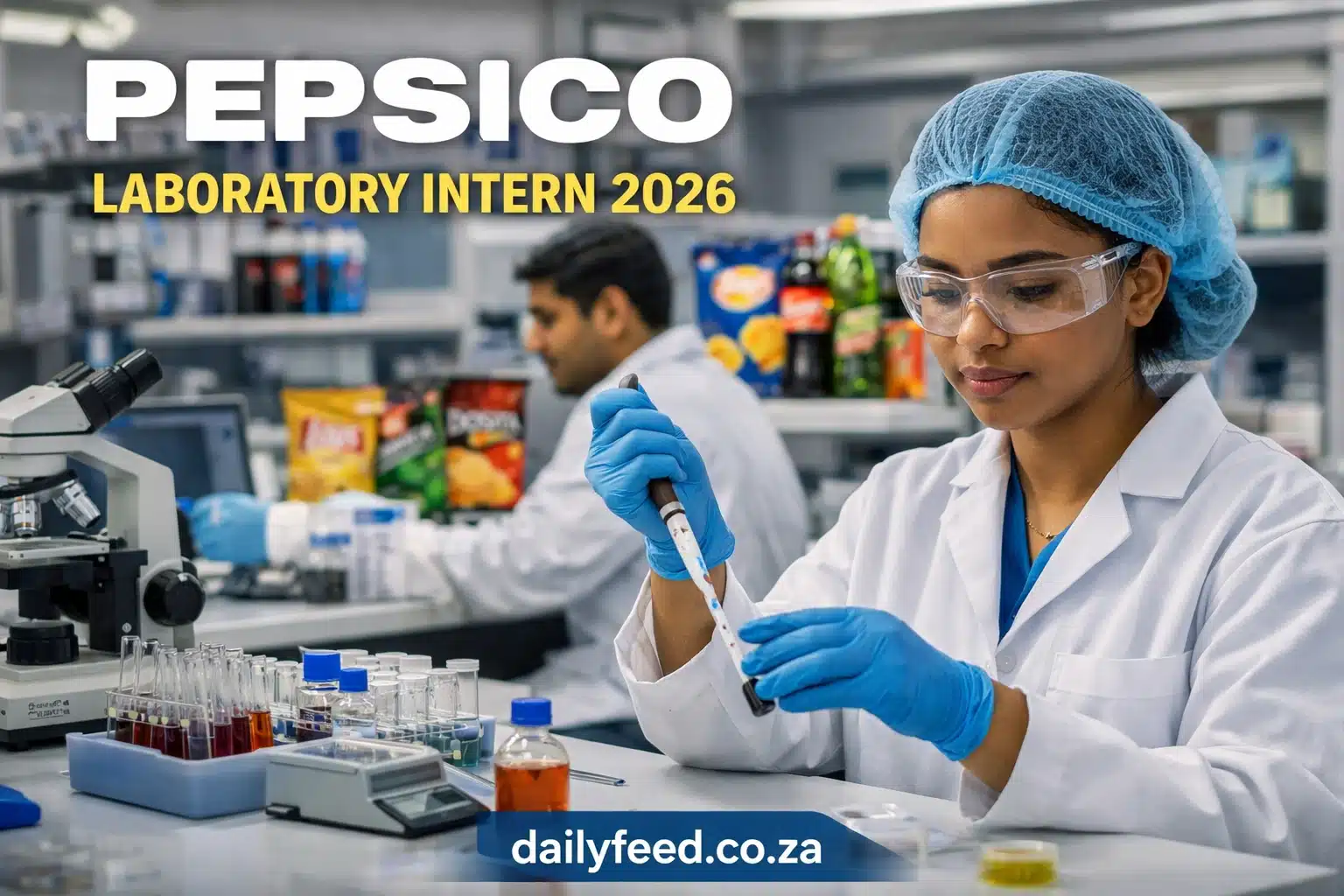
If you’re a Food Technology graduate wondering where real industry experience begins, this opportunity speaks directly to you.
The PepsiCo Laboratory Intern 2026 role matters now because employers increasingly want graduates who understand compliance, data accuracy, and production realities, not just theory.
PepsiCo’s laboratory environment offers exposure to the daily mechanics of quality assurance inside a global food and beverage operation. For many early-career professionals, this is where textbook knowledge meets production pressure.
A Global Company, a Ground-Level Role
PepsiCo operates at enormous scale, with products consumed more than a billion times a day across over 200 countries. But internships like this sit far from glossy brand campaigns.
A laboratory intern works at plant level, where measurements, tolerances, and deviations directly affect product safety and consistency.
Instead of “learning about quality,” interns participate in it.
You’re not observing from a distance. You’re calibrating equipment, analysing samples, documenting findings, and reporting results to frontline teams who depend on accurate data.
That distinction is important.
What the Work Actually Looks Like
🔬 Inside the Day-to-Day Lab Reality
This internship is built around three practical pillars:
1. Laboratory Analysis
Daily testing of raw materials, in-process samples, and finished goods. This may involve moisture analysis, microbiological checks, chemical testing, or allergen swabbing depending on the plant’s focus.
2. Data & Reporting
Interns coordinate data collation on shift. That means ensuring test results are captured correctly, reports are completed, and deviations are flagged.
Accuracy here isn’t academic — it influences release decisions and production adjustments.
3. Equipment Calibration & Maintenance
Laboratory instruments drift over time. Calibration ensures readings remain reliable. An intern helps verify and maintain measurement integrity.
A single miscalibrated device can distort an entire batch’s data.
When Things Go Wrong and Why That’s Valuable
⚠️ Learning from Out-of-Specification Results
One of the most educational aspects of lab work is handling out-of-specification (OOS) results.
When a test falls outside acceptable limits, interns assist with:
- Investigating root causes
- Reviewing sampling methods
- Checking calibration status
- Implementing corrective actions
This is where analytical thinking becomes practical problem-solving.
You begin to see that quality failures are rarely random. They’re often linked to process variation, handling errors, environmental factors, or equipment issues.
Understanding this early builds strong professional judgment.
Exposure to Food Safety Systems
🛡️ Beyond Testing: Compliance & Audits
Modern laboratories operate inside strict regulatory and safety frameworks. Interns engage with systems such as:
- HACCP monitoring
- FSSC 22000 preparation
- AIB standards
- Internal ASHA Lab Audits
Rather than abstract compliance concepts, interns witness:
- Documentation audits
- Non-conformance tracking
- Corrective action processes
- Audit preparation pressure
This experience is highly transferable.
Employers value graduates who understand how quality systems function under real operational constraints.
Working with Production, Not Apart from It
🏭 Communication Under Shift Conditions
Laboratory interns don’t work in isolation.
They:
- Provide feedback to frontline teams
- Attend production meetings
- Communicate results during shifts
- Support trials and commissioning
This builds communication skills many graduates lack.
Explaining technical findings clearly to operators, supervisors, or engineers is a critical workplace ability.
It’s also where confidence develops.
Skills That Quietly Shape Careers
📈 What You’re Really Building
While the title says “intern,” the competencies developed are foundational:
- Attention to detail
- Data accuracy discipline
- Analytical thinking
- Integrity in reporting
- Shift adaptability
These skills influence long-term career direction in:
- Quality Assurance
- Food Safety
- Laboratory Management
- Regulatory Affairs
- Production & Process Improvement
Internships like this often clarify whether you enjoy lab environments, compliance systems, or operational problem-solving.
Entry Requirements and What They Signal
The qualifications are straightforward:
- Matric
- Food Technology Diploma (or equivalent)
- Computer literacy
- Strong written & oral communication
- Ability to work shifts
But beyond eligibility, they signal expectations.
This is a role requiring reliability, consistency, and professionalism — not just academic knowledge.
Closing date is not indicated on the Company’s official Website.
Apply for the PepsiCo Laboratory Intern 2026
FAQs About the PepsiCo Laboratory Intern 2026
Is this internship suitable for recent graduates?
Yes. It’s designed for candidates with a Food Technology Diploma or equivalent qualification seeking practical industry exposure.
Will I only perform basic lab tasks?
No. Responsibilities include analysis, calibration, reporting, audits, investigations, and project support.
Do laboratory interns work shifts?
Yes. The role requires shift flexibility, reflecting real manufacturing operations.
Is prior lab experience required?
Not always, but familiarity with lab techniques and quality concepts is advantageous.
What career paths can this lead to?
Common directions include Quality Assurance, Food Safety, Compliance, and Laboratory roles.
A Balanced Perspective
An internship at PepsiCo offers meaningful exposure, but expectations should remain realistic.
It’s structured learning, not guaranteed employment.
Work can be repetitive. Shifts can be demanding. Precision is non-negotiable.
Yet for many graduates, this environment provides clarity, confidence, and credibility that classroom education alone cannot.
For those serious about food quality and safety careers, the PepsiCo Laboratory Intern 2026 role represents something valuable:
A first real test of professional readiness.
About The Author
