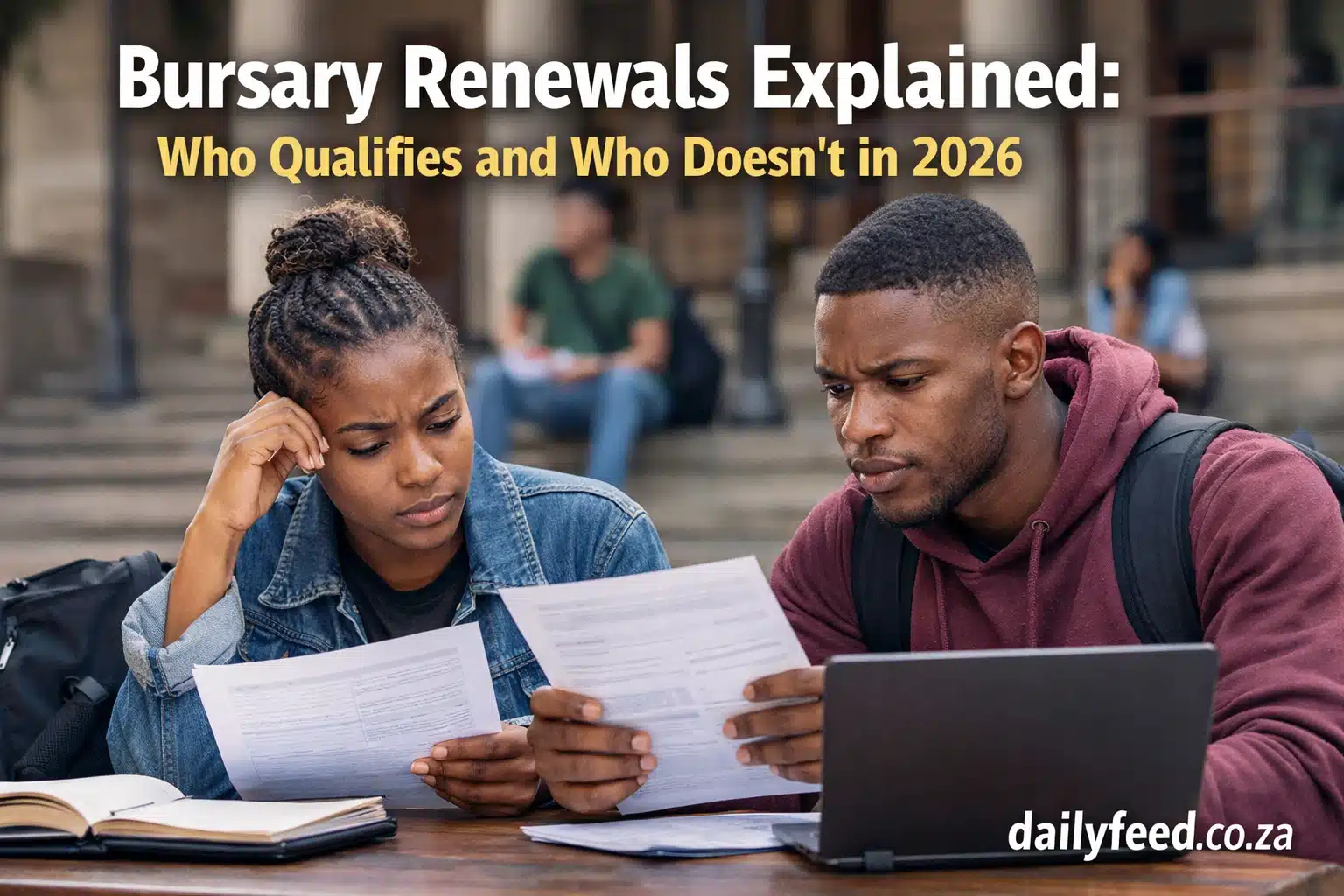
If you’re relying on a bursary to stay in university next year, 2026 may already feel uncertain. Many students assume renewal is automatic — until an email, or silence, proves otherwise. This guide is for funded students who need clarity now, before registration deadlines arrive.
Bursary renewals explained properly matter because one missed requirement can quietly end your funding, even if you’re still enrolled and trying your best.
Why Bursary Renewals Are Causing So Much Anxiety in 2026
Bursary funding in South Africa has always been competitive, but renewals are becoming stricter. Funders are under pressure from rising tuition costs, limited budgets, and growing demand.
In 2026, many organisations are reviewing not just who they fund, but whether continuing students still meet the original conditions. This means renewals are no longer treated as a formality.
Students often find out too late that academic performance, funding rules, or administrative issues have shifted. By the time rejection letters arrive, registration has already started — and alternatives are limited.
That’s where understanding bursary renewals explained in plain language becomes essential.
APPLY FOR The Vulamathuba Bursary Grant Fund 2026
Who Usually Qualifies for a Bursary Renewal
While each bursary has its own rules, most renewals follow a similar pattern.
You’re more likely to qualify if you meet all of the following:
• You passed most or all of your modules
• You met the minimum academic average stated in your contract
• You progressed to the next year of study without interruption
• You submitted renewal documents on time
• Your course and institution remain approved by the funder
For example, a student who passed all modules with a 65% average and submitted transcripts early is rarely declined — even if their marks aren’t outstanding.
Funders often value consistency more than perfection. Showing steady progress and compliance matters.
APPLY FOR Shoprite’s 2026 Bursary Programme
Common Reasons Students Lose Their Bursary Funding
This is where many students get caught off guard.
Bursaries are commonly not renewed due to:
• Failing one or more core modules
• Dropping below the required average (often 60% or 65%)
• Changing courses or institutions without approval
• Late or missing renewal submissions
• Disciplinary or conduct issues
• Repeating a year without permission
One overlooked detail is administrative failure. Students sometimes qualify academically but lose funding because they missed an email, uploaded the wrong document, or assumed someone else handled the process.
In 2026, funders are less likely to follow up. If requirements aren’t met, funding simply stops.
Apply for the Cipla bursary program 2026
Grey Areas That Funders Don’t Always Explain
Not every case is black and white.
Some students fall into grey zones and this is where uncertainty grows.
For example:
• Passing all modules but just below the average
• Failing one module but progressing overall
• Mental health or family disruptions affecting performance
• Institutional delays in releasing results
In these cases, decisions vary widely. Some funders allow appeals. Others don’t.
What many students don’t realise is that motivation letters and academic explanations can matter — but only if submitted correctly and on time.
Bursary renewals explained honestly means acknowledging this: outcomes aren’t always predictable, even when you feel your situation is reasonable.
What Students Can Do Now to Protect Their Funding
While you can’t control every outcome, you can reduce risk.
Before the end of 2025:
• Re-read your bursary contract carefully
• Confirm renewal requirements with the funder or administrator
• Track your academic average realistically
• Prepare documents early (transcripts, proof of registration)
• Ask about appeal processes before you need them
If you’re already worried about renewal, start exploring backup options now — partial bursaries, NSFAS top-ups, payment plans, or institutional aid.
Waiting until rejection arrives is the most damaging mistake.
Frequently Asked Questions (FAQs)
Are bursary renewals automatic in 2026?
No. Most bursaries require annual review, academic proof, and timely submission.
Can I still qualify if I failed one module?
Sometimes. It depends on the funder, the module, and whether you progressed overall.
Do funders check marks or just pass/fail?
Most check averages, not just progression status.
What happens if my bursary is not renewed?
You’ll need to self-fund, apply for alternative aid, or negotiate payment options with your institution.
Can I appeal a bursary renewal decision?
Some bursaries allow appeals, but many do not. Always check early.
Final Thoughts
For students depending on financial aid, bursary renewals explained clearly can be the difference between continuing your studies and dropping out unexpectedly.
Renewal decisions in 2026 are stricter, quieter, and faster. The students who stay funded are usually the ones who understand the rules early — not the ones who assume things will work out.
Clarity doesn’t remove uncertainty, but it gives you time to respond.
About The Author
