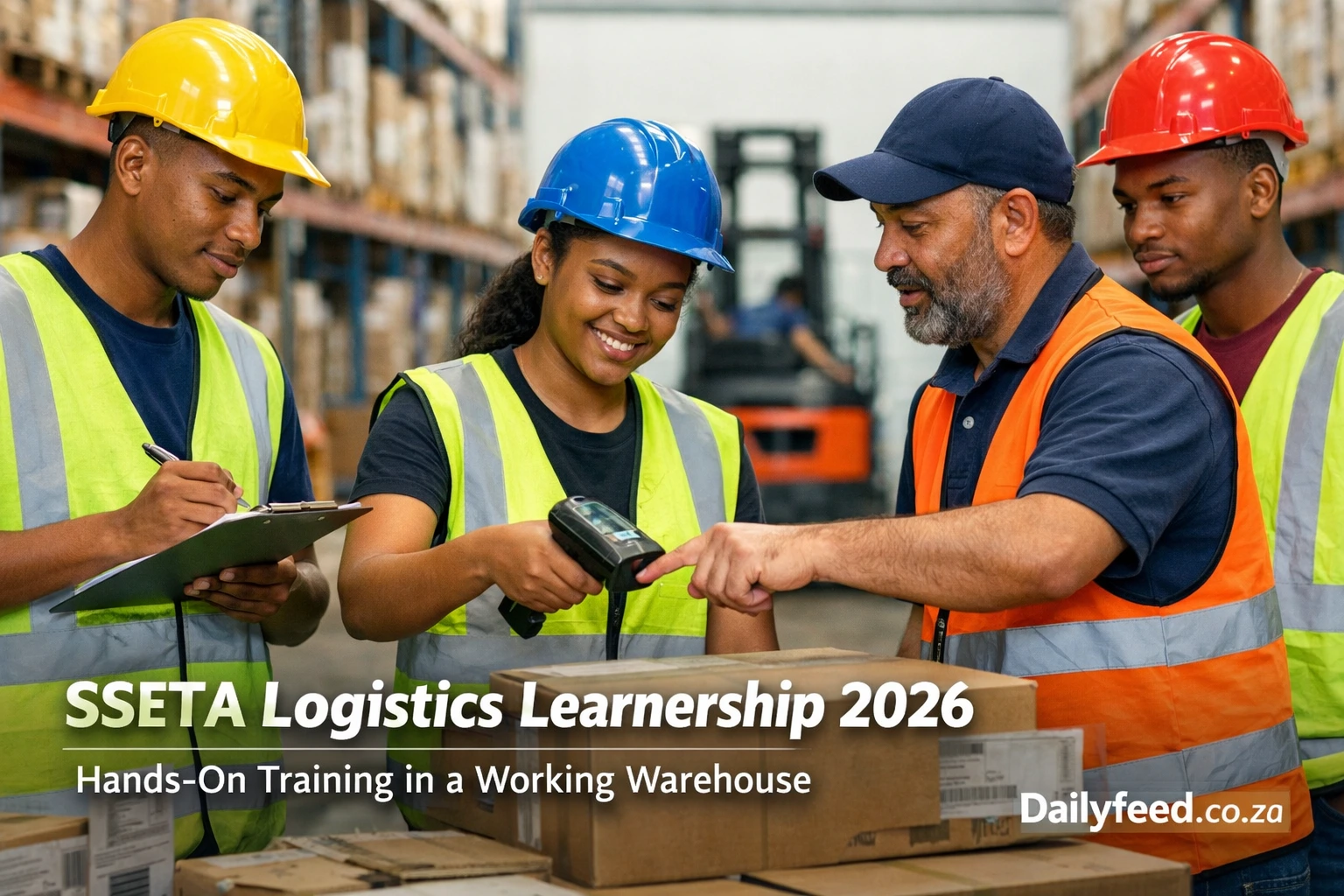
The SSETA Logistics Learnership 2026 offers unemployed South African youth paid training, real work experience, and a monthly R5700 stipend.
South Africa’s logistics industry doesn’t stop — even when the economy slows. Goods still need to move, warehouses still operate, and supply chains still depend on skilled people. For unemployed young South Africans, the SSETA Logistics Learnership 2026 arrives at a moment when practical, paid training matters more than promises.
This learnership is designed for youth who want a way into work, not theory alone. It combines real workplace exposure with a recognised qualification and a monthly R5700 stipend, offering both skills and short-term financial relief in a tough job market.
Why Logistics Skills Matter Right Now
Logistics sits quietly behind almost everything people use daily — food deliveries, retail stock, manufacturing inputs, and online orders. When logistics fails, shelves empty and delays ripple across the economy.
South Africa continues to face challenges such as port congestion, transport inefficiencies, and rising demand from e-commerce. These pressures increase the need for trained entry-level workers who understand how warehouses, inventory systems, and transport coordination actually function.
The SSETA Logistics Learnership 2026 responds directly to this reality by preparing young people for roles that already exist, rather than speculative future jobs.
How the SSETA Logistics Learnership Works
This is not a classroom-only programme. Learners move between structured theory sessions and practical workplace training at host companies operating in logistics and supply chain environments.
The programme typically runs for 12 to 18 months, depending on the qualification stream. During this time, learners are exposed to everyday operational tasks such as:
- Managing stock and inventory records
- Assisting with dispatch and receiving
- Supporting warehouse coordination
- Understanding transport scheduling
- Following workplace safety and compliance rules
Mentorship plays a central role. Learners are guided by supervisors who already work in logistics operations, helping bridge the gap between learning material and real-world demands.
The R5700 Monthly Stipend: What It Really Means
For many applicants, the R5700 stipend is not just a benefit — it is what makes participation possible.
The stipend helps cover transport costs, meals, data, and basic personal expenses while learners train. Unlike short-term casual work, it provides predictable monthly income throughout the programme.
There are no application fees and no deductions from the stipend. Learners receive the full amount directly, allowing them to focus on completing the programme rather than chasing temporary income elsewhere.
What You Gain After Completing the Learnership
On successful completion, learners receive a recognised NQF Level 3 or Level 4 logistics qualification. This is widely accepted across the logistics, transport, retail, and manufacturing sectors.
Typical entry-level roles after completion include:
- Logistics assistant
- Inventory or stock clerk
- Warehouse controller
- Dispatch and receiving assistant
- Junior supply chain administrator
Because logistics supports multiple industries — from agriculture to retail and manufacturing — many learners find employment shortly after qualifying. With experience, progression into supervisory roles is common in distribution and warehouse environments.
Who Can Apply — and Who Usually Succeeds
Basic Requirements
Applicants must meet the following minimum criteria:
- South African citizen
- Youth within the required age bracket
- Grade 11 completed (Grade 12 is an advantage)
- Certified academic records available
Personal Qualities That Matter
No previous logistics experience is required. However, learners who succeed often show:
- Reliability and punctuality
- Attention to detail
- Willingness to learn
- Basic computer skills
- Ability to work in a team
Logistics environments are structured and deadline-driven. Applicants who understand this reality tend to adapt more quickly.
Application Deadline and What to Expect
Applications for the SSETA Logistics Learnership 2026 close 20 January 2026, though availability may vary slightly by region and training provider.
Due to high demand, early applications are more likely to be processed. Shortlisted candidates are usually contacted via email or phone, which makes accurate contact details critical.
How to Apply Without Complications
Applicants must apply through SSETA-approved training providers or official recruitment portals. The general process includes:
- Registering an online profile
- Selecting Logistics Learnership 2026
- Uploading certified documents (ID, academic records, CV)
- Submitting and saving confirmation
- APPLY HERE
ALSO APPLY FOR: Value Group Supply Chain Practitioner Learnership 2026: A Realistic Path Into Logistics for Young South Africans
APPLY FOR: CETA Thapelo Madibeng Bursaries 2026: A Great Opportunity for Unemployed Youth
Documents should be clear, legible, and uploaded in PDF format.
Click here to Follow the Daily Feed channel on WhatsApp
Frequently Asked Questions
Is the stipend guaranteed every month?
Yes. Learners receive the R5700 stipend monthly for the duration of the programme, provided attendance and participation requirements are met.
Can I apply if I only have Grade 11?
Yes. Grade 11 meets the minimum requirement, though Grade 12 is an advantage.
Does completing the learnership guarantee a job?
No job is guaranteed, but the qualification and experience significantly improve employability.
Is prior logistics experience required?
No. The programme is designed for entry-level candidates.
Can I apply if I have applied before?
Yes, as long as you meet the current intake requirements.
A Practical Step Into a Working Industry
The SSETA Logistics Learnership 2026 is not a shortcut to success, but it is a structured, realistic entry point into one of South Africa’s most essential industries. For young people facing limited options, it offers skills, income, and experience that employers genuinely need.
For those ready to commit, this learnership can be the first solid step from unemployment into sustained work.
About The Author
