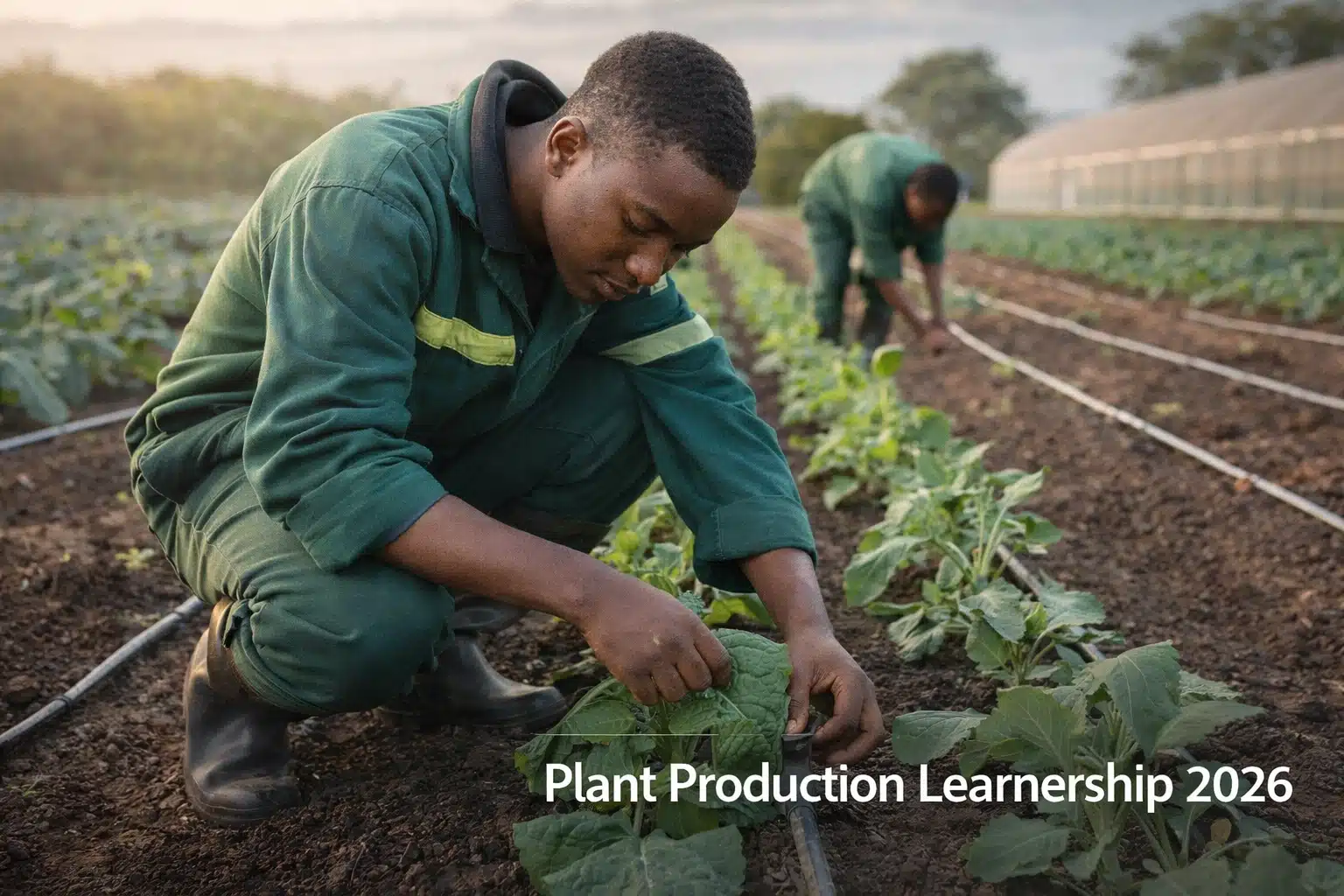
The Plant Production Learnership 2026 offers hands-on farming skills, real workplace experience, and an NQF 3 qualification for aspiring agricultural workers.
Many young South Africans are interested in agriculture but struggle to find a realistic way in. University isn’t accessible to everyone, and entry-level farm jobs often offer little structured training. That’s where the Plant Production Learnership 2026 becomes relevant.
This learnership is designed for people who want practical skills, real workplace exposure, and a recognised qualification—all at the same time. Leading to a National Certificate in Plant Production at NQF Level 3, it offers a structured path into farming, agri-processing, and related agricultural work at a time when food production skills are increasingly important.
For those who prefer learning by doing, this programme matters now more than ever.
What the Plant Production Learnership 2026 Really Is
The Plant Production Learnership is not a short course or informal training. It is a nationally registered qualification, aligned with AgriSETA standards and recognised by the South African Qualifications Authority (SAQA).
What sets it apart is its structure. Learners don’t just study agriculture in theory. They spend time in real agricultural workplaces—farms, nurseries, and production sites—where they apply what they learn immediately.
The programme combines:
- Classroom-based agricultural theory
- Practical, on-site workplace training
- Ongoing guidance and mentorship
- A formal National Certificate at NQF Level 3
By the time learners complete the learnership, they understand how agricultural operations actually run day to day. That experience often counts just as much as the certificate itself.
Why Plant Production Learnership 2026 Qualification Still Carries Weight
Agriculture in South Africa is changing. Climate pressure, food security concerns, and rising production costs mean farms need workers who understand efficient, sustainable plant production, not just manual labour.
The National Certificate in Plant Production prepares learners for work in environments such as:
- Crop production farms
- Nurseries and greenhouses
- Agri-processing and packhouse facilities
- Small-scale and commercial farming operations
While the qualification does not guarantee employment, it provides a credible foundation. Employers know what skills an NQF Level 3 graduate should have, which makes this certificate more useful than unaccredited training.
Skills Learners Gain Over 12 Months
The learnership typically runs for 12 months, during which learners complete both theory modules and workplace tasks, supported by a Portfolio of Evidence and final assessments.
Key skills covered include:
- Soil preparation and fertilisation methods
- Irrigation systems and water management
- Crop establishment and propagation
- Pest and disease identification and control
- Safe handling of agricultural chemicals
- Use and basic maintenance of farm equipment
- Harvesting and post-harvest handling
- Workplace health and safety
- Basic farm administration and record-keeping
These are everyday skills used across the agricultural sector. Graduates are usually ready to contribute from their first day on the job, rather than needing long adjustment periods.
Who Can Apply — and What to Expect
Entry requirements vary slightly by provider, but most Plant Production Learnerships look for applicants who:
- Have Grade 10, 11, or 12 (Matric is often preferred)
- Can communicate in basic English
- Have a genuine interest in agriculture
- Are willing to work outdoors in practical conditions
- Hold a valid South African ID
- Are usually between 18 and 35 years old
- Are unemployed (often prioritised)
- APPLY HERE
No prior farming experience is required. However, this is not a purely academic programme. Learners should be prepared for physical work, early mornings, and working with crops in different weather conditions.
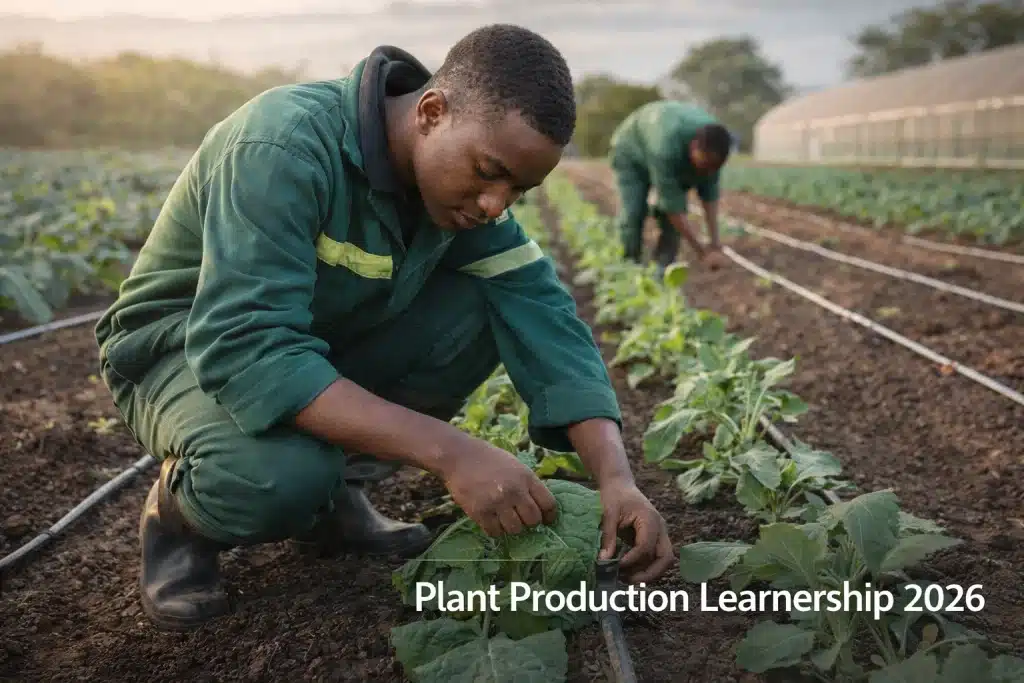
Some programmes offer monthly stipends, but this varies depending on funding and provider.
ALSO APPLY FOR: Unlock Your Potential: The Setaco 2026 Learnership Programme
Where the Learnership Is Offered
The Plant Production Learnership is delivered by AgriSETA-accredited training providers across South Africa.
One known provider is PERITUM Agri Institute, which focuses on practical training, experienced facilitators, and workplace placement. PERITUM often works with unemployed youth and farm workers.
Other opportunities may be available through:
- AgriSETA-accredited colleges
- Agricultural training centres
- Farming co-operatives
- Private training providers
- Employer-sponsored learnerships
Applicants should always confirm accreditation before applying.
Career Options After Completion
Graduates of the Plant Production Learnership often move into roles such as:
- Crop production assistants
- Farm workers or junior supervisors
- Irrigation assistants
- Nursery or greenhouse workers
- Agricultural production operators
- Packhouse assistants
- Small-scale farmers or agri-entrepreneurs
With experience, some progress into supervisory roles or continue their studies at NQF Level 4 and beyond. Others use the skills to start small farming projects of their own.
Frequently Asked Questions
Is the Plant Production Learnership a job?
No. It is a training programme, though some learners are employed afterward.
Do all programmes pay a stipend?
Not all. Stipends depend on the provider and funding.
Is this qualification recognised nationally?
Yes. It is registered with SAQA and aligned to AgriSETA.
Can I study further after completing it?
Yes. Many learners progress to NQF Level 4 qualifications.
Is it suitable for beginners?
Yes. The programme is designed for people with little or no experience.
A Practical Starting Point, Not a Shortcut
The Plant Production Learnership 2026 is not a quick fix for unemployment. What it offers instead is structured, practical entry into agriculture, backed by a recognised qualification.
For people who enjoy working outdoors, growing crops, and learning through experience, this learnership can be the first solid step into a long-term agricultural career — one built gradually, with real skills and real work behind it.
About The Author

How to apply for this learnership