By Bless Nohiya | Published: 1 January 2026
Bana Pele ECD Registration Drive 2026 explains how South Africa is registering ECD centres to improve early learning access and quality nationwide.
Bana Pele ECD Registration Drive 2026
Early childhood education has long been uneven in South Africa. In many communities, especially informal settlements and rural areas, ECD centres operate with limited support, unclear registration pathways, and little guidance. For parents, this creates uncertainty. For practitioners, it often means doing vital work without recognition or protection.
The Bana Pele ECD Registration Drive 2026 is meant to change that reality. Led by the Department of Basic Education (DBE), the initiative aims to bring every Early Childhood Development programme into a single, clear system — one that prioritises children’s safety, learning, and long-term outcomes.
This is not just an administrative update. It reflects a broader shift in how South Africa treats early learning.
What the Bana Pele ECD Registration Drive Is Really About
The Bana Pele ECD Registration Drive is a national process to formally register all ECD programmes — including crèches, preschools, day-care centres, playgroups, and community-based services — under the DBE.
For years, ECD centres were overseen by the Department of Social Development. The move to the DBE recognises that early childhood is not only about care, but about education, development, and school readiness.
At its core, the drive is designed to:
- Make registration simpler and more accessible
- Bring informal and under-resourced centres into the system
- Improve quality without excluding struggling communities
For practitioners who have operated “under the radar” due to complex rules, this marks a significant policy shift.
How the New Registration Process Works
The DBE has introduced a three-stage registration model that acknowledges different starting points among ECD centres.
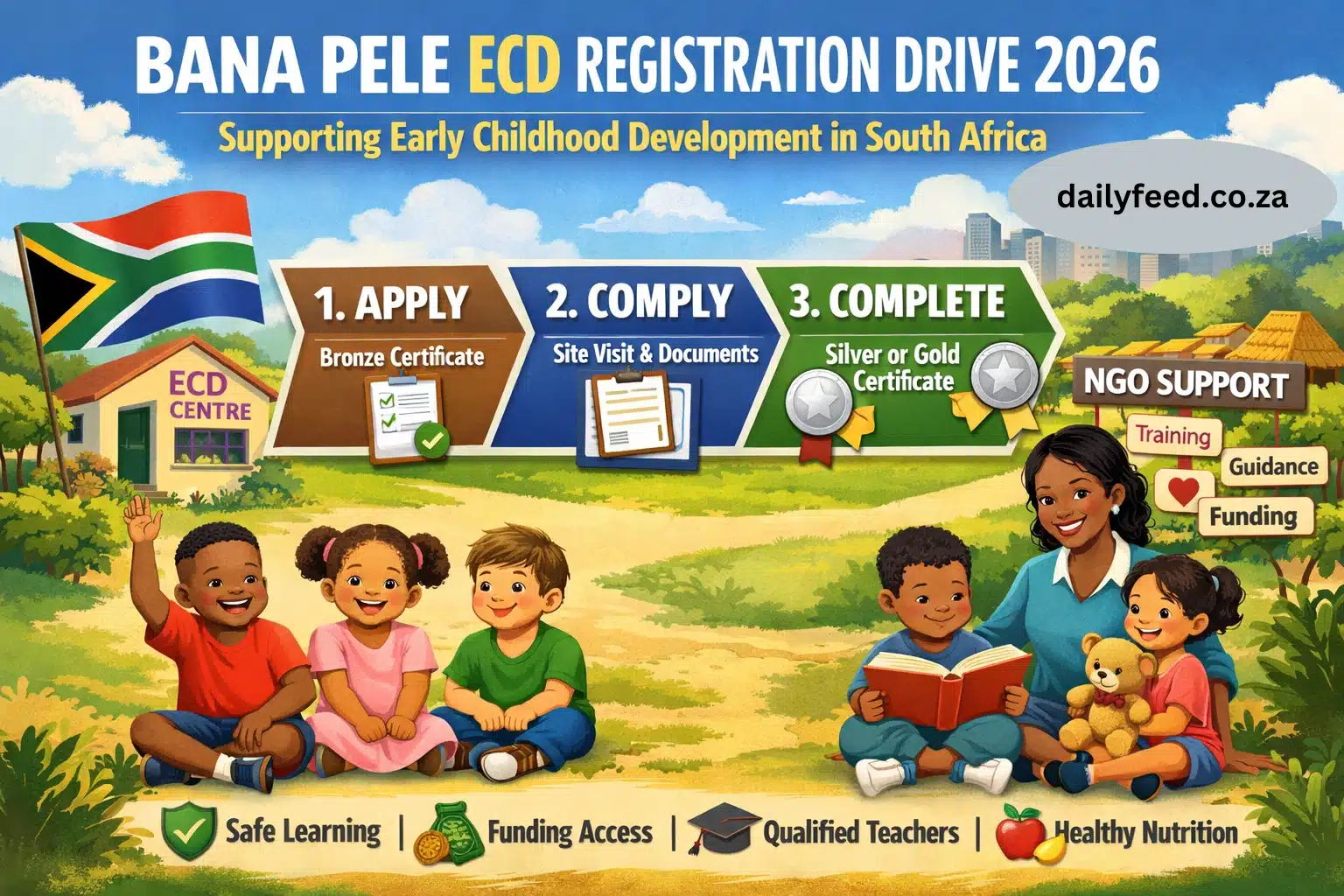
Apply (Bronze Certificate)
Once a centre applies online or through the WhatsApp system, it immediately receives a Bronze certificate. This confirms the programme is recognised and in the system, even before full compliance.
Comply (Verification and Support)
Centres then upload required documents, such as safety and health information, staff details, and programme plans. Officials conduct site visits, not only to assess compliance but also to guide improvements where needed.
Complete (Silver or Gold Certificate)
Fully compliant centres receive Silver or Gold certification, depending on their level of alignment with national norms and standards. This certification builds trust with parents and funders.
The phased approach is important in a country where many ECD centres operate with limited resources but strong community support.
Why Registration Matters for Communities and Practitioners
For parents, registration brings visibility and reassurance. It becomes easier to check whether a centre meets basic safety and learning standards.
For ECD practitioners, the benefits are practical:
- Access to government subsidies and donor funding
- Eligibility for training and professional development
- Legal recognition and reduced risk of closure
- Clear guidance on improving quality over time
In communities facing high unemployment and poverty, ECD centres are often run by women who are both caregivers and informal entrepreneurs. Formal registration helps protect this work while improving outcomes for children.
The Role of NGOs and Local Support Structures
Non-governmental organisations play a crucial role in the Bana Pele rollout. Many already work closely with ECD centres, helping with:
- Online applications and document uploads
- Preparing centres for compliance checks
- Training practitioners and upgrading facilities
This partnership model recognises that policy alone cannot fix deep-rooted inequality. Support on the ground is essential, especially in rural provinces and townships.
Organisations involved in skills development and community education, such as those linked to accredited training and compliance support, are expected to be key partners in the process.
(Internal reference example: related compliance and training resources available via https://dailyfeed.co.za)
What Parents Should Know in 2026
Parents are often the last to hear about policy changes, yet they are directly affected. The Bana Pele system allows parents to:
- Verify whether an ECD centre is registered
- Understand what Bronze, Silver, or Gold status means
- Make informed choices about early learning
In a country where early learning gaps often mirror later school drop-out rates, informed parental choice matters.
Action Steps Today:
- If you run an ECD centre → Apply now online.
- If you’re a parent → Choose registered centres for your child.
- If you’re an NGO → Partner with DBE to support compliance.
Together, we can ensure that every child in South Africa has the best possible start in life
Frequently Asked Questions
Who must register?
All ECD programmes, including informal and community-based centres.
Is the registration process free?
Yes. Registration is 100% free. Any request for payment is fraudulent.
How long does registration take?
The Bronze certificate is issued immediately after application. Full certification depends on compliance readiness.
Can small or informal centres apply?
Yes. The system is designed to support centres at different stages, not exclude them.
Where can centres apply?
Through the official DBE platform or WhatsApp system managed by the Department of Basic Education.
Looking Ahead: Why This Drive Matters Long Term
South Africa’s education challenges do not start in Grade 10 or Grade 12. They start much earlier. Research consistently shows that quality early childhood education improves school performance, health outcomes, and long-term employment prospects.
The Bana Pele ECD Registration Drive is not a quick fix. But it is a foundational step toward a more equal education system — one that starts where it matters most.
External resources
- Department of Basic Education (ECD): DoFollow reference
- Official Bana Pele enquiries: banapele@dbe.gov.za
Final note:
This article is written to inform, not to promote. The success of Bana Pele will ultimately depend on whether support reaches the centres that need it most — and whether children, regardless of where they are born, are given a fair start.
About The Author

I do have certificates in ECD but struggling to get work or safe place to open my own ECD center.
I do have N6 qualifications in Human Resource Management
I am looking forward to help and share my ideas and knowledge.