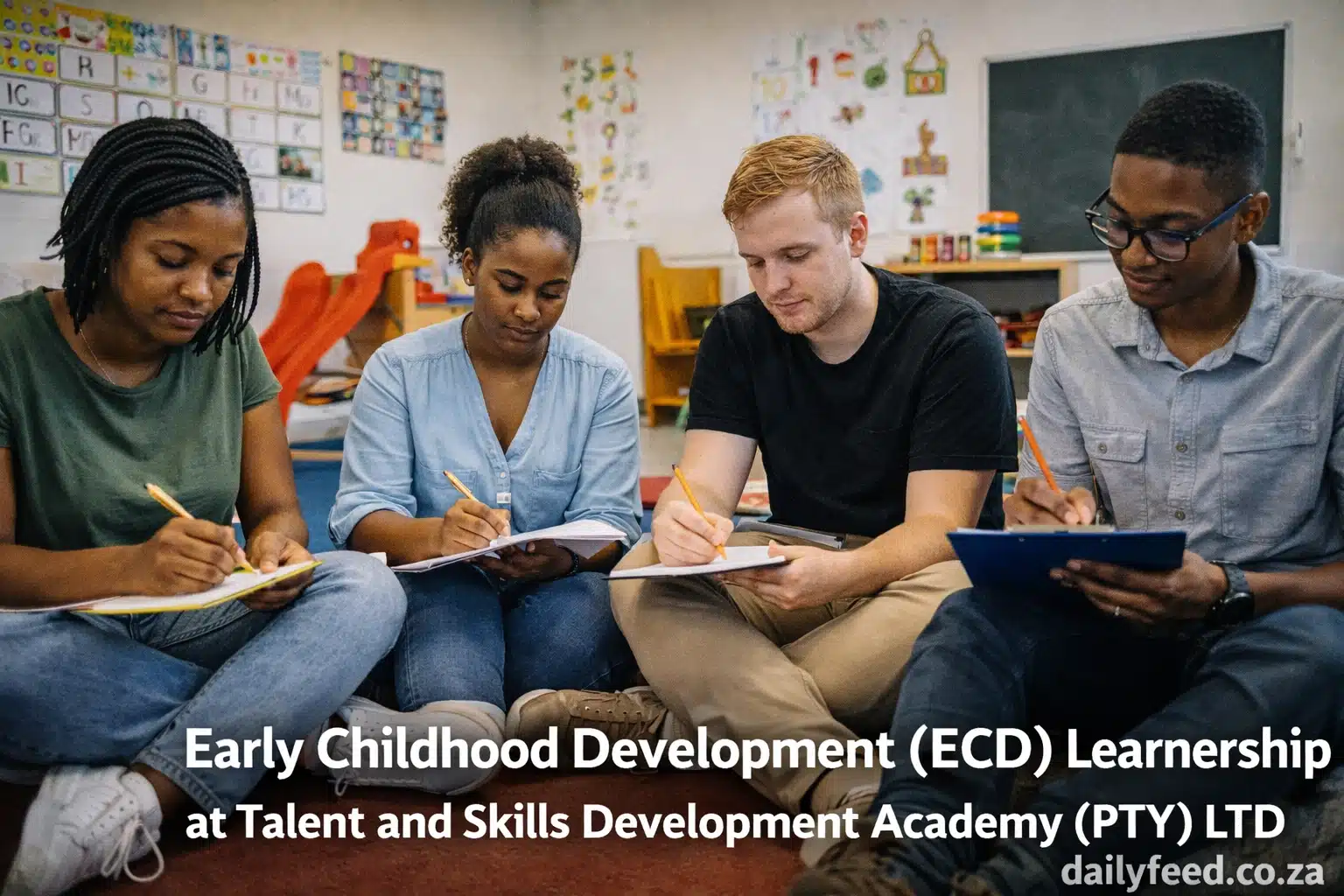
ECD Learnership in Sandton offers unemployed youth practical experience and a recognised qualification in early childhood development.
Working with young children is often described as a calling — but in South Africa, turning that calling into a career is not always straightforward. Many passionate people lack formal qualifications or practical experience, which keeps them locked out of the sector.
That’s why the Early Childhood Development (ECD) Learnership offered by Talent and Skills Development Academy matters now. It provides unemployed youth with structured training, workplace exposure, and a nationally recognised qualification at a time when the ECD sector urgently needs skilled, committed practitioners.
For those who care deeply about children’s early years, this opportunity speaks directly to that purpose.
Why an ECD Learnership Matters Right Now
Early childhood development has moved from the margins to the centre of national conversation. Research continues to show that the first few years of a child’s life shape learning, behaviour, and long-term outcomes.
Yet many ECD centres remain understaffed or rely on unqualified practitioners due to skills shortages and funding constraints.
This ECD Learnership responds to that reality by developing people from within communities — individuals who are willing to learn, work hands-on, and grow into the sector rather than viewing it as a temporary option.
At a time when unemployment remains high, especially among youth, combining training with real workplace experience offers a more realistic path than classroom learning alone.
ALSO APPLY FOR IT Learnerships at Geeks4Learning Offer a Real Starting Point for Young Tech Talent
What Learners Will Actually Do Day to Day
This learnership is not observational or symbolic. Participants are expected to be active contributors in a registered ECD centre.
Typical responsibilities include:
- Assisting with the daily care and supervision of children
- Supporting learning through play-based activities
- Helping prepare lessons and learning materials
- Maintaining a safe, clean, and stimulating environment
- Observing and recording children’s progress
- Following health, safety, and hygiene standards
These tasks may sound simple, but in practice they require patience, attentiveness, and emotional awareness. Working with young children is rewarding, but it is also demanding — physically and mentally.
That honesty matters. This opportunity suits people who genuinely enjoy working with children, not those looking for an easy option.
Who This ECD Learnership Is Best Suited For
The eligibility criteria are specific, which helps set realistic expectations.
Applicants must:
- Be South African citizens
- Be between 18 and 33 years old
- Be unemployed at the time of appointment
- Hold a qualification in Psychology or Social Work
- Have a valid driver’s license
- Show a clear passion for working with young children
The requirement for Psychology or Social Work qualifications suggests the programme is aimed at candidates with an existing understanding of human behaviour and development. This is not an entry-level opportunity for everyone, and that limitation should be acknowledged.
Good communication skills are also essential, as ECD work involves constant interaction with children, parents, and colleagues.
How to apply
Apply For ECD Learnership Here
What Learners Gain — and What They Shouldn’t Assume
On completion, learners gain a nationally recognised ECD qualification and practical experience in a real ECD centre. That combination can significantly improve employability within the sector.
Other gains include:
- Child development knowledge
- Classroom and behaviour management skills
- Professional workplace exposure
- A monthly stipend during the learnership
However, it’s important to be clear: completion does not guarantee permanent employment. Outcomes depend on individual performance, availability of roles, and broader sector conditions.
Still, candidates who finish with strong references and real experience are far better positioned than those with theory alone.
The Bigger Picture: Why ECD Careers Matter
ECD work is often undervalued, despite its long-term impact on society. Practitioners play a foundational role in shaping confidence, curiosity, and emotional stability in young children.
Programmes like this ECD Learnership help professionalise the sector by ensuring that those entering it are trained, supported, and qualified.
For candidates who see ECD not just as a job, but as meaningful work, this pathway can be a stepping stone to roles such as ECD practitioner, centre supervisor, or further studies in education and child development.
Frequently Asked Questions
Is this ECD Learnership paid?
Yes. Learners receive a monthly stipend during the programme.
Is this a permanent job?
No. It is a fixed-term learnership that provides training and work experience.
Can I apply without a Psychology or Social Work qualification?
Based on the advert, these qualifications are required. Applicants without them may not be considered.
Where is the learnership based?
The opportunity is based in Sandton, with practical placement at an ECD centre.
Does completion guarantee employment?
No. The learnership improves employability but does not guarantee placement.
Final Thought
The Early Childhood Development Learnership offered by Talent and Skills Development Academy is not flashy, and it doesn’t promise instant success. What it offers instead is something more valuable: structure, experience, and a chance to contribute meaningfully to children’s lives.
For the right candidate — patient, committed, and purpose-driven — that can be the start of a career that truly matters.
About The Author
