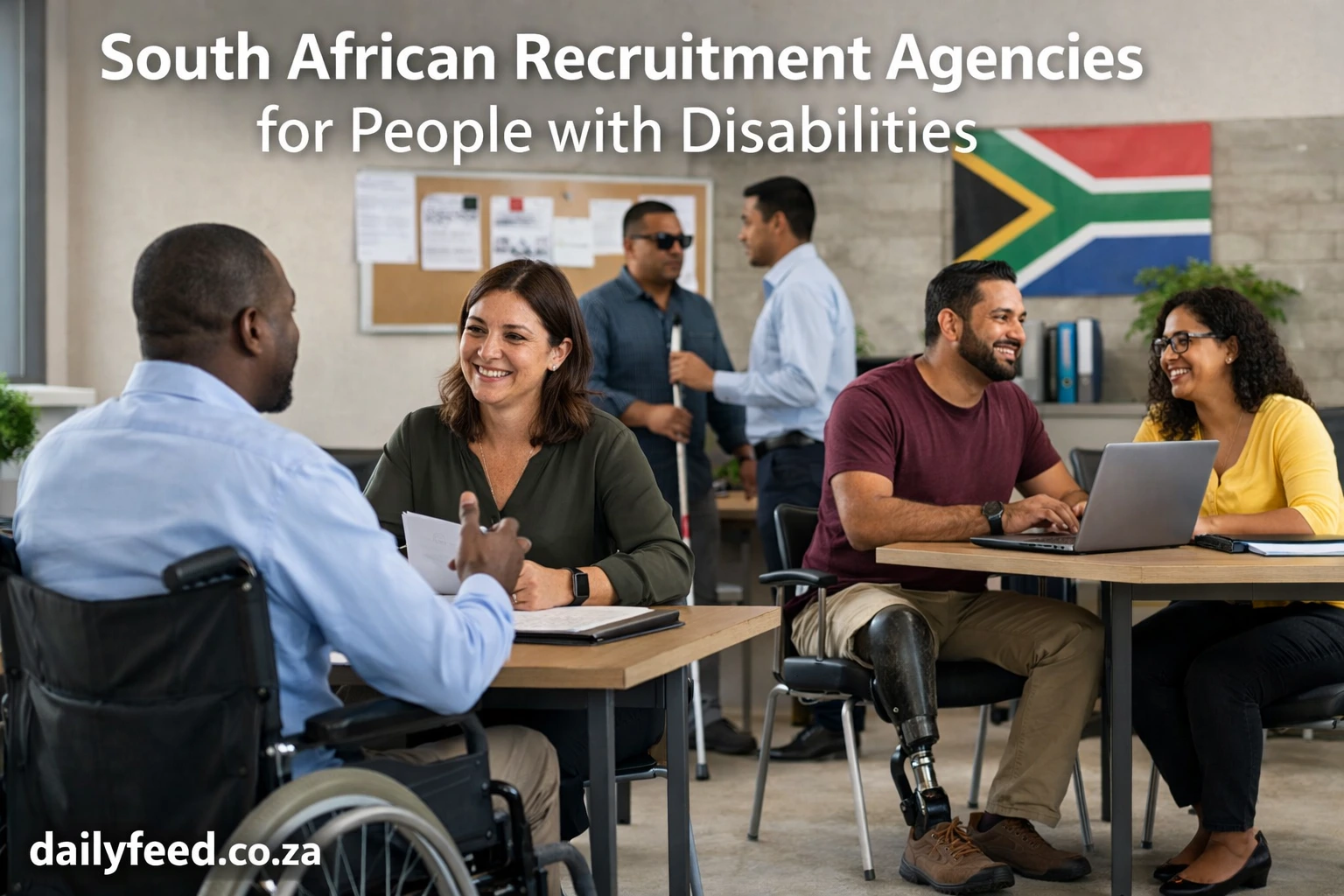
Empowering Inclusion: A Guide to South African Recruitment Agencies for People with Disabilities In South Africa’s journey toward true economic inclusion, the employment of people with disabilities remains both a critical challenge and a transformative opportunity. Specialized recruitment agencies are emerging as essential partners in this mission, connecting talented individuals with disabilities to meaningful employment while helping companies build genuinely diverse and innovative workplaces. These agencies are not just filling positions—they are changing perceptions, breaking down barriers, and unlocking potential across every sector of South African industry.
South African Recruitment Agencies for People with Disabilities: Legislation and Reality
South Africa’s commitment to disability employment is enshrined in several key frameworks:
- Employment Equity Act (EEA): Requires designated employers to implement affirmative action measures for people with disabilities
- Broad-Based Black Economic Empowerment (B-BBEE): Awards points for employing people with disabilities
- UN Convention on the Rights of Persons with Disabilities: Ratified by South Africa, emphasizing the right to work
Despite this legislative framework, the unemployment rate among people with disabilities in South Africa remains disproportionately high. Specialized recruitment agencies are addressing this gap by creating practical pathways to employment that benefit both job seekers and forward-thinking employers.
South African Recruitment Agencies for People with Disabilities: Disability Placement
1. Disability Employment Services (DES) Providers
Government-accredited agencies that receive funding to place people with disabilities:
- Services: Assessment, job matching, workplace modification advice, and post-placement support
- Funding: Often subsidized through the Department of Employment and Labour
- Access: Available through local Labour Centres nationwide
2. Specialized Disability Recruitment Agencies
QuadPara Association of South Africa (QASA) Employment Services
- Focus: Primarily individuals with physical disabilities, particularly quadriplegia and paraplegia
- Services: Career counseling, skills development, employer education, and job placement
- Strength: Deep understanding of accessibility requirements and workplace adaptations
South African National Council for the Blind (SANCB)
- Specialization: Employment for blind and visually impaired individuals
- Services: Assistive technology training, employer sensitization, job matching
- Programs: Various employment initiatives across different industries
Deaf Federation of South Africa (DeafSA)
- Expertise: Employment for Deaf and hard-of-hearing individuals
- Services: Sign language interpreter coordination, workplace communication strategies
- Advocacy: Promoting Deaf culture and appropriate workplace accommodations
National Council for Persons with Physical Disabilities in South Africa (NCPPDSA)
- Scope: Broad physical disabilities spectrum
- Services: Career development, employment placement, disability management consulting
- Network: Extensive corporate partnerships across industries
3. Corporate-Focused Disability Recruitment Partners
CareerBox
- Approach: Combines recruitment with skills development
- Special Programs: Includes candidates with disabilities in their learnership and placement programs
- Industries: Focus on BPO, technology, and administration roles
Momentum Multiply
- Initiative: Corporate wellness and rewards program with disability employment components
- Services: Connects member companies with candidates with disabilities
- Focus: Financial services and corporate sectors
Skills Development Providers with Disability Focus
Various SETA-accredited training providers that include recruitment components:
- Health and Welfare SETA initiatives
- Services SETA disability programs
- MerSETA disability in manufacturing programs
APPLY HERE: South African Recruitment Agencies for People with Disabilities
ALSO READ ABOUT: Tshwane University Of Technology (TUT) Online Registration 2026
Frequently Asked Questions
What does “reasonable accommodation” mean at work?
It means simple, practical changes that help a person with a disability do their job properly — like flexible hours, assistive software, or a modified workstation. Most accommodations cost little or nothing and are supported by South African labour law.
Do disability recruitment agencies charge job seekers?
No. Legitimate disability employment agencies in South Africa do not charge job seekers. They are usually funded by government, SETAs, or employer partnerships. Be cautious of anyone asking for payment.
Do I have to disclose my disability when applying for a job?
No. Disclosure is a personal choice. Some people choose to disclose early to access workplace support, while others wait until an offer is made. There is no legal requirement to disclose during the application stage.
Can people with mental or intellectual disabilities get employment support?
Yes. Several South African organisations and supported employment programmes assist people with psychosocial and intellectual disabilities, offering job matching, workplace support, and follow-up services.
South African Recruitment Agencies for People with Disabilities: Government Initiatives and Supported Employment
Department of Employment and Labour Programmes
- Supported Employment Factories: Provide sheltered employment with transition to open labour market
- Vocational Rehabilitation Centres: Nationwide facilities offering assessment and job placement services
- Disability Grants Coordination: Linking grant recipients with employment opportunities where possible
National Youth Development Agency (NYDA)
- Youth with Disability Programmes: Entrepreneurship and employment support specifically for young people with disabilities
- Partnerships: Collaborates with disability organizations on placement initiatives
Building an Inclusive South African Economy
Recruitment agencies specializing in disability employment are transforming South Africa’s labour landscape, turning legislative requirements into genuine opportunities and shifting corporate culture toward true inclusion. These organizations are demonstrating that employing people with disabilities isn’t just about compliance—it’s about accessing untapped talent, driving innovation, and building stronger, more representative organizations.
As South Africa continues to address historical inequalities and build a more inclusive economy, disability-focused recruitment agencies will play an increasingly vital role. They serve as crucial bridges between capable individuals seeking meaningful work and progressive employers ready to build diverse, dynamic teams.
The message is clear: when South African businesses intentionally include people with disabilities, everyone benefits—companies gain valuable perspectives and skills, the economy grows more robust and inclusive, and we move closer to realizing the promise of a society where every person can contribute their talents and thrive.
Inclusion isn’t just the right thing to do—it’s the smart thing to do for South Africa’s future.
About The Author

hello everyone, my backlink bot is system
That was surprisingly useful, This gave me a clearer picture overall, which is honestly rare these days. I might explore more here.
Alright, Not sure how I ended up here, and I got into it quickly. Not gonna lie it made everything feel simpler without trying too hard.
That was surprisingly useful, It actually answered something I was confused about. might be useful again later.
Well, It connected a few things I didn’t fully understand before.
So, This popped up while I was checking something else. This actually made things clearer for me, in a way that actually makes sense. this could be useful later.
Funny enough, I somehow ended up here while searching for something else. I didn’t expect it to be this helpful, which made it more readable. I might need this again later.
Funny enough, It connected a few things I didn’t fully understand before. I’ll check out more posts here.