When Finishing School Isn’t Enough Anymore
For many young South Africans, completing Grade 10, 11, or even Matric doesn’t feel like an achievement — it feels like standing still. Jobs require experience. Colleges require money. And at home, expectations to “find something” keep growing.
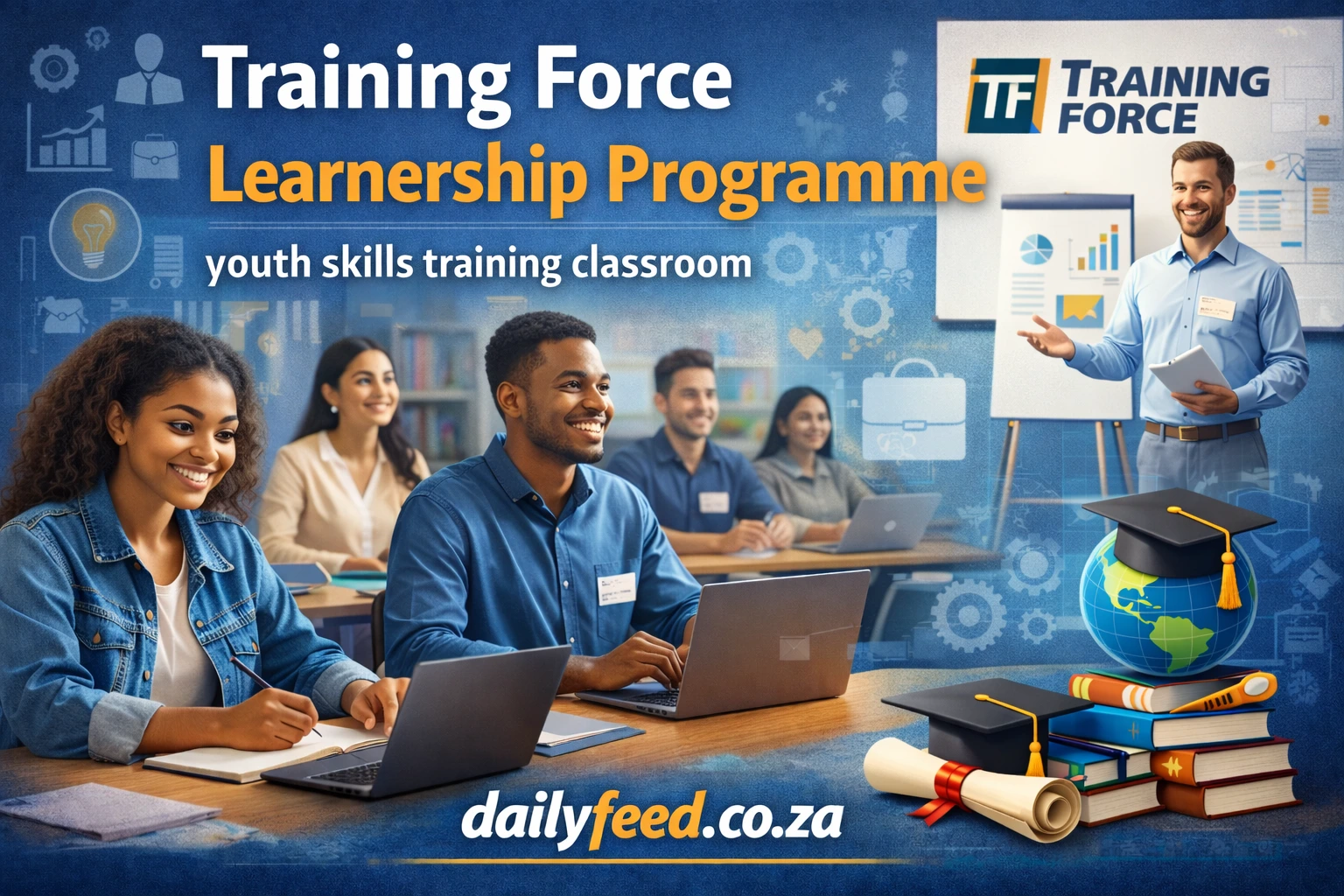
This is the reality where learnerships become more than just training programmes. They become a way forward. The Training Force Learnership Programme for 2026 is one of the opportunities now drawing attention, especially among youth who are eager to build skills without needing a university degree.
But what does it really offer — and who is it for?
Training Force Learnerships 2026: Who Can Apply and Why It Matters
Training Force has confirmed that its 2026 learnership intake is open to applicants with Grade 10, Grade 11, or Grade 12, including both abled and disabled candidates. This matters in a country where many opportunities quietly exclude those who didn’t complete Matric or who live with disabilities.
The learnerships span multiple sectors, including:
- Construction
- Business Services
- Wholesale & Retail
- Agriculture
- Information Technology
- Manufacturing & Engineering
- Transport & Logistics
- Hospitality
These are not random fields. They reflect industries that continue to need skilled workers, even as the job market tightens.
For young people who feel locked out of formal employment, this kind of access can change the direction of a year — or a life.
ALSO APPLY FOR Drake Training Academy: What Learnerships Really Mean for Young South Africans
What the Application Process Actually Looks Like
Applying for a learnership can feel intimidating, especially for first-time applicants. Training Force has outlined a clear process, which helps remove uncertainty.
Here’s what applicants should realistically expect:
Once you submit your application through the official form, your details are captured for assessment. If shortlisted, you may receive an SMS invitation for a pre-training assessment test. This step helps determine readiness and placement suitability.
If a learnership becomes available that matches your profile — and you meet the requirements — you may then be placed accordingly. There are no guarantees, but there is a structured pathway.
It’s important to understand that only applicants who complete the official form are considered. Applications sent directly to staff members or to the general email address are not assessed.
Why Learnerships Still Matter in a Tough Job Market
Youth unemployment remains one of South Africa’s most pressing challenges. According to Statistics South Africa, young people without post-school qualifications face the highest barriers to entry into the labour market.
Learnerships help bridge that gap by offering:
- Practical, workplace-aligned training
- Exposure to real industry environments
- Skills that are nationally recognised
They don’t replace jobs, but they improve employability. For many young people, a completed learnership becomes the first credible work experience on their CV.
That first line matters more than most people realise.
ALSO APPLY FOR Clover Call Centre Learnership 2026
Realistic Expectations: What Learnerships Can — and Can’t — Do
It’s important to approach programmes like the Training Force Learnerships with clarity, not desperation.
A learnership will not instantly solve financial struggles. It requires commitment, attendance, and patience. Assessments, time management, and adapting to professional environments can be challenging, especially for those coming straight from school.
However, for those willing to commit, the long-term value often outweighs the short-term discomfort. Skills, references, and confidence gained during a learnership can open doors that were previously closed.
The key is consistency — showing up, completing the programme, and taking it seriously.
Common Mistakes Applicants Should Avoid
Many applicants unintentionally disqualify themselves by ignoring instructions. Based on past intakes across similar programmes, common mistakes include:
- Applying through unofficial channels
- Ignoring SMS communications
- Providing incomplete or incorrect information
- Assuming placement is automatic
APPLY NOW :Training Force Learnership Programme
Training Force has been clear: only applications submitted through the official form are assessed. Following instructions carefully is not optional — it’s part of the evaluation.
Frequently Asked Questions (FAQs)
Can I apply if I only passed Grade 10 or 11?
Yes. Training Force Learnerships for 2026 are open to applicants with Grade 10, 11, or 12.
Are people with disabilities allowed to apply?
Yes. The programme is open to both abled and disabled candidates.
Will everyone who applies be placed?
No. Applicants are assessed, and placement depends on availability and suitability.
How will I know if I’m shortlisted?
Shortlisted candidates are typically contacted via SMS for a pre-training assessment.
Can I email my application instead?
No. Applications sent via email are not considered. Only the official form is used.
Final Thoughts: A Small Step That Can Change Direction
In a country where opportunities often feel out of reach, programmes like the Training Force Learnership Programme for 2026 offer something practical — not promises, but possibilities.
For young people with Grades 10 to 12 who are willing to learn, adapt, and commit, this could be a meaningful step forward. Not a shortcut, but a starting point.
And sometimes, that’s exactly what’s needed.
About The Author
